When someone first becomes Muslim, one of the most overwhelming parts of the journey is not always belief itself. Often, it is the language. A new Muslim may walk into a masjid, listen to a lecture, or watch a lesson online and suddenly hear many Arabic words, Islamic phrases, and religious terms that seem unfamiliar. Even simple conversations between Muslims can sound full of expressions that are new to the ear.
This can feel intimidating at first, but it does not need to be. You do not need to know every Arabic word immediately in order to be a good Muslim. Islam is not for scholars alone, and it is not only for people born into Muslim families. It is for all people. These words are simply part of the language of the religion, and over time they become familiar. Little by little, what once sounded foreign begins to feel natural.
Many of these terms are used because the Qur’an was revealed in Arabic and the Prophet Muhammad, peace and blessings be upon him, spoke Arabic. As a result, Muslims across the world often preserve certain Arabic words even when speaking English. Sometimes there is an English equivalent, but often the Arabic word carries a fuller meaning that Muslims prefer not to lose.
This article is meant to help new Muslims feel more at home. These are some of the most common words, terms, and phrases you are likely to hear often, especially in the beginning of your life as a Muslim. The goal is not to make you memorize all of them at once, but to make them less confusing and more welcoming.
Why Muslims Use So Many Arabic Terms
Arabic is not the religion itself, and a person does not need to become Arab in order to become Muslim. But Arabic has a special place in Islam because it is the language of the Qur’an. The daily formal prayer is recited in Arabic, many acts of worship use Arabic phrases, and the earliest teachings of Islam were preserved in Arabic.
Because of that, Muslims often continue using these words even when speaking other languages. A Muslim in America, Nigeria, Pakistan, Indonesia, or the United Kingdom may all say things like in shā’ Allāh, alḥamdu lillāh, ṣalāh, zakāh, duʿāʾ, and sunnah. This creates a kind of shared religious vocabulary across the world.
That said, there is no shame at all in not knowing these terms yet. Learning them takes time. Some of them you will pick up quickly. Others may take months or years to feel natural. That is normal.
Allah
The word Allah simply means God. It is not the name of a separate deity or a “Muslim god.” It is the Arabic word used for the One true God, the Creator of the heavens and the earth. Arabic-speaking Christians and Jews also use the word Allah when speaking about God.
For Muslims, saying Allah is natural because it is the word used in the Qur’an. A new Muslim will hear it constantly in prayer, sermons, casual speech, and Islamic writing.
Islam
Islam means submission, surrender, and willing obedience to Allah. It refers to the religion revealed by Allah and taught by the prophets, culminating in the final revelation given to Muhammad, peace and blessings be upon him.
When Muslims say “Islam,” they are referring not just to a label or identity, but to a way of life rooted in worship, obedience, belief, and moral conduct.
Muslim
A Muslim is a person who submits to Allah. The word does not mean a member of a race, culture, or ethnicity. It means one who submits to God. Anyone from any background can become Muslim.
This is important for new Muslims to remember. You do not have to belong to a certain ethnic group, speak a certain language fluently, or come from a Muslim family in order to be a real Muslim.
Shahādah
The Shahādah is the testimony of faith: that there is no god worthy of worship except Allah, and that Muhammad is the Messenger of Allah. This is the first pillar of Islam and the doorway into the religion.
You will often hear Muslims refer to “taking shahādah” or “saying the shahādah.” This means entering Islam by sincerely declaring and believing this testimony.
You will also hear parts of the shahādah within prayer and in many Islamic discussions because it lies at the heart of Muslim belief.
Īmān
Īmān means faith or belief. It refers to inward faith in the core truths of Islam, such as belief in Allah, His angels, His books, His messengers, the Last Day, and divine decree.
A Muslim might say, “Protect your īmān,” or “My īmān feels strong,” meaning one’s faith feels strong. You may also hear that faith rises and falls. This means a believer may go through periods of strength and weakness, and should keep returning to Allah.
Dīn
Dīn is often translated as religion, but it means more than that. It refers to the whole way of life ordained by Allah. When Muslims say, “This is part of our dīn,” they mean this is part of the religion and the life-path Allah has given us.
It is a broader term than many English speakers expect. It includes belief, worship, ethics, law, character, and community.
Tawḥīd
Tawḥīd means the absolute oneness of Allah. It is one of the most central ideas in Islam. It means Allah alone is the Creator, Sustainer, Lord, and only One worthy of worship.
A new Muslim will hear this term often in lessons about creed. It is the foundation of all Islamic belief. To understand Islam properly is to understand that worship belongs to Allah alone.
Kufr and Kāfir
Kufr means disbelief or rejection of faith. A kāfir is a disbeliever. These are serious theological terms, but they are often used carelessly by some people. A new Muslim should be cautious about how such words are used.
These terms do exist in the Qur’an and Islamic theology, but Muslims are not supposed to casually throw them around in an arrogant or reckless way. New Muslims especially should not get pulled into a culture of constantly labeling people. Learn the religion with humility and caution.
Shirk
Shirk means associating partners with Allah. It is the gravest sin in Islam if a person dies upon it without repentance. It includes directing worship to other than Allah or giving created things what belongs only to Him.
You may hear this term in discussions about prayer, supplication, graves, saints, idols, superstition, or religious practices from other traditions. It is an important word, but like many serious Islamic terms, it should be learned carefully and with knowledge rather than fear.
Ṣalāh
Ṣalāh is the formal ritual prayer performed five times daily. This is often one of the very first Arabic words a new Muslim learns. Muslims do not usually use the word “prayer” in a general sense when referring to the five daily prayers; they often say ṣalāh specifically.
For example, someone may say, “Did you pray ʿAṣr yet?” or “I’m learning ṣalāh.” This refers to the structured, prescribed prayer with standing, bowing, prostration, and recitation.
Duʿāʾ
Duʿāʾ means supplication — calling upon Allah, asking Him for help, forgiveness, guidance, mercy, or provision. Unlike ṣalāh, duʿāʾ is not restricted to a fixed form. It can be made at any time, in any language, and in simple words.
A new Muslim may hear people say, “Make duʿāʾ for me,” which means, “Pray to Allah for me.” This is one of the most beautiful and personal parts of Islamic life.
Dhikr
Dhikr means remembrance of Allah. This includes phrases said with the tongue and heart such as glorifying Allah, praising Him, seeking His forgiveness, or repeating words of remembrance taught in the Qur’an and Sunnah.
You may hear Muslims say, “Keep your tongue busy with dhikr,” meaning keep remembering Allah. Some common forms of dhikr include saying subḥān Allāh, alḥamdu lillāh, Allāhu akbar, and astaghfirullāh.
Sūrah and Āyah
A sūrah is a chapter of the Qur’an. An āyah is a verse of the Qur’an. If someone says, “Read that sūrah,” they mean read that chapter. If they say, “There is an āyah about that,” they mean there is a verse about it.
New Muslims hear these words frequently in classes, khutbahs, and Islamic books.
Qur’an
The Qur’an is the final revelation of Allah, sent down to the Prophet Muhammad, peace and blessings be upon him. It is the central scripture of Islam and the speech of Allah.
A new Muslim may hear terms like “reciting Qur’an,” “memorizing Qur’an,” “tafṣīr of the Qur’an,” or “reading translation.” The Qur’an is not merely a book of inspiration. It is guidance, recitation, law, warning, mercy, and healing.
Ḥadīth
A ḥadīth is a report about what the Prophet Muhammad, peace and blessings be upon him, said, did, approved of, or described. These narrations help Muslims understand how Islam is lived.
You may hear, “There is a hadith about that,” meaning there is a report from the Prophet related to that issue. New Muslims should know that not all hadith are equal in strength, which is why scholars distinguish between authentic and weak reports.
Sunnah
Sunnah refers to the way, example, and practice of the Prophet Muhammad, peace and blessings be upon him. It includes how he worshipped, behaved, spoke, dressed with modesty, treated people, and lived his life.
Sometimes Muslims use sunnah in a broad sense to mean the Prophetic example in general. Sometimes they use it in a more specific legal sense to mean an act that is recommended but not obligatory. Context matters.
Fard or Farḍ
Farḍ means obligatory. If something is farḍ, it is required in Islam. The five daily prayers are farḍ. Fasting Ramadan is farḍ. Believing in Allah is farḍ.
A new Muslim will hear this term often because it helps distinguish between what is mandatory and what is recommended.
Wājib
Wājib also refers to something required or obligatory, though some scholars use it slightly differently from farḍ. In everyday conversation, many Muslims use the two words similarly.
A new Muslim does not need to panic over every technical distinction immediately. It is enough at first to understand that both words generally point to something one is religiously expected to do.
Ḥalāl and Ḥarām
Ḥalāl means lawful or permissible. Ḥarām means forbidden. These are among the most commonly used Islamic terms.
People may ask, “Is this halal?” when talking about food, money, behavior, clothing, entertainment, or business practices. Likewise, “That is haram” means it is prohibited in Islam.
These words are important, but new Muslims should be careful not to reduce Islam to a constant stream of halal-and-haram questions without learning the bigger picture of faith, worship, and character.
Makrūh
Makrūh means disliked or discouraged, but not strictly forbidden. If something is makrūh, avoiding it is rewarded, but doing it is not the same as committing something haram.
This is a helpful term because not every matter in Islam falls into only “allowed” or “forbidden.” Some things are better left alone even if they are not outright prohibited.
Mubāḥ
Mubāḥ means permissible or neutral. It refers to things that are allowed and religiously neutral in themselves. Many ordinary daily matters fall into this category unless there is evidence otherwise.
Zakāh
Zakāh is the obligatory almsgiving due on certain wealth when it reaches a minimum threshold. It is one of the five pillars of Islam.
A new Muslim may also hear ṣadaqah, which means voluntary charity. The two are related, but zakāh is specifically obligatory charity, while ṣadaqah is any voluntary act of charity.
Ṣadaqah
Ṣadaqah means voluntary charity. It can be money, food, clothing, help, kindness, or even a good word. Muslims use this term often because charity is a constant part of Islamic life, not just a once-a-year duty.
Ṣawm
Ṣawm means fasting. In common speech, many Muslims simply say “fasting Ramadan,” but you may also hear the Arabic term ṣawm, especially in books or lessons.
Ramaḍān
Ramaḍān is the ninth month of the Islamic calendar and the month in which Muslims fast from dawn to sunset. It is one of the most beloved and spiritually intense times of the year.
A new Muslim will hear about Ramadan constantly, especially because learning to fast is one of the major milestones of early Islamic practice.
Ḥajj and ʿUmrah
Ḥajj is the pilgrimage to Makkah required once in a lifetime for those who are able. It is one of the five pillars of Islam. ʿUmrah is a lesser pilgrimage that is recommended but not obligatory in the same way.
New Muslims often hear these words in conversation even long before they are personally concerned with pilgrimage.
Masjid
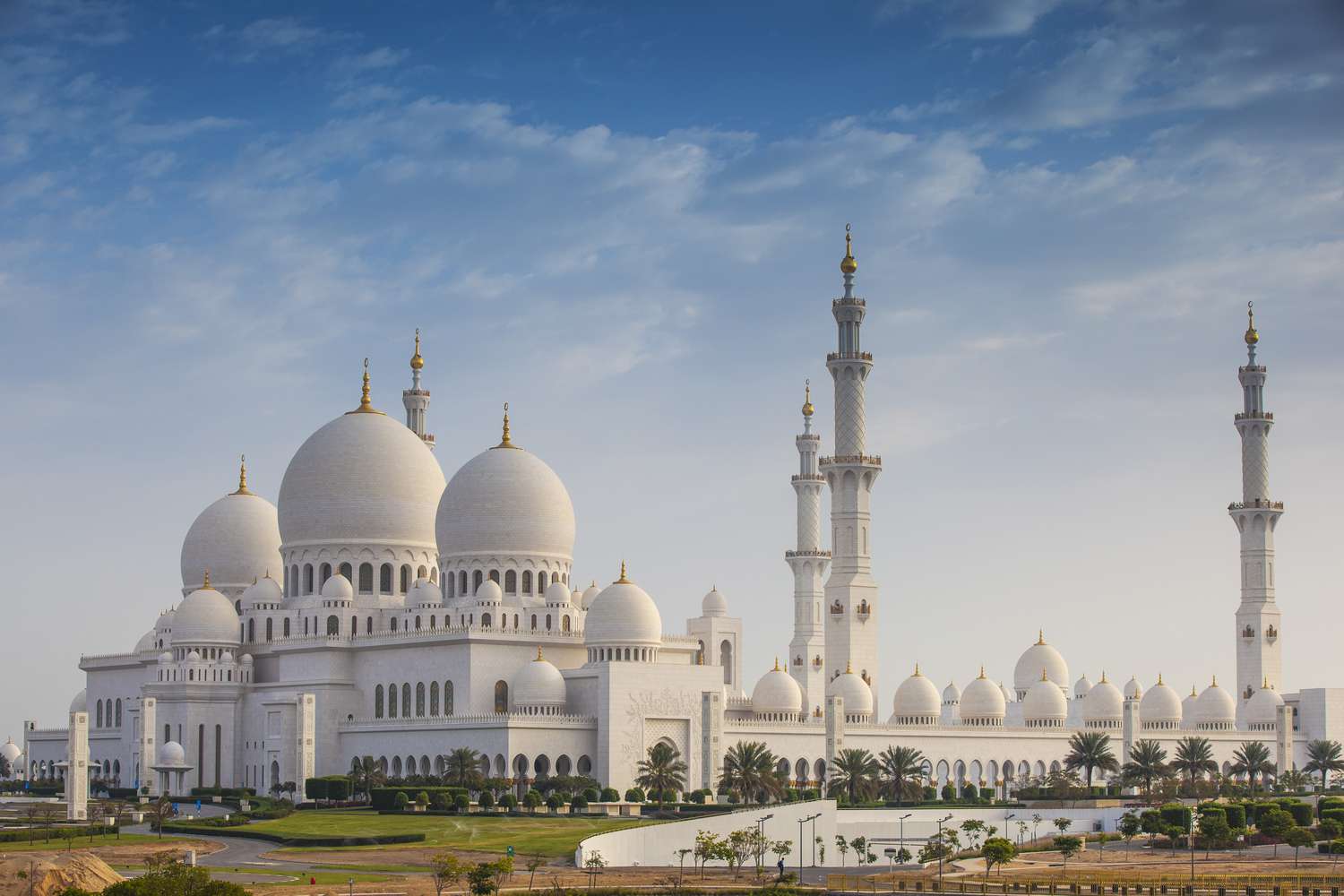
A masjid is a mosque, a place of prostration, where Muslims gather for prayer. In English, Muslims often say “masjid” rather than “mosque.”
A new Muslim will hear phrases like “Go to the masjid,” “I met the imam at the masjid,” or “There’s a class at the masjid tonight.”
Imām
The word imām can mean the one who leads prayer, or more broadly a religious leader or scholar, depending on the context. In a local masjid, the imam is often the one who leads prayers, teaches, counsels, and serves the community.
Khuṭbah
A khuṭbah is a sermon, especially the Friday sermon before Jumuʿah prayer. If someone says, “The khutbah was good today,” they mean the sermon was beneficial or moving.
Jumuʿah
Jumuʿah is the Friday congregational prayer. It has special importance in Islam and replaces the regular noon prayer for those required to attend.
New Muslims will hear this word every week. “Are you going to Jumuʿah?” simply means, “Are you going to the Friday prayer?”
Adhān and Iqāmah
The adhān is the call to prayer. The iqāmah is the second, shorter call given immediately before the prayer begins.
A new Muslim who attends the masjid will hear both often. Over time, the adhān becomes one of the most recognizable and beloved sounds in Muslim life.
Wuḍūʾ
Wuḍūʾ means ritual washing before prayer. It includes washing the hands, mouth, nose, face, arms, wiping the head, and washing the feet in the prescribed way.
New Muslims hear this word very early, because learning wuḍūʾ usually comes before learning ṣalāh.
Ṭahārah
Ṭahārah means purity or purification. It can refer to both physical cleanliness and ritual purity. Many early lessons for new Muslims begin with ṭahārah because Islam places great emphasis on cleanliness and preparation for worship.
Najāsah
Najāsah means impurity — something considered ritually impure, such as certain bodily substances. This comes up in discussions of cleaning clothes, the body, and prayer spaces.
Qiblah
The qiblah is the direction Muslims face in prayer, toward the Kaʿbah in Makkah. A new Muslim may hear someone say, “Which way is the qiblah?” or “Use an app to find the qiblah.”
Kaʿbah
The Kaʿbah is the sacred House in Makkah toward which Muslims face in prayer. It plays a central role in ṣalāh and pilgrimage.
Bismillāh
Bismillāh means “In the name of Allah.” Muslims say this before beginning many actions, such as eating, drinking, reading, writing, entering the home, or starting a task.
It is one of the first phrases many new Muslims begin using in daily life.
Alḥamdu lillāh
Alḥamdu lillāh means “All praise is for Allah” or “Praise be to Allah.” Muslims say it constantly. It may be used in response to blessings, after finishing something, when expressing gratitude, or even when answering the simple question, “How are you?”
Allāhu akbar
Allāhu akbar means “Allah is greater.” It is said in prayer and in many other situations of remembrance. It is a phrase of glorification, reverence, and awe.
Subḥān Allāh
Subḥān Allāh means “Glory be to Allah.” It is often said when admiring something, when reflecting on Allah’s perfection, or during forms of dhikr.
Astaghfirullāh
Astaghfirullāh means “I seek forgiveness from Allah.” Muslims say this after sinning, after making mistakes, or simply as a regular act of repentance and humility.
In shā’ Allāh
In shā’ Allāh means “if Allah wills.” Muslims say this when speaking about the future. “I’ll see you tomorrow, in shā’ Allāh” means “I intend to, if Allah wills.”
This phrase reminds the believer that nothing happens except by Allah’s permission.
Mā shā’ Allāh
Mā shā’ Allāh is often said when admiring something good, such as a child, a home, knowledge, character, or beauty. It expresses admiration while remembering Allah as the source of blessing.
Jazāk Allāhu khayran
Jazāk Allāhu khayran means “May Allah reward you with goodness.” It is a beautiful Islamic way of thanking someone.
Barakallāhu fīk
Barakallāhu fīk means “May Allah bless you.” It is commonly said in response to kindness, help, or good words.
As-salāmu ʿalaykum
As-salāmu ʿalaykum means “Peace be upon you.” It is the standard greeting among Muslims. The reply is wa ʿalaykum as-salām — “and upon you be peace.”
A new Muslim may find that this greeting becomes one of the warmest and most comforting parts of joining the Muslim community.
Ṣallallāhu ʿalayhi wa sallam
After mentioning the Prophet Muhammad, Muslims often say ṣallallāhu ʿalayhi wa sallam, meaning “may Allah send blessings and peace upon him.” In English writing, this is sometimes abbreviated as “peace and blessings be upon him.”
A new Muslim will hear this often in lectures and conversations. It is an expression of respect, love, and obedience.
Raḍiya Allāhu ʿanhu / ʿanhā
These phrases mean “may Allah be pleased with him” or “may Allah be pleased with her.” Muslims say them after mentioning the Companions of the Prophet. You may hear, for example, “Abu Bakr, may Allah be pleased with him,” or “ʿĀ’ishah, may Allah be pleased with her.”
Ṣaḥābah
The Ṣaḥābah are the Companions of the Prophet Muhammad, peace and blessings be upon him. These were the men and women who believed in him, met him, and died as Muslims. Their lives are very important in Islamic learning because they witnessed Islam directly.
Tabiʿīn
The Tabiʿīn are the generation after the Companions — those who met the Companions and followed them in faith. You may hear this term in lessons about early Islam.
ʿUlamāʾ
ʿUlamāʾ means scholars — those with learned knowledge of Islam. A single scholar is an ʿālim. New Muslims often hear phrases like “the scholars said” or “ask a scholar.”
This is important because Islam is not built only on personal feelings or internet opinions. It is a religion transmitted through knowledge.
Fiqh
Fiqh means Islamic jurisprudence or deep understanding of practical religious rulings. It deals with matters like prayer, fasting, marriage, purity, business, and daily conduct.
A new Muslim may hear, “There is a difference of fiqh on this issue,” meaning scholars have different legal views on that matter.
Madhhab
A madhhab is a school of Islamic law. New Muslims may hear about the Hanafi, Maliki, Shafiʿi, and Hanbali schools in Sunni Islam. These schools are not separate religions. They are structured ways scholars preserved and understood the law.
ʿAqīdah
ʿAqīdah means creed or Islamic belief. This includes what Muslims believe about Allah, the prophets, the unseen, the Last Day, and other foundational matters of faith.
Bidʿah
Bidʿah means religious innovation — introducing into the religion matters that do not properly belong to it. This is a serious concept in Islam, but it is also a word that gets overused and misused by some people.
A new Muslim should learn the concept carefully and avoid joining a culture of constant accusation and argument.
Ummah
Ummah means the global Muslim community. When Muslims say, “The Ummah is suffering,” they mean Muslims around the world are suffering. It refers to the shared body of believers.
Dunyā and Ākhirah
Dunyā refers to this worldly life. Ākhirah refers to the next life, the Hereafter. These are common words in Islamic teaching because Islam constantly reminds believers not to become lost in the temporary world while neglecting eternity.
Jannah and Jahannam
Jannah means Paradise. Jahannam means Hellfire. These are very common Qur’anic and Islamic terms. The believer seeks Jannah and asks Allah to protect him or her from Jahannam.
Qadr
Qadr refers to divine decree — Allah’s knowledge, will, and determination of all things. New Muslims may hear people say, “It was qadr,” meaning it occurred by the decree of Allah.
This concept brings both humility and comfort. It teaches that Allah is not absent from our lives, even when we do not understand His wisdom.
Rizq
Rizq means provision — everything Allah provides, including money, food, opportunities, family, health, and blessings. A Muslim may say, “Allah will provide your rizq,” meaning your provision comes from Him.
Common Phrases New Muslims Hear in Conversation
Beyond technical terms, there are a number of phrases new Muslims hear all the time in ordinary speech.
A Muslim may say alḥamdu lillāh when asked how they are doing. Someone may say in shā’ Allāh whenever discussing plans. When hearing good news, people say mā shā’ Allāh. When thanking someone in an Islamic way, they may say jazāk Allāhu khayran. When hearing something distressing or sinful, they may say astaghfirullāh. Before eating or beginning something, they may say bismillāh.
At first, this can sound like a flood of unfamiliar vocabulary. But after some time, these phrases begin to anchor a Muslim’s daily life in remembrance of Allah.
You Do Not Need to Learn Everything at Once
One of the mistakes some new Muslims make is feeling embarrassed that they do not know enough Arabic terms yet. But this is not a reason for shame. You are learning a religion, not passing a language exam. Many born Muslims also do not understand these words deeply. What matters is steady learning, sincerity, and practice.
Start with the words you hear the most. Learn Allah, Islam, Muslim, ṣalāh, duʿāʾ, Qur’an, sunnah, halal, haram, alḥamdu lillāh, in shā’ Allāh, and as-salāmu ʿalaykum. These alone will already make daily Islamic conversation much easier to follow.
Then keep building gradually. Over time, the vocabulary of Islam will stop feeling like an outside language and start feeling like part of your life as a believer.
A Simple Way to Learn These Terms
A good method is to keep a small notebook or note on your phone. Every time you hear a word repeatedly, write it down with a short meaning. Do not try to master fifty terms in one day. Learn a few, hear them in context, and use them naturally.
It also helps to ask trusted Muslims what a word means when you hear it. Most people are happy to explain, and this is often how new Muslims grow comfortable in the community.
Final Reflection
Learning the common words of Islam is part of learning how to live as a Muslim. These terms are not meant to exclude you. They are part of the shared language of faith that connects Muslims across the world and across generations. At first they may sound unfamiliar, but with time they become familiar companions in worship, conversation, and remembrance.
Do not be discouraged if you feel behind. Every Muslim started somewhere. Every scholar began as a student. Every fluent tongue once struggled with new words. What matters is that you keep learning for the sake of Allah.
The language of Islam will come, little by little. And as it comes, it will not simply teach you vocabulary. It will teach you how Muslims think, how they worship, how they remember Allah, and how they speak about the deepest realities of life, death, faith, mercy, and hope.
And that is one of the beautiful things about entering Islam: even the words you begin to learn start carrying you closer to Allah.