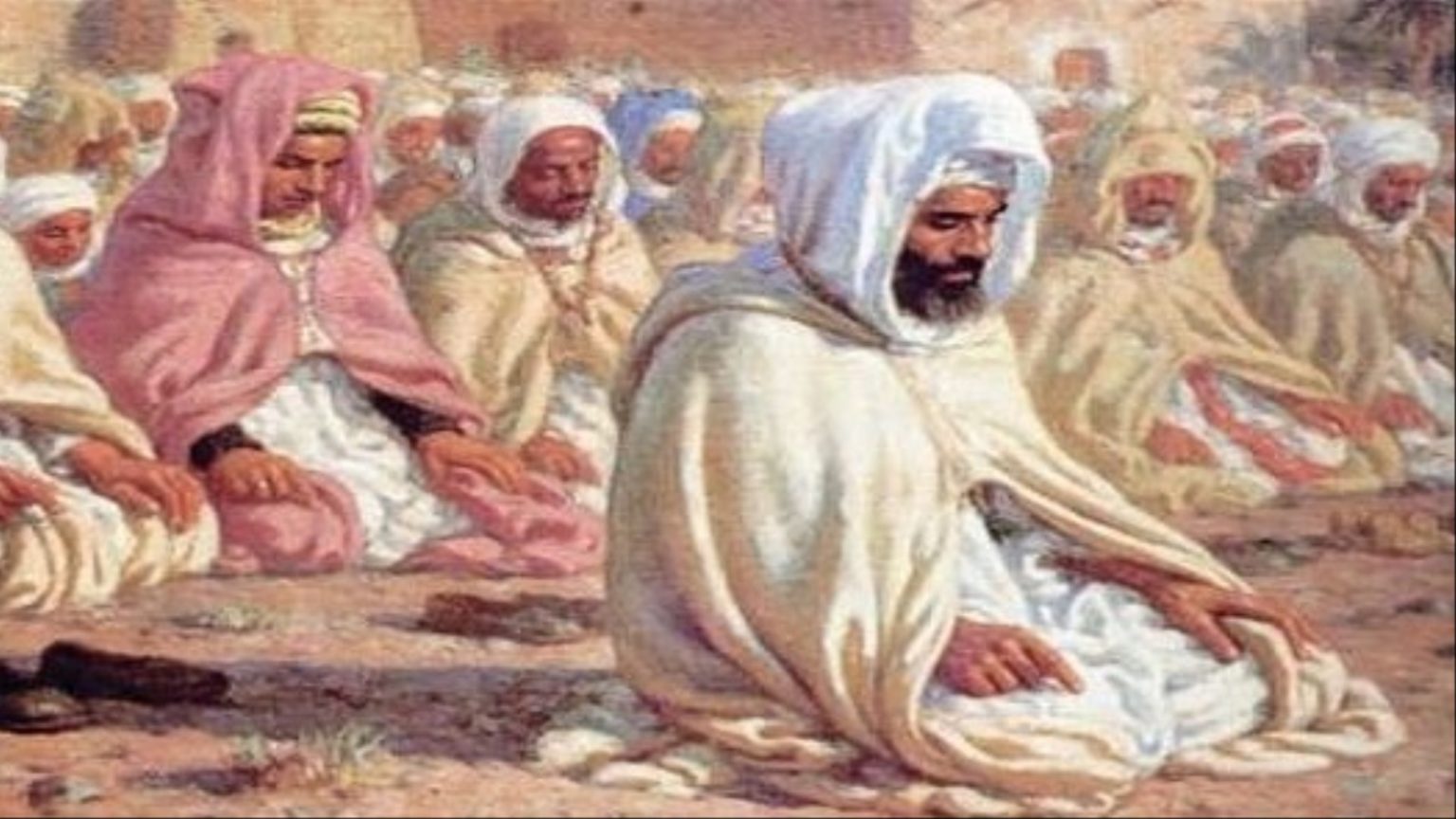
There are some men in Islamic history whose names do not merely belong to the past. Their names still carry weight in the soul. They still evoke reverence, still call the heart toward seriousness, still remind us that sacred knowledge is not a game, not a performance, and not a ladder for worldly status. Among those towering figures stands Imam Malik ibn Anas, the great scholar of Madinah, the imam of dignity, restraint, and living fidelity to the Sunnah.
To speak of Imam Malik is to speak of Madinah itself. His life cannot be separated from that blessed city, for he was formed by it, taught in it, and buried in it. He belonged to Madinah not merely by residence, but by spirit. He was one of those rare souls whose character seems to reflect the place that shaped him. Madinah was the city of the Messenger of Allah ﷺ, the city where revelation had been lived out in community, where the Prophet had taught, judged, prayed, and walked among his Companions. It was the city that held his mosque, his grave, and the memory of the first Muslim generations. Imam Malik emerged from that sacred atmosphere as one of its purest inheritors.
He was born into a family connected to knowledge and honor, and from an early age it was clear that he would be given to learning. The stories told about his youth often reveal something important, not merely about the facts of his upbringing, but about the kind of man he became. He was not raised to see knowledge as mere information. He was raised to understand that sacred learning requires discipline, humility, manners, and inward refinement. Knowledge in Islam was never meant to be something cold and detached. It was always meant to shape the person who carried it. In Imam Malik, this truth became visible in full form.
It is said that his mother prepared him for the circles of learning not only by encouraging him to study, but by teaching him that the character of a scholar matters as much as the content of his lessons. Whether one hears this as a family memory, a moral lesson, or both, it fits everything we know of him. Imam Malik did not become great simply because he memorized reports or mastered legal opinions. He became great because knowledge entered his soul and settled there with gravity. His learning was clothed in adab. His scholarship had dignity. His speech carried weight because it came from a man who feared Allah and revered the legacy of His Messenger ﷺ.
As a young man, he devoted himself to the scholars of Madinah. He sat with the inheritors of the generation after the Companions and drank deeply from the transmitted wisdom preserved in that city. Madinah was not just another center of learning. It was the city where the traces of Prophetic life remained closest to the ground. The people prayed there as the Prophet ﷺ had prayed. They remembered how he had judged, how he had worshipped, how he had spoken, and how the earliest Muslims had understood the religion in practice. Imam Malik came to see this living inheritance as something of immense importance. Islam was not only found in isolated narrations or abstract arguments. It was also preserved in the lived tradition of the people of Madinah, in the inherited practice of the city that had cradled the first Muslim community.
This shaped his entire method. He was a master of hadith, but he was never a mere collector of reports. He was a jurist, but he was never a man of dry speculation detached from revelation. He stood at the meeting point of narration, law, communal memory, and living practice. He understood that the religion was not a loose collection of facts but a divinely given way of life, carried by trustworthy hearts and embodied by real communities. He approached that trust with immense seriousness.
What stands out again and again in the portrait of Imam Malik is caution. He was not careless with sacred knowledge. He did not rush to speak. He did not delight in answering every question. He did not treat the words of the Prophet ﷺ as material for display. He knew that religious speech is weighty, and that to speak wrongly in matters of faith and law is not a small matter before Allah. Many later generations would remember him for his willingness to say, “I do not know.” In a world where people often chase the appearance of mastery, Imam Malik understood that humility is part of knowledge. To say “I do not know” was not a weakness in him. It was evidence of fear of Allah and reverence for truth.
This alone makes him an enduring teacher for every age. The greatest scholars are not those who speak the most, but those who know the danger of speaking without right. Imam Malik knew that the soul can be corrupted by the love of being consulted, admired, quoted, and followed. He knew that religious knowledge can become a temptation for the ego if it is not guarded by sincerity. So he lived with reserve. He taught, but he did not perform. He led, but he did not seek self-exaltation. He became one of the greatest scholars of Islam precisely because he did not pursue greatness in the worldly sense.
His most famous work, the Muwatta, reflects this same spirit. It is one of the earliest and most precious books in the Islamic tradition, but it is more than a historical document. It is the labor of a man trying to preserve the religion with care. In it, Imam Malik gathered hadith, reports from the Companions and their students, and legal judgments arranged by subject, creating a work that stands at the heart of both hadith and fiqh. Yet the greatness of the book lies not only in what it contains. It lies in what it reveals about the man who compiled it. The Muwatta is disciplined. It is measured. It is selective. It does not feel like the work of a man trying to impress. It feels like the work of a man trying to protect.
And that is one of the best ways to understand Imam Malik: he was a protector. He protected the Sunnah from carelessness. He protected law from being severed from lived reality. He protected knowledge from arrogance. He protected the tradition of Madinah from being flattened into abstraction. His life was a service of guarding what had been entrusted to the ummah.
He was also a man of deep reverence for the Messenger of Allah ﷺ. This love was not sentimental excess. It was disciplined reverence, visible in his manners, his bearing, and the seriousness with which he approached hadith. Accounts of his life often describe him honoring the narration of Prophetic traditions with bodily dignity and inward solemnity. He did not treat hadith as ordinary speech because he did not believe it was ordinary speech. When the Messenger of Allah ﷺ was mentioned, Imam Malik’s heart recognized that something sacred was near. His entire demeanor testified to this.
His love for Madinah flowed from the same source. To many, a city is merely a place of residence, but to Imam Malik, Madinah was hallowed ground. It was the place where the Prophet ﷺ had lived and where his body rested. It was the city illuminated by revelation and sanctified by memory. To dwell there with heedlessness would have been impossible for a man like Malik. He saw himself as living in the shadow of the Prophetic presence, and this awareness shaped his adab, his caution, and his identity as a scholar.
Students traveled to him from distant regions. His reputation spread far beyond Madinah, and his circle became one of the great centers of knowledge in the Muslim world. Men who would themselves become giants in the history of Islam sat under his influence. Yet even as his fame grew, he remained marked by a kind of noble sobriety. He was not intoxicated by renown. He did not chase courts or flatter rulers. He did not turn sacred knowledge into an ornament of power.
That did not mean he was cowardly. Imam Malik’s life also bears witness to moral courage. He lived in a time when scholars could come under pressure from political authorities, especially when legal opinions touched questions of legitimacy, loyalty, or coercion. Malik was not a revolutionary agitator, but neither was he willing to surrender truth for safety. When he gave a legal judgment that displeased the ruling power, he endured punishment. He was beaten, yet his dignity was not broken. In the memory of the ummah, this became another sign of his stature: he was gentle but not weak, cautious but not compromising, dignified but not pliable before injustice.
This balance is one of the most beautiful things about him. Some people imagine piety as softness without spine. Others imagine courage as loud defiance without wisdom. Imam Malik showed another way. He was composed, thoughtful, rooted, and measured. He did not seek conflict, but when truth demanded firmness, he did not abandon it. His strength was not theatrical. It was the strength of a soul anchored in something greater than fear.
The legal school that bears his legacy would go on to shape vast regions of the Muslim world. From Madinah, his influence spread across North Africa, Muslim Spain, and deep into West Africa, where generations of scholars, judges, students, and ordinary believers would inherit the tradition associated with his name. Yet even this outward spread should not distract us from the inner beauty of his legacy. The true power of Imam Malik was not merely that he founded a school. It was that he embodied a certain vision of what scholarship ought to be.
In him we see that sacred knowledge is not merely intellectual brilliance. It is reverence. It is caution. It is humility. It is beauty of conduct. It is a refusal to separate law from piety or scholarship from moral seriousness. Imam Malik teaches us that the carrier of religious knowledge must first be shaped by the holiness of what he carries. He teaches us that one can be immensely learned without becoming harsh, and deeply authoritative without becoming arrogant. He teaches us that nearness to the Prophetic inheritance is not proven by loud claims, but by discipline of soul.
There is something deeply moving in the image of Imam Malik teaching in the city of the Prophet ﷺ, surrounded by students, transmitting words and judgments with gravity, conscious that he was handling a trust that came from the earliest generations of Islam. One can almost feel the stillness of that circle, the seriousness of that moment, the awareness that knowledge was being passed from heart to heart. This is why his memory has endured so powerfully. He was not just a jurist who left opinions behind. He was a spiritual type, a model of how one stands before sacred knowledge.
His death in Madinah feels, in a sense, fitting beyond words. The city that formed him received him back. The scholar who had spent his life preserving the inheritance of that place was laid to rest in its blessed earth. He remained what he had always been: a son of Madinah, a guardian of its knowledge, a witness to its living tradition.
For later Muslims, Imam Malik became more than a historical figure. He became a symbol of the scholar at his best. When people think of dignity in knowledge, they think of him. When they think of reverence for hadith, they think of him. When they think of a man who was not dazzled by power or popularity, they think of him. His life stands as a quiet rebuke to superficial scholarship and a luminous example of what it means to inherit the religion faithfully.
And perhaps that is the deepest lesson of all. Imam Malik reminds us that Islam is not preserved merely by intelligence, though intelligence matters. It is preserved by truthful hearts, disciplined souls, trustworthy transmitters, and people who understand that the religion of Allah is too sacred to be handled carelessly. He reminds us that knowledge without humility is corruption, that law without reverence becomes brittle, and that love for the Prophet ﷺ must show itself in how one speaks, teaches, walks, and carries oneself in the world.
To remember Imam Malik, then, is not only to remember a great scholar of the past. It is to remember a standard. It is to remember what sacred seriousness looks like. It is to remember that the path of knowledge is also the path of purification, restraint, and adab. It is to remember that the best of this ummah were not merely clever men, but men who trembled before the trust they had been given.
Imam Malik ibn Anas remains one of the brightest lights in the long history of Islam because he did not try to shine with his own brilliance. He reflected something greater. He reflected the majesty of revelation, the beauty of the Sunnah, the sanctity of Madinah, and the nobility of scholarship rooted in fear of Allah. That is why his name still lives. That is why hearts still bow with respect when he is mentioned. And that is why, generation after generation, he remains not only an imam of law, but an imam of character, reverence, and enduring faithfulness.