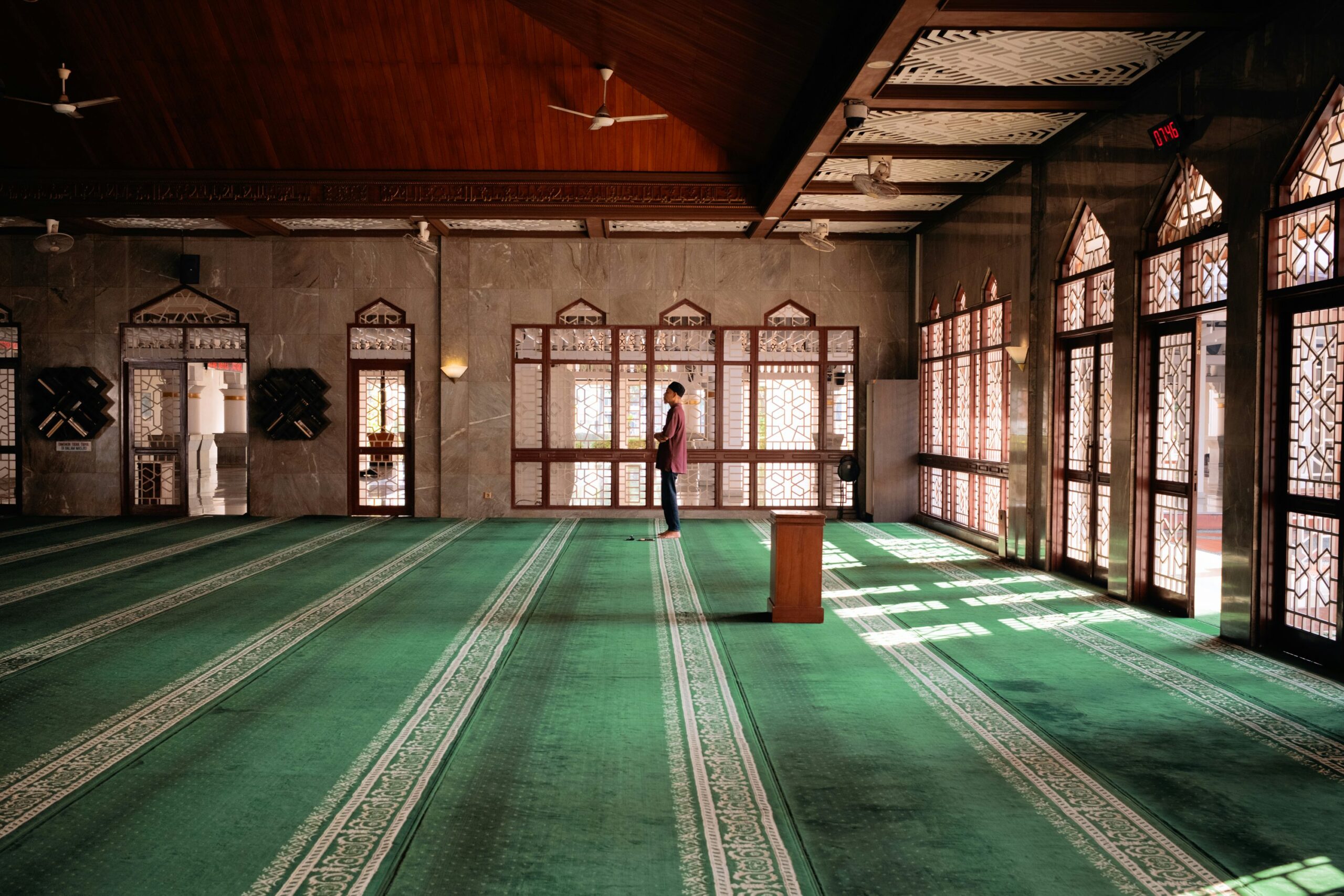
There is a quiet hardship in Muslim life across America that many of us have simply accepted as normal.
We work long hours. We sit in traffic. We commute from work to home and from home to work, losing huge parts of our day on the road. Then, after finally getting home, we try to make it to the masjid for prayer or community, only to find that the congregational prayer is already over. In many places, the mosque is not woven into neighborhood life. It is a destination. It is somewhere you drive to when you can manage it, not somewhere you naturally live around. That reality leaves many Muslims praying alone more often than they want, and cut off from the daily rhythm of communal worship that Islam loves for us.
This should not be so difficult.
Yes, prayer at home is valid. Yes, Allah has made the earth broad and usable for prayer. But that beautiful ease in Islam was never meant to reduce communal worship into an afterthought. It was meant to remove hardship while still keeping the believers connected to salah, to one another, and to the remembrance of Allah.
That is why every neighborhood in America needs a masjid.
And if it cannot yet be a full masjid in the formal legal sense, then it should at least have a regular neighborhood musalla: a clean, dependable place where Muslims gather for daily prayer, Qur’an, learning, and mutual support.
Why This Matters
Allah says:
“The mosques of Allah are only to be maintained by those who believe in Allah and the Last Day and establish prayer and give zakah and do not fear except Allah.”
And He says:
“In houses which Allah has ordered to be raised and that His Name be mentioned therein; exalting Him within them in the morning and the evenings.”
These verses do not present prayer spaces as optional decorations in Muslim life. They present them as signs of living faith. They remind us that places of worship are part of the visible life of Islam. A Muslim community is not meant to exist only in private hearts. It is meant to gather, to bow, to prostrate, to remember Allah together.
In many Muslim-majority lands, this is ordinary. Prayer is near. A masjid is part of the neighborhood. A child grows up hearing the adhan. A working man can reach a congregation without turning the effort into a second commute. An elderly Muslim is not cut off from the mosque by geography. A new Muslim does not have to cross half a city just to find companionship in the deen.
In America, that is often not the case.
A masjid thirty minutes away may not sound far on paper. In real life, after work, traffic, family obligations, exhaustion, and dinner, it can become effectively unreachable for daily prayer. Many Muslims end up seeing the mosque mostly on Jumu‘ah, in Ramadan, or on special occasions. The result is that Islam becomes something visited instead of something lived nearby.
The answer is not to scold people for struggling. The answer is to bring prayer closer to where Muslims actually live.
This Is Not a Rebellion Against Established Mosques
This must be said clearly.
Calling for neighborhood prayer spaces is not an attack on existing masajid. It is not a political maneuver. It is not about board fights, personality clashes, fundraising rivalries, or splintering the community into little camps. It is not about replacing the central mosque.
It is about access. It is about making worship easier.
It is about helping the tired brother who cannot make the thirty-minute drive after a two-hour commute. It is about the sister who wants local Muslim company and a place of remembrance nearby. It is about children growing up with Islam present in ordinary life. It is about reverts and seekers finding Muslims in their own neighborhoods rather than only at distant institutions.
A neighborhood musalla should see itself as support for the wider Muslim community, not competition with it.
What Is a Neighborhood Musalla?
A useful distinction helps here.
In fiqh, a formally endowed masjid and a musalla are not always exactly the same thing. A masjid in the full juristic sense is typically a place permanently set aside for public prayer. A musalla is a designated prayer space used for worship without necessarily carrying every ruling of a fully endowed masjid. That distinction matters in some legal discussions, but it should not discourage anyone. It should free people from all-or-nothing thinking.
A neighborhood prayer space can still be immensely valuable even if it begins as a musalla in a home, garage, rented room, storefront, office suite, or community room. Daily congregational prayer does not require domes, minarets, a large budget, or a complicated institution. It requires believers willing to gather for Allah.
So if your neighborhood cannot yet sustain a full mosque, start with a musalla. Start with a place where Allah’s name is remembered regularly.
The Qur’anic Spirit of Raising Places for Remembrance
When Allah mentions houses in which His name is remembered morning and evening, the image is deeply instructive. He ties light, remembrance, prayer, and daily continuity together. The life of faith is not meant to be confined to rare events. It is meant to be sustained in recurring places and recurring acts of worship.
The idea of a neighborhood musalla fits that spirit beautifully.
Not every community can build a major Islamic center overnight. But almost every community can begin somewhere. A room can be cleaned. A schedule can be fixed. A few believers can commit. One family can open a door. A neglected garage can become a prayer room. A small rented unit can become an evening anchor for Maghrib and ‘Isha. A neighborhood can begin to breathe with salah again.
That matters.
The Prophetic Model: Make Worship Easier, Not Harder
The Sunnah points us in this direction.
The Prophet ﷺ emphasized the excellence of congregational prayer. He taught that prayer in congregation is better than prayer alone by many degrees. He also rebuked those who made prayer difficult for people by prolonging it and causing hardship. When someone leads the people, he should keep it manageable, because among them are the weak, the elderly, the sick, and those with needs.
That wisdom applies beyond the length of recitation. It speaks to a broader principle: do not make access to worship unnecessarily hard.
If the structure of Muslim life in a given city means that huge numbers of believers are effectively shut out from regular congregational prayer by distance, traffic, and schedule, then bringing prayer closer to them is not dilution. It is mercy. It is practical sunnah-minded thinking.
The Prophet ﷺ also taught that the most beloved deeds to Allah are those done regularly, even if they are small. That principle should shape how we think about neighborhood prayer spaces. A small, steady musalla that serves ten households every day may do more real good than grand ambitions that never move beyond meetings and arguments.
What Is Needed Islamically?
For the five daily prayers, what is needed is much less complicated than many people imagine.
A clean place. Correct prayer. Facing the qiblah as accurately as reasonably possible. A group of Muslims willing to gather. An imam who can lead properly. Order, dignity, and consistency.
That is enough to begin.
What should be handled with more care is Jumu‘ah. The rules for Friday prayer are more specific, and scholars differ about what locations qualify, especially across madhhabs. So the practical rule is simple: establish daily congregational prayer without paralysis, but do not casually improvise Jumu‘ah. If a neighborhood musalla wants to hold Friday prayer, it should consult a qualified local imam or scholar who understands the madhhab being followed and the actual circumstances on the ground.
That is not bureaucracy. That is respect for the religion.
What a Neighborhood Musalla Can Become
A neighborhood musalla can become many things at once.
It can be the place where a brother stops drifting because there is finally a nearby congregation he can actually reach.
It can be the place where a new Muslim first learns wudu and salah.
It can be the place where women in the neighborhood build support and friendship.
It can be the place where children grow up seeing Islam not as an occasional event but as part of ordinary life.
It can be the place where the lonely are noticed, the struggling are checked on, and the curious non-Muslim neighbor feels able to step in and ask questions.
This is not a small thing. This is how communities are built.
10 Steps to Start a Neighborhood Musalla
1. Begin with sincere intention.
Make the purpose worship, service, and accessibility. Do not begin with ego, factionalism, or a desire to prove something to another mosque.
2. Identify a suitable space.
A living room, garage, detached room, storefront, office unit, or shared community room may work. It should be clean, safe, and reasonably quiet.
3. Decide what you are starting.
Be honest. Are you establishing a regular prayer space for daily salah? Then say that. Do not confuse a small musalla with a fully developed masjid before it is ready.
4. Start with one or two prayers consistently.
Maghrib and ‘Isha are often the most realistic starting point. Consistency is better than overpromising.
5. Set basic standards.
Cleanliness, shoe placement, prayer rows, respectful conduct, modest dress, and simple adab matter. Let the space feel like a place of worship.
6. Choose an imam carefully.
Pick someone who can recite properly, lead correctly, and keep the prayer manageable. The imam should make the prayer easier for people, not harder.
7. Keep it open-hearted and local.
Serve the neighborhood. Welcome practicing Muslims, struggling Muslims, reverts, and respectful seekers. A local prayer space should lower barriers, not create new ones.
8. Stay connected to established masajid.
Do not isolate yourself. Maintain good relations. Attend larger community events and Jumu‘ah where appropriate. Think of the musalla as support, not secession.
9. Get guidance before attempting Jumu‘ah.
Daily prayers are one thing; Friday prayer is another. Ask a qualified scholar about validity in your circumstances.
10. Let growth come naturally.
Do not chase grandeur. If Allah puts barakah in a small musalla, it may grow into a larger rented space, and one day perhaps into a formal masjid. Start small, but start seriously.
Who Can Be the Imam in a Neighborhood Musalla?
One concern that naturally comes up is this: who is going to lead the prayer?
Many Muslims assume that only a formally trained scholar, a full-time imam, or someone with years of advanced study can stand in front and lead. For the daily prayers, that is not the case. A neighborhood musalla does not need to wait until it has a seminary graduate before it can begin establishing salah in congregation.
What matters is that the person leading is a Muslim of sound practice who knows how to perform the prayer correctly and can recite what is necessary with reasonable correctness. He should be someone upright in character, dependable, and able to lead calmly and with dignity. He should know the basic rules of salah well enough not to confuse the congregation, and he should be able to recite Surat al-Fatihah and whatever additional Qur’an he intends to read in an acceptable way.
In general, the one most qualified to lead is the one strongest in recitation and most grounded in the prayer. If one brother has better Qur’an recitation, another has more knowledge, and another is older and more respected, then the people should use wisdom and choose the one best suited to regular leadership. The goal is not to create rank or prestige. The goal is simply to ensure that the prayer is led properly and reverently.
This also means that not every sincere brother is automatically ready to lead. A person who does not yet know the prayer properly, who makes major mistakes in recitation, or who is careless in worship should not be pushed into the role simply because no one else volunteered. If necessary, one of the first goals of the musalla should be to train a few dependable men to lead correctly and confidently.
Can People Take Turns Leading the Prayer?
Yes. In many neighborhood musallas, people can absolutely take turns leading the prayer.
There is nothing wrong with rotating leadership when several brothers are capable of leading properly. In fact, this can be healthy. It prevents the musalla from becoming centered around one personality, helps multiple people develop confidence and competence, and ensures that the congregation does not collapse whenever one regular leader is absent.
At the same time, rotation should not become disorderly. A musalla should not feel confused or improvised every day. It is often wise to have one or two primary people who usually lead, with several others ready to step in as needed. This creates consistency while still sharing responsibility.
Just as importantly, taking turns should never become a matter of ego. The imam is not a performer, and leading salah is not a status symbol. If brothers are arguing over who gets to stand in front, then something unhealthy has already entered the space. Leadership in prayer is service, not status.
Practical Guidelines for Choosing an Imam
In a neighborhood musalla, the best approach is usually simple.
Choose someone who knows the prayer correctly, can recite clearly enough to lead, is punctual and dependable, has good adab, and does not make the prayer unnecessarily long. If more than one person meets those standards, let them share the role in an orderly way. One may lead Maghrib most evenings, another may lead ‘Isha, and others may fill in when needed. The important thing is that the congregation knows who is leading, trusts that person, and can pray behind him with peace of mind.
If the musalla grows, the matter of leadership should be handled with more care, not less. A very small prayer group can function informally for a while. But if dozens of people begin attending regularly, children are present, new Muslims are relying on the space, and the musalla is becoming a visible neighborhood institution, then it becomes even more important to ensure that the imam or rotating imams are grounded, stable, and able to represent Islam well.
This does not mean they must all be scholars. But it does mean they should be serious, teachable, and humble enough to seek correction when needed.
A neighborhood musalla does not need celebrity speakers or polished personalities. It needs men who can stand before Allah, lead His servants in prayer, and do so with correctness, humility, and sincerity.
A Final Word
We need our major mosques. We need strong institutions, scholarship, and well-run Islamic centers.
But we also need nearness.
We need prayer where Muslims actually live. We need ordinary neighborhoods to contain places where Allah is remembered. We need fewer excuses for isolation and more openings for congregation. We need less obsession with image and more concern for access.
Every neighborhood in America needs a masjid.
And until every neighborhood has one, then let it at least have a room, a garage, a storefront, a corner, a dedicated place where believers gather for salah and remembrance. Let there be houses in which Allah’s name is mentioned morning and evening. Let there be local light. Let there be nearby prayer. Let there be Muslim community within reach.
That is not a threat to the masjid.
That is love for the masjid.
That is service to the ummah.
That is one of the simplest, most practical ways to make Islam more livable in America today.