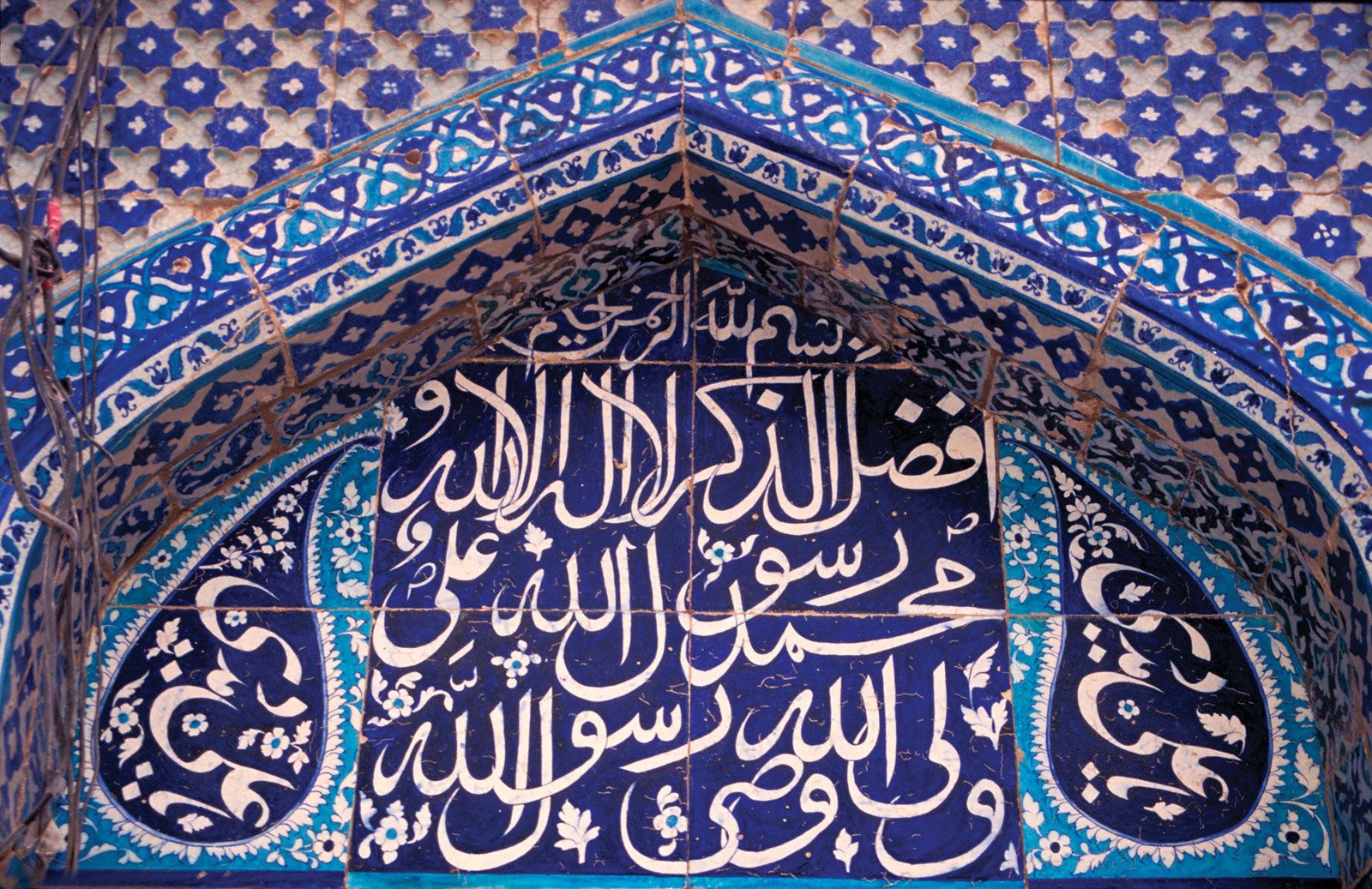
Islam stands on foundations. The Prophet Muhammad ﷺ taught that this religion is built upon five pillars, and the first of them is the greatest and most important of all: the Shahadah, the testimony of faith. Everything else in Islam rests upon it. Prayer, fasting, charity, pilgrimage, good character, lawful living, love of Allah, fear of Allah, hope in Allah, repentance, obedience, and worship all begin here.
A person does not enter Islam by ethnicity, culture, family background, or nationality. A person enters Islam through faith. That faith is expressed in the Shahadah:
Ashhadu an lā ilāha illā Allāh, wa ashhadu anna Muḥammadan rasūl Allāh.
I bear witness that there is no god worthy of worship except Allah, and I bear witness that Muhammad is the Messenger of Allah.
These are not merely words to be spoken. They are not a slogan, a badge, or a ritual formula with no meaning behind it. The Shahadah is a declaration that changes everything. It is a statement of truth, loyalty, worship, identity, and submission. It is the doorway into Islam, but it is also much more than a doorway. It is the center of a Muslim’s life from beginning to end.
This is why the first pillar is not simply “belief in God” in some vague or general sense. Rather, it is a precise testimony. It tells us who Allah is, who we are in relation to Him, what worship means, what truth is, and who we must follow in order to worship Allah correctly.
Islam Begins With Testimony
The Shahadah is called a testimony because it is not casual speech. It is witness-bearing. To say “I bear witness” is to declare with the tongue what one believes in the heart and accepts with conviction. It is a serious statement, not a passing emotion. A witness testifies to what he knows to be true. In the Shahadah, the Muslim testifies that the most important truth in existence is that none has the right to be worshipped except Allah, and that Muhammad ﷺ is His Messenger.
The Prophet ﷺ said:
“Islam is built upon five: testifying that there is no god but Allah and that Muhammad is the Messenger of Allah, establishing prayer, giving zakah, fasting Ramadan, and pilgrimage to the House for whoever is able to do so.”
Ṣaḥīḥ al-Bukhārī, Ṣaḥīḥ Muslim
Notice that the first thing mentioned is the testimony of faith. This is not accidental. No deed is accepted without correct faith. No act of worship is valid if it is built on shirk, disbelief, or rejection of the Messenger ﷺ. The pillars that follow the Shahadah are not independent from it. They grow out of it.
If the Shahadah is sound, then the rest of Islam has a foundation. If it is absent, then the rest collapses.
What the Shahadah Means
The Shahadah has two inseparable halves. Each must be understood correctly.
The first half is:
Lā ilāha illā Allāh
There is no god worthy of worship except Allah.
The second half is:
Muḥammadun rasūl Allāh
Muhammad is the Messenger of Allah.
The first half establishes pure worship of Allah alone. The second half establishes the way that worship must be carried out: through the message brought by Muhammad ﷺ.
This is the pattern of Islam. We do not merely worship sincerely. We worship Allah alone, and we worship Him in the way He has revealed.
Both are necessary.
The Meaning of “There Is No God Worthy of Worship Except Allah”
This phrase is the essence of tawḥīd, the oneness of Allah. But it is often misunderstood, especially in English. It does not simply mean that Allah exists, or that Allah is the greatest being, or that there is one creator among many lesser powers. It means something far more complete.
It means that none deserves worship except Allah.
The phrase begins with negation and ends with affirmation. It first rejects every false deity, every rival, every object of worship, every devotion directed to other than Allah. Then it affirms that worship belongs to Allah alone.
So the Shahadah is not merely a statement about existence. It is a statement about worship, obedience, and devotion.
Allah says:
“That is because Allah is the Truth, and what they call upon besides Him is falsehood, and because Allah is the Most High, the Most Great.”
Qur’an 22:62
And He says:
“Your God is one God. There is no deity except Him, the Most Merciful, the Especially Merciful.”
Qur’an 2:163
To say lā ilāha illā Allāh is to reject every form of worship directed to anyone or anything besides Allah. This includes idols, saints, ancestors, spirits, celestial bodies, shrines, talismans, ideologies, desires, and even the worship of the self. It also means that one does not make ultimate obedience to human beings in opposition to Allah. A Muslim belongs to Allah first and completely.
This is why the Shahadah is liberating. It frees the human being from servitude to created things. The one who worships Allah alone does not bow spiritually to the crowd, the tribe, fashion, fear, political idolatry, celebrity culture, or worldly status. He may live among people, work among people, and deal with people, but his heart belongs to his Lord.
Worship Is Broader Than Many People Think
When some people hear the word “worship,” they think only of rituals such as prayer or fasting. In Islam, worship is broader than that. Worship includes love, fear, hope, trust, reliance, supplication, sacrifice, obedience, repentance, and devotion. All of these belong ultimately to Allah.
So when we say none is worthy of worship but Allah, we are saying that we pray to Allah, call upon Allah, rely upon Allah, seek help from Allah in the deepest sense, fear Allah above all, love Allah above all, and submit to Allah above all.
Allah says:
“And your Lord says, ‘Call upon Me; I will respond to you.’”
Qur’an 40:60
And He says:
“So worship Allah, being sincere to Him in religion.”
Qur’an 39:2
Sincerity is crucial here. A deed may outwardly look religious, but if it is done for other than Allah, or directed to other than Allah, it is corrupted. The Shahadah demands sincerity. The Muslim worships Allah not because of social pressure, family custom, or public image, but because Allah alone is worthy of worship.
The Shahadah Is a Rejection of Shirk
If the heart of the Shahadah is tawḥīd, then its opposite is shirk, associating partners with Allah. Shirk is the gravest sin in Islam because it violates the very foundation of why human beings were created.
Allah says:
“And I did not create jinn and mankind except to worship Me.”
Qur’an 51:56
And He says:
“Indeed, Allah does not forgive association with Him, but He forgives what is less than that for whom He wills.”
Qur’an 4:48
Shirk can take many forms. The most obvious is to worship another being besides Allah, whether an idol, a statue, a saint, or a spirit. But shirk can also enter through acts of the heart. To fear another as one should fear Allah, to direct acts of devotion to the dead, to seek unseen aid from created beings, or to treat a created thing as having divine qualities—these are all violations of the Shahadah.
For this reason, the first pillar is not a small matter. It is not simply a membership statement. It is the dividing line between truth and falsehood, guidance and misguidance, salvation and destruction.
The Meaning of “Muhammad Is the Messenger of Allah”
The second half of the Shahadah is just as essential:
Muḥammadun rasūl Allāh
Muhammad is the Messenger of Allah.
This means that Muhammad ﷺ was not a philosopher, tribal reformer, mere spiritual teacher, or political genius who founded a religion from his own ideas. He was the Messenger of Allah, chosen by Allah, given revelation, and sent as a mercy to mankind.
Allah says:
“Muḥammad is not the father of any one of your men, but he is the Messenger of Allah and the seal of the prophets.”
Qur’an 33:40
And He says:
“Say, [O Muhammad], ‘O mankind, indeed I am the Messenger of Allah to you all.’”
Qur’an 7:158
To testify that Muhammad ﷺ is the Messenger of Allah means to believe that what he conveyed is true, that his commands are to be obeyed, that his guidance is to be followed, and that Allah is not worshipped except in the manner he taught.
This is why the two halves of the Shahadah belong together. A person cannot say, “I believe in God, but I do not need Muhammad.” That is not Islam. Nor can someone say, “I respect Muhammad as a historical figure, but I do not accept his message.” That is not Islam either. Islam requires belief in Allah and acceptance of His Messenger ﷺ.
Allah says:
“Whoever obeys the Messenger has obeyed Allah.”
Qur’an 4:80
And He says:
“But no, by your Lord, they will not truly believe until they make you, [O Muhammad], judge concerning that over which they dispute among themselves and then find within themselves no discomfort from what you have judged and submit in full submission.”
Qur’an 4:65
This is profound. True faith is not just admiration for the Prophet ﷺ. It is submission to his message.
What It Means to Follow the Messenger
Following the Messenger ﷺ means more than speaking respectfully about him. It means believing him, loving him, obeying him, and taking his Sunnah seriously.
Allah says:
“There has certainly been for you in the Messenger of Allah an excellent example for whoever hopes in Allah and the Last Day and remembers Allah often.”
Qur’an 33:21
It also means rejecting the idea that human reason, social trends, or inherited culture can replace revelation. Muslims do not invent religion. We receive it. We learn it from what Allah revealed in the Qur’an and what His Messenger ﷺ taught and embodied.
The Prophet ﷺ said:
“Whoever introduces into this matter of ours that which is not from it, it is rejected.”
Ṣaḥīḥ al-Bukhārī, Ṣaḥīḥ Muslim
So the second half of the Shahadah protects the religion from distortion. Without it, people would claim to worship Allah while inventing their own practices, beliefs, and spiritual systems. With it, the path is clear: worship Allah sincerely and follow the Messenger ﷺ faithfully.
The Shahadah Is Not Mere Speech
A person enters Islam by saying the Shahadah sincerely and truthfully, but the Shahadah is not mere pronunciation. The words must be accompanied by belief, acceptance, and submission.
The Qur’an warns us about hypocrites who say with their tongues what they do not believe in their hearts. Allah says:
“When the hypocrites come to you, [O Muhammad], they say, ‘We testify that you are the Messenger of Allah.’ And Allah knows that you are His Messenger, and Allah testifies that the hypocrites are liars.”
Qur’an 63:1
Their words outwardly resembled the testimony, but their hearts rejected it. So the Shahadah must be real. It must be believed.
At the same time, once a person enters Islam sincerely, growth comes over time. New Muslims often worry that they do not yet know enough, feel enough, or live up to the Shahadah perfectly enough. But Islam does not require instant perfection. It requires sincere faith and a willingness to submit. A person may enter Islam with limited knowledge and then spend the rest of life learning what the Shahadah truly demands.
That is normal. In fact, that is the path of every Muslim.
The Conditions of the Shahadah
Classical scholars often explained that the Shahadah has conditions which protect a person from treating it as empty speech. These conditions are not separate from the testimony but help explain what real testimony requires.
Among the meanings they discussed are knowledge, certainty, acceptance, submission, truthfulness, sincerity, and love.
A person must know what the Shahadah means, at least in its essential sense. He must not treat it as a magical phrase without understanding. He must affirm it with certainty rather than empty doubt. He must accept what it entails rather than reject its demands. He must submit rather than resist. He must say it truthfully rather than hypocritically. He must say it sincerely for Allah rather than for worldly gain. And he must love this testimony and what it calls him to.
Allah says:
“So know that there is no deity except Allah.”
Qur’an 47:19
And He says:
“Only those are the believers who have believed in Allah and His Messenger and then doubt not.”
Qur’an 49:15
And He says:
“But they do not truly believe until they make you, [O Muhammad], judge…”
Qur’an 4:65
These are not abstract ideas. They describe what living faith looks like.
The Shahadah and the Heart
The first pillar is deeply connected to the inner life. It changes the heart before it changes anything else. A person may still look outwardly the same on the day he accepts Islam, but inwardly everything has shifted. The direction of the heart has changed. The center of loyalty has changed. The source of truth has changed. The purpose of life has changed.
The one who truly says the Shahadah no longer belongs to the world in the same way. He may still struggle with sins, habits, fears, ignorance, and weakness, but now he belongs to Allah and is walking toward Allah.
This is why the Shahadah is so powerful. It is not simply a legal entry point into the Muslim community. It is the reorientation of the human soul.
Allah says:
“Indeed, my prayer, my sacrifice, my living and my dying are for Allah, Lord of the worlds. No partner has He. And this I have been commanded, and I am the first of the Muslims.”
Qur’an 6:162–163
That is the spirit of the Shahadah. My life is for Allah. My death is for Allah. My worship is for Allah. My loyalty is for Allah.
Why the Shahadah Comes Before Everything Else
The Makkan period of revelation teaches us something important. Before the laws of fasting, zakah, inheritance, commercial dealings, and many other rulings were fully developed, the early Muslims were taught tawḥīd. They were called to know Allah, reject false gods, affirm revelation, and follow the Messenger ﷺ.
This is because the heart must be built before the structure can stand.
When the Shahadah is strong, obedience becomes meaningful. Prayer is no longer empty motion. Fasting becomes devotion, not dieting. Charity becomes worship, not social generosity alone. Morality becomes obedience to Allah, not merely public respectability.
The first pillar comes first because without it, religion becomes hollow.
The Shahadah and Conversion to Islam
For the person entering Islam, the Shahadah is the threshold. One becomes Muslim by sincerely pronouncing it and believing it. There is no elaborate initiation ritual required. No priesthood is needed. No ethnic transformation is necessary. No cultural imitation is required. The person testifies to the truth, and by that he enters the fold of Islam.
The Prophet ﷺ said to Muʿādh ibn Jabal when sending him to Yemen:
“Let the first thing to which you call them be the testimony that none has the right to be worshipped except Allah…”
Ṣaḥīḥ al-Bukhārī, Ṣaḥīḥ Muslim
The first call is always to tawḥīd.
For new Muslims, this is especially important to understand. Islam does not begin with mastering Arabic vocabulary, wearing a certain ethnicity as if it were religion, or instantly knowing every legal ruling. It begins with the Shahadah. It begins with knowing who Allah is and who His Messenger ﷺ is. Then the rest is learned step by step.
The Shahadah Is Not Said Only Once
A person enters Islam by sincerely testifying to the Shahadah with belief, understanding, and acceptance. That single sincere testimony is enough for a person to become Muslim. Islam does not require a repeated initiation ceremony or some elaborate rite of entry. The servant bears witness that there is no god worthy of worship except Allah and that Muhammad is the Messenger of Allah, and by that testimony he enters the fold of Islam.
But the Shahadah is not something a Muslim says once and then leaves behind. It remains with him for the rest of his life. In fact, part of the wisdom of Islamic worship is that this testimony is constantly renewed on the tongue and in the heart. Every time the Muslim sits in the tashahhud during salah, he again bears witness. In this way, the testimony of faith is not only the entrance into Islam, but part of the rhythm of daily worship.
This carries deep spiritual meaning. Faith is not static. The believer’s heart rises and falls. Strength and weakness come and go. Certainty can be strong in one season and burdened in another. Obedience can increase, and heedlessness can creep in. For that reason, the continual recitation of the Shahadah serves as a renewal of one’s covenant with Allah. It is a reaffirmation of tawḥīd, a reminder of one’s submission, and a strengthening of one’s attachment to the Messenger ﷺ and the path he brought.
The scholars of Islam have long taught that īmān increases and decreases. It grows through obedience, remembrance, knowledge, and worship, and it weakens through sin, neglect, distraction, and forgetfulness. Repeating the Shahadah with presence of heart is therefore not empty repetition. It is one of the ways a Muslim nourishes faith when it begins to fade and reinforces it when he wishes to grow stronger. The believer does not repeat the Shahadah because he is re-entering Islam each time, but because he is renewing his awareness of the truth by which he lives.
This is also one of the mercies of salah itself. Prayer is not merely a sequence of movements. It is a repeated return to Allah, and within it the Shahadah stands near the center as a continual reminder of who Allah is, who we are before Him, and whose guidance we are bound to follow. The Muslim begins life with this testimony, lives upon it daily, repeats it in prayer, teaches it to others, and hopes that it will be the last thing on his tongue before he meets his Lord.
The Shahadah Is Also for Born Muslims
Many people think of the Shahadah only in connection with conversion, but in reality it is for every Muslim every day. A born Muslim does not move past the Shahadah. He must renew it in heart and life constantly.
A person may have been raised in a Muslim household, but if he does not understand the Shahadah, love it, and live by it, then he has not grasped the first pillar deeply. The first pillar is not merely for the beginning of Islam. It is the foundation of all Islamic life.
That is why Muslims repeat it in prayer, in the adhān, in remembrance, in teaching, and at the approach of death. The believer lives upon it and hopes to die upon it.
The Prophet ﷺ said:
“Whoever’s last words are ‘lā ilāha illā Allāh’ will enter Paradise.”
Sunan Abī Dāwūd
This does not mean a person can live however he wants and be saved by a final utterance alone. It means that the blessed end is to die upon the testimony one truly lived by.
The Shahadah and Daily Life
Sometimes people speak of creed as if it were detached from daily life. Islam does not treat it that way. The Shahadah has consequences in everything.
If there is no god worthy of worship except Allah, then the Muslim must pray to Allah alone, seek forgiveness from Allah alone, trust Allah above all, and prefer Allah’s command over social pressure.
If Muhammad ﷺ is the Messenger of Allah, then the Muslim must care about what he taught concerning worship, marriage, honesty, business, modesty, mercy, justice, family, and character.
The Shahadah reshapes priorities. It affects what we love, what we hate, what we fear, what we hope for, how we spend money, what we do in private, what we do in public, and whom we obey.
It also gives dignity and direction. The Muslim knows why he is here. He is not wandering through life inventing meaning for himself. He has been created to worship Allah and to follow the path revealed through His Messenger ﷺ.
Loving the Shahadah
A Muslim should not only understand the Shahadah intellectually. He should love it. He should find peace in it. He should feel its weight and sweetness.
This testimony means that there is one Lord over all things, one ultimate source of truth, one perfect object of worship, one final revelation to guide mankind, one Messenger ﷺ whose example illuminates the path.
There is mercy in that. There is stability in that. There is relief in that. The world is chaotic, but the Shahadah is clear. Human opinions shift, but the Shahadah remains. Cultures rise and fall, but the Shahadah stands unchanged.
The believer returns to it again and again because it is life itself.
Common Misunderstandings About the Shahadah
One common misunderstanding is to think that saying the Shahadah is enough while ignoring its implications. This reduces it to empty speech. Another is to think the Shahadah only means believing in a creator, as if even idolaters did not often admit that. The Qur’an makes clear that many people acknowledged Allah in some sense while still associating partners with Him. The Shahadah demands exclusive worship, not mere vague belief.
Another misunderstanding is to separate Allah from His Messenger ﷺ, as if one can take spiritual inspiration from Islam while refusing revelation, Sunnah, or prophetic authority. That is not the Shahadah.
Another misunderstanding, especially for new Muslims, is to think that accepting the Shahadah requires adopting a foreign ethnicity. It does not. Islam is submission to Allah, not absorption into someone else’s culture. The Shahadah makes you Muslim, not Arabized, not tribalized, not culturally erased.
The First Pillar and the Rest of Islam
Once the Shahadah is in place, the other pillars make sense.
Prayer becomes the regular expression of servitude to Allah alone. Zakah becomes purification and obedience to Allah. Fasting becomes discipline for Allah’s sake. Hajj becomes a journey of devotion to Allah in the path shown by His Messenger ﷺ.
Without the Shahadah, those acts lose their meaning. With the Shahadah, they become acts of living faith.
This is why the first pillar is not merely first in order. It is first in importance. It is the pillar upon which all the others stand.
A Word to the New Muslim
If you are new to Islam, do not think that the Shahadah is something you said once and have now left behind. Return to it often. Learn what it means. Learn about tawḥīd. Learn about the life and Sunnah of the Prophet Muhammad ﷺ. Let your worship, your questions, your growth, and your repentance all be rooted in this first pillar.
You do not need to know everything at once. But you do need to hold tightly to this testimony and let it shape your life.
And if you have not yet entered Islam, know that the door is open. Islam begins with truth spoken sincerely: that none has the right to be worshipped except Allah, and that Muhammad is His Messenger.
Conclusion
The first pillar of Islam is the Shahadah, the testimony that there is no god worthy of worship except Allah and that Muhammad is the Messenger of Allah. It is the foundation of the religion, the beginning of faith, and the truth upon which all worship rests. It calls the human being away from false worship, false loyalties, and false gods, and directs him entirely toward his Creator. It teaches not only whom to worship, but how to worship: by following the Messenger ﷺ.
The Shahadah is the beginning of Islam, but it is also the lifelong heart of Islam. A Muslim lives by it, learns it more deeply over time, struggles to fulfill it sincerely, repeats it in worship, renews it when faith weakens, and hopes to die upon it. The one who understands the Shahadah properly understands that Islam is not merely a label or identity. It is a life of worship, sincerity, obedience, and devotion built on the clearest truth there is: that Allah alone is worthy of worship and that Muhammad ﷺ is His Messenger.
May Allah make our hearts firm upon lā ilāha illā Allāh, Muḥammadun rasūl Allāh, allow us to understand it rightly, live by it truthfully, and meet Him while clinging to it with sincerity. Āmīn.