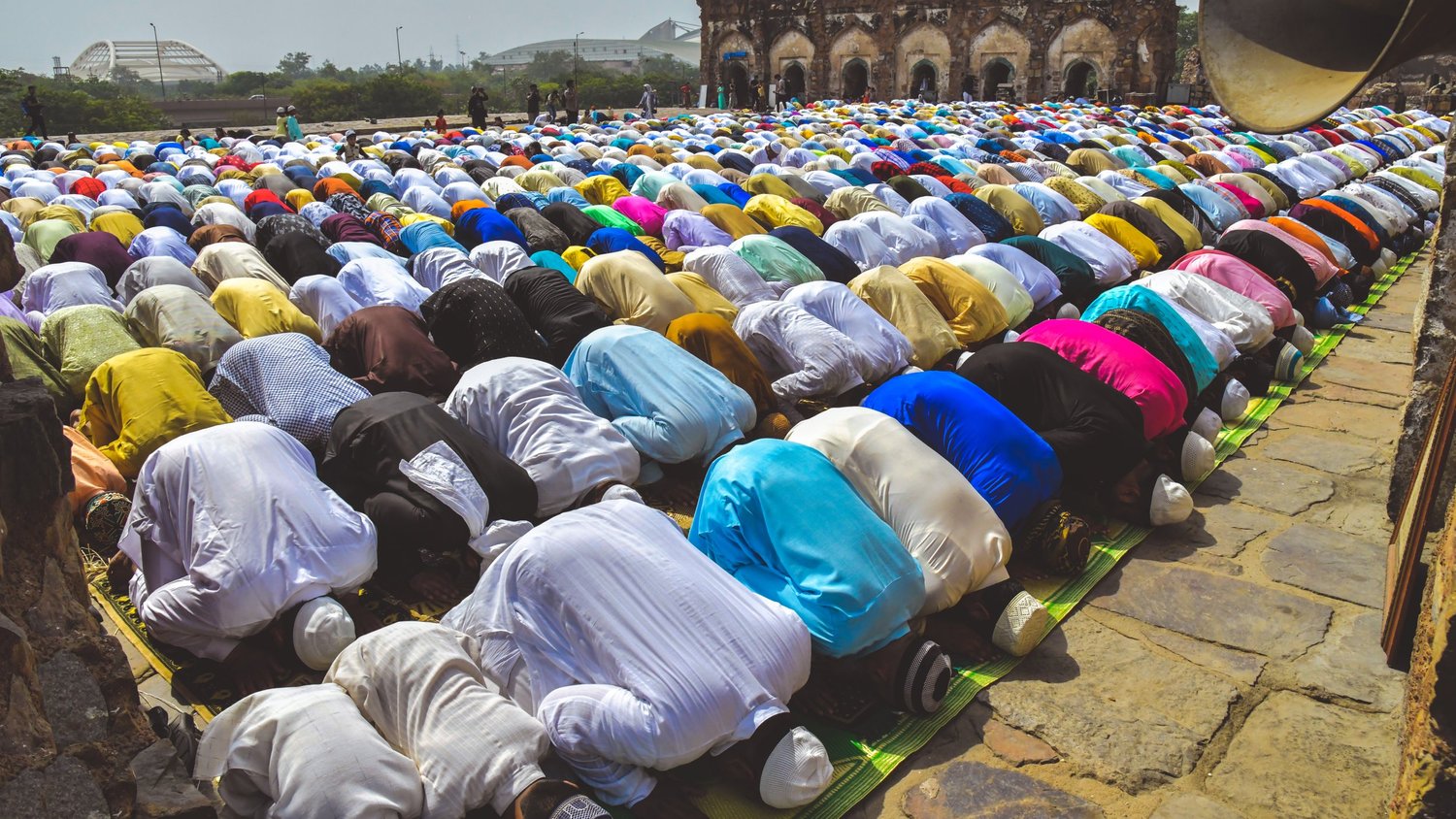
For a person who has entered Islam through the shahādah, the testimony that there is no god but Allah and that Muḥammad is the Messenger of Allah, the next great foundation of the religion is ṣalāh, the five daily prayers. If the shahādah is the doorway into Islam, ṣalāh is the structure that begins to shape everything that comes after it. It is one of the clearest outward signs that faith has moved from the tongue into the life. It is the daily act by which a Muslim repeatedly turns away from distraction, ego, desire, and the pressures of the world in order to stand before Allah.
The Prophet ﷺ said:
“Islam is built upon five: testifying that there is no god but Allah and that Muḥammad is the Messenger of Allah, establishing the prayer, giving zakāh, fasting Ramaḍān, and pilgrimage to the House for whoever is able.”
This ḥadīth is one of the most important summaries of Islam. It tells us not only what the pillars are, but how essential they are. A building cannot stand without its supports. Likewise, Islam is not merely a set of ideas or a spiritual identity. It is a life built upon revealed foundations. Among those foundations, prayer stands immediately after the testimony of faith.
And the wording matters. The Prophet ﷺ did not merely say “prayer.” He said establishing the prayer. Islam is not calling a person to occasional religious feelings, or to remembering God only in hardship, or to speaking about faith without structuring life around it. It is calling the believer to build a life in which worship is regular, disciplined, reverent, and rooted in obedience.
This is why ṣalāh is the second pillar of Islam. It is not an optional devotion for the especially pious. It is not an advanced practice reserved for scholars or saints. It is one of the defining obligations of every Muslim. It is one of the greatest acts of worship in the religion, one of the strongest protectors of faith, and one of the greatest mercies Allah has given His servants.
What Ṣalāh Is
Ṣalāh is the formal ritual prayer prescribed by Allah for the believers. It consists of specific prayers performed at specific times every day and night. These prayers include standing, recitation from the Qur’an, bowing, standing again, prostration, sitting, remembrance of Allah, testimony of faith, and supplication. They are performed in a state of ritual purity, facing the qiblah, the direction of the Kaʿbah in Makkah.
This is important to understand because in English the word “prayer” can mean many things. It can mean talking to God generally. It can mean a request. It can mean private devotion. In Islam, however, ṣalāh is a particular revealed act of worship. It is not merely spontaneous speech from the heart, though Islam certainly encourages that in the form of duʿāʾ. Ṣalāh is a prescribed form of worship with conditions, timings, recitations, and movements taught by Allah and demonstrated by His Messenger ﷺ.
The prayer engages the entire person. The tongue recites. The mind attends. The heart turns. The body submits. In a world that constantly encourages distraction, self-importance, and restlessness, ṣalāh trains the believer in humility, reverence, order, and remembrance. The Muslim stands when Allah has commanded him to stand. He bows when Allah has commanded him to bow. He places his face on the ground before his Lord, declaring by his body as well as his words that Allah is the Most High and that he is His servant.
So ṣalāh is not merely “a ritual.” It is a daily enactment of servitude, a repeated embodiment of tawḥīd, and one of the greatest schools of spiritual discipline in Islam.
Why Ṣalāh Comes Immediately After the Shahādah
The shahādah brings a person into Islam, but ṣalāh begins to teach him how to live as a Muslim. This is why the second pillar follows the first so naturally. To testify that there is no god but Allah is to affirm that Allah alone is worthy of worship. To testify that Muḥammad ﷺ is His Messenger is to accept that worship must be learned from him. Prayer is where both truths begin to take practical form.
Allah says:
“Indeed, I am Allah. There is no deity except Me, so worship Me and establish prayer for My remembrance.”
(Qur’an 20:14)
This verse is extraordinarily rich. Allah first declares His oneness, then commands worship, and then specifically commands the establishment of prayer. That is the whole structure of Islam in miniature. Theology leads to worship. Belief leads to obedience. Recognition of the Lord leads to standing before Him in prayer.
Allah also says:
“Recite what has been revealed to you of the Book and establish prayer. Indeed, prayer restrains from shameful and unjust deeds. And the remembrance of Allah is greater.”
(Qur’an 29:45)
Prayer is therefore not an empty ceremony. It does something. It restrains, disciplines, recalls, and protects. It interrupts the momentum of heedlessness. It calls the believer back from sin and forgetfulness. It places Allah again at the center of attention.
The Qur’an repeatedly joins prayer with other major acts of faith and obedience. Again and again Allah says:
“Establish prayer and give zakāh.”
This repeated pairing shows that prayer is not peripheral. It belongs to the core of Muslim life. A Muslim community that prays is visibly ordered around Allah. A Muslim individual who prays is repeatedly declaring, through action, that his life belongs to Allah.
The Honor With Which Prayer Was Given
The obligation of the five daily prayers was given to the Prophet ﷺ in connection with the Night Journey and Ascension. This alone sets prayer apart. It was not given casually, and it was not treated as a minor matter. The Messenger of Allah ﷺ was first given fifty prayers, and then, by the mercy of Allah, they were reduced to five while remaining equal in reward to fifty.
This teaches several deep lessons. It teaches the greatness of prayer. It teaches the mercy of Allah. And it teaches that even the obligations of Islam are not random burdens but wise and measured acts of divine guidance.
Five daily prayers may sound demanding to someone outside Islam or newly entering it. But when seen rightly, they are not excessive. They are the merciful structure by which Allah keeps the heart alive. They are enough to discipline a life, enough to repeatedly return the soul to remembrance, and enough to distinguish a life of heedlessness from a life of worship.
Allah did not leave the believer wandering through the day with no spiritual anchor. He gave him appointed times of return.
The Five Daily Prayers
The second pillar of Islam is specifically the establishment of five daily prayers at their appointed times. These prayers are Fajr, Ẓuhr, ʿAṣr, Maghrib, and ʿIshāʾ. Together they shape the believer’s day from before sunrise until night.
Fajr: Beginning the Day With Allah
Fajr is the dawn prayer, performed before sunrise. It begins the day not with news, work, emails, conversation, or entertainment, but with worship. There is something deeply transformative about leaving sleep in order to stand before Allah while much of the world remains quiet. Fajr tests sincerity because it is often difficult. It is easier to claim devotion than to rise from sleep for the sake of Allah.
Allah says:
“And establish prayer at the two ends of the day and at the approach of the night.”
(Qur’an 11:114)
The beginning of the day is not meant to belong to heedlessness. It is meant to belong to remembrance.
The Prophet ﷺ also praised the special worth of Fajr and ʿIshāʾ in congregation, indicating their importance and the challenge they present. A believer who protects Fajr is protecting more than one prayer; he is setting the tone for his whole day.
Ẓuhr: Worship in the Middle of the World’s Noise
Ẓuhr comes after the sun has passed its highest point in the sky. It breaks into the middle of the day, often at a time when work and responsibilities are fully underway. This is part of its wisdom. It interrupts the illusion that our tasks, deadlines, and ambitions are ultimate. The Muslim leaves off from worldly preoccupation and stands before his Lord.
This is one of the great lessons of ṣalāh: life must bend toward Allah, not Allah toward our convenience. The prayer is not an interruption of real life. It is one of the truest parts of life.
ʿAṣr: Guarding Faith as the Day Declines
ʿAṣr comes in the late afternoon, when many people are tired, distracted, or mentally scattered. It is often one of the easiest prayers to neglect if a person becomes careless, and precisely for that reason it is one of the prayers heavily emphasized in the revealed texts.
Allah says:
“Guard strictly the prayers, especially the middle prayer, and stand before Allah in devotion.”
(Qur’an 2:238)
Many scholars identified the “middle prayer” as ʿAṣr, and the Sunnah contains stern warnings about neglecting it. The Prophet ﷺ said:
“Whoever misses the ʿAṣr prayer, it is as though he has lost his family and wealth.”
This shows the seriousness with which the believer must treat the prayer. Islam is not content with vague goodwill toward worship. It calls for guarding the prayer carefully.
Maghrib: Returning at the Setting of the Sun
Maghrib begins just after sunset. It marks the transition from day to night, and Islam teaches the believer to mark that transition with remembrance. The setting sun is one of the signs of Allah, and the faithful response to His signs is not heedlessness but worship.
Maghrib also often becomes one of the most natural points of family prayer and household remembrance. The day closes, people gather, and the believer returns again to his Lord.
ʿIshāʾ: Ending the Day in Worship
ʿIshāʾ is the night prayer. It completes the cycle of the day. Before sleep overtakes us and another day vanishes forever, the Muslim stands before Allah once more. He began with worship and he ends with worship.
There is a deep mercy in this pattern. The believer does not begin his day alone, nor does he end it alone. He returns again and again to Allah until the day is complete.
Prayer Has Appointed Times
Allah says:
“Indeed, prayer has been decreed upon the believers at appointed times.”
(Qur’an 4:103)
This verse is one of the keys to understanding ṣalāh. Prayer is not only about content but also about timing. The believer is not merely told to pray in some undefined way whenever convenient. He is taught to pray within prescribed windows of time.
This teaches discipline. It also teaches worldview. Time belongs to Allah. Our schedules do not rule over Him; He rules over our schedules. The person who obeys the prayer times is learning to reorder life around divine command rather than around mood, desire, or convenience.
Modern society often imagines freedom as the ability to structure life around personal preference. Islam teaches that true freedom lies in being liberated from slavery to the self. The one who cannot detach himself from sleep, work, entertainment, stress, or distraction in order to obey Allah is not free. The one who can leave all of that to stand before his Lord has begun to taste real freedom.
This is one reason the prayer becomes easier and sweeter with time. At first it may feel like an interruption. Later the believer realizes it is a rescue. The Prophet ﷺ said to Bilāl:
“Give us comfort by it, O Bilāl.”
Prayer is not only duty. It is comfort, relief, orientation, and return.
The Centrality of Prayer in the Qur’an
The Qur’an speaks about prayer constantly. It commands it, praises those who establish it, describes it as a mark of the believers, and warns against neglecting it.
Allah says:
“Successful indeed are the believers, those who are humble in their prayer.”
(Qur’an 23:1–2)
Success in Islam is not defined first by wealth, recognition, achievement, or worldly advancement. It is defined by faith and by the worship that flows from faith.
Allah also says:
“And establish prayer and give zakāh and bow with those who bow.”
(Qur’an 2:43)
And He says:
“And they were not commanded except to worship Allah, being sincere to Him in religion, inclining to truth, and to establish prayer and give zakāh. And that is the correct religion.”
(Qur’an 98:5)
Prayer is therefore not a secondary devotional habit. It belongs to the straight path of sincere religion itself.
The Qur’an also gives severe warnings regarding its neglect. Allah says:
“Then there came after them successors who neglected prayer and followed desires, so they are going to meet evil.”
(Qur’an 19:59)
Notice the link between neglecting prayer and following desires. This is one of the most penetrating descriptions in the Qur’an. When prayer weakens, the soul becomes more vulnerable to the pull of appetite, ego, laziness, temptation, and moral drift.
Allah also says of the people of the Fire:
“What has caused you to enter Saqar?” They will say, “We were not of those who prayed.”
(Qur’an 74:42–43)
This is among the starkest warnings in the Qur’an concerning the neglect of prayer.
The Seriousness of Prayer in the Sunnah
The Sunnah speaks with equally strong force. The Prophet ﷺ did not treat prayer as a minor issue, and neither did the Companions after him.
He ﷺ said:
“The covenant between us and them is the prayer. Whoever abandons it has disbelieved.”
He also said:
“Between a man and shirk and kufr is the abandonment of prayer.”
And he said:
“The first matter that the slave will be brought to account for on the Day of Resurrection is the prayer. If it is sound, then the rest of his deeds will be sound. And if it is corrupt, then the rest of his deeds will be corrupt.”
These narrations explain why scholars have always treated prayer with such gravity. Even where they differed on some legal details regarding the one who abandons prayer, they did not differ on its immense importance or on the danger of treating it lightly.
For the ordinary Muslim, the message is plain enough: never take ṣalāh casually. A life in which prayer slips away easily is a spiritually dangerous life.
What Prayer Does to the Soul
One of the great mistakes people make is to think of prayer only as obligation and not as transformation. But the Qur’an and Sunnah show that prayer is a means by which Allah forms the believer inwardly.
First, prayer anchors tawḥīd. In every rakʿah the believer recites Sūrat al-Fātiḥah and says:
“You alone we worship, and You alone we ask for help.”
(Qur’an 1:5)
This is not a passing phrase. It is a repeated renewal of faith, reliance, and servitude. The heart is constantly being brought back to the truth that Allah alone is the One worshipped and the One relied upon.
Second, prayer teaches humility. A person may speak humble words, but in ṣalāh he physically enacts humility. He bows. He prostrates. He lowers himself before the Lord of the worlds. Arrogance cannot flourish easily in a soul that sincerely prostrates.
Third, prayer interrupts heedlessness. Human beings drift. They become wrapped up in work, desires, fears, anger, ambitions, resentments, pleasures, and anxieties. Prayer cuts through that drift. Five times a day the believer is called back.
Fourth, prayer trains discipline. A person learns to obey when tired, obey when busy, obey when lazy, and obey when the world is noisy. This is one of the hidden powers of ṣalāh. It strengthens the entire moral structure of the believer.
Fifth, prayer restrains sin. Allah explicitly says:
“Indeed, prayer restrains from shameful and unjust deeds.”
(Qur’an 29:45)
This does not mean every praying person instantly becomes righteous in all matters, but sincere prayer exerts a moral force. It keeps conscience alive. It makes complete surrender to heedlessness harder.
Sixth, prayer creates closeness to Allah. The Prophet ﷺ said:
“The closest that a servant is to his Lord is while he is prostrating, so increase supplication.”
This is one of the most beautiful truths in the religion. The posture of greatest lowering is the moment of greatest nearness.
Ṣalāh, Duʿāʾ, and Dhikr
For many new Muslims, it is important to distinguish between three related but different acts: ṣalāh, duʿāʾ, and dhikr.
Ṣalāh is the formal ritual prayer performed in the prescribed way at prescribed times.
Duʿāʾ is supplication. It is calling upon Allah, asking Him, praising Him, seeking His help, mercy, forgiveness, protection, healing, or provision. Duʿāʾ can be made at any time and in any language.
Dhikr is remembrance of Allah. It includes glorifying Him, praising Him, magnifying Him, seeking forgiveness, and remembering Him through revealed phrases and general remembrance.
These three overlap, but they are not identical. Ṣalāh contains dhikr and often includes duʿāʾ. But the five daily prayers are not replaced by simply “talking to God.” A Muslim should have all three: formal prayer, ongoing remembrance, and personal supplication.
The Conditions of Prayer
Because ṣalāh is a formal act of worship, it has conditions that must be fulfilled. Even when one is still learning the details, the basic framework matters. The believer should be in a state of ritual purity through wuḍūʾ unless ghusl is required. His body, clothing, and place of prayer should be free from impurity. He should cover the ʿawrah properly. The prayer should be performed within its time. He should face the qiblah. And he should intend in his heart the prayer he is performing.
These conditions teach reverence. A Muslim does not stumble carelessly into prayer. He prepares for it. He washes. He dresses appropriately. He stands in the right direction. He comes before Allah with readiness. Even this preparation becomes worship.
Allah says:
“O you who believe, when you rise for prayer, wash your faces and your forearms to the elbows and wipe over your heads and wash your feet to the ankles.”
(Qur’an 5:6)
So even purification is part of the divine training of the believer.
The Prayer Must Be Learned From the Prophet ﷺ
The Prophet ﷺ said:
“Pray as you have seen me pray.”
This short statement establishes one of the most important principles in Islam: acts of worship are not invented by personal preference. We do not design prayer to match our own tastes. We do not create our own gestures, timings, or liturgies. We worship Allah as He legislated, through the guidance of His Messenger ﷺ.
This protects the religion from distortion. It also humbles the ego. The servant is not the author of worship. He is its learner and practitioner.
But this should not lead a believer to think of prayer as lifeless formality. Its outward form is full of meaning. Standing reflects attentiveness and readiness. Bowing reflects reverence. Prostration reflects humility and nearness. Sitting for the tashahhud includes testimony, blessing upon the Prophet ﷺ, and supplication. Every position has spiritual weight.
Khushūʿ: The Heart of Prayer
If the outward form is essential, so is the inward state. One of the most important Qur’anic descriptions of successful believers is that they are humble in their prayer.
Allah says:
“Successful indeed are the believers, those who are humble in their prayer.”
(Qur’an 23:1–2)
This humility, attentiveness, softness, and reverent focus is known as khushūʿ. It does not mean that the mind never wanders. Human beings are weak. Thoughts intrude. Attention drifts. Rather, khushūʿ means that the believer approaches prayer seriously, fights distraction, slows himself down, reflects on what he is saying, and remembers before whom he stands.
One of the most beneficial things a Muslim can do for khushūʿ is to learn the meanings of the recitations. A person who knows what he is saying in al-Fātiḥah, in rukūʿ, in sujūd, and in the tashahhud will usually pray with greater presence than someone repeating sounds without understanding.
At the same time, it is important not to fall into a trap. A person should not delay or avoid prayer because he does not “feel spiritual enough.” The cure for weak prayer is continued prayer, repentance, and learning. The cure for distraction is struggle, not abandonment.
The Congregational Dimension of Prayer
Prayer is both personal and communal. A Muslim can pray alone, and often does. But Islam also strongly emphasizes prayer in congregation, especially for men when able. The masjid is not a mere meeting hall. It is a house of Allah, a place of remembrance, prostration, learning, brotherhood, and ordered devotion.
Congregational prayer teaches equality before Allah. In the rows, the wealthy stand beside the poor, the educated beside the uneducated, the powerful beside the weak, the old beside the young. All face one qiblah and worship one Lord. It is one of the most visible and practical demonstrations of Muslim unity.
The call to prayer, the adhan, itself has immense meaning. It declares Allah’s greatness over the noise of the world and summons the believers to success through worship. The one who responds is choosing divine remembrance over heedlessness.
Even when praying alone, however, the believer remains tied to the wider Ummah. Across the earth, millions are standing, bowing, and prostrating in the same revealed pattern.
Why Prayer Can Feel Difficult
Especially for new Muslims, ṣalāh can seem overwhelming at first. There are prayer times to learn, wuḍūʾ to learn, Arabic recitations to memorize, physical positions to remember, and a whole new rhythm of life to establish. This can feel like a lot.
But difficulty at the beginning should not be mistaken for impossibility. Everything meaningful requires effort. The nafs resists discipline. Shayṭān seeks to keep a servant away from prayer. Modern life is built around distraction and constant interruption. All of this makes prayer a struggle at first for many people.
That struggle is normal. The answer is not despair. The answer is persistence. Every Muslim who now prays comfortably once had to learn. Many began awkwardly. Many forgot words. Many were inconsistent before becoming steady. What matters is not instant perfection. What matters is sincere striving and gradual establishment.
How a New Muslim Begins Learning Ṣalāh Step by Step
A new Muslim should approach prayer with seriousness, but not panic. The best way to learn is to build piece by piece and to begin praying as soon as possible rather than waiting for perfect mastery.
Learn the Names and Times of the Five Prayers
The first practical step is to learn the basic structure of the day: Fajr before sunrise, Ẓuhr after midday, ʿAṣr in the afternoon, Maghrib at sunset, and ʿIshāʾ at night. A reliable prayer app or local masjid timetable is extremely helpful. Before a person can guard the prayers, he must know when they begin.
Learn Wuḍūʾ Properly
Before standing for prayer, learn the basic ablution. Allah Himself taught this in the Qur’an:
“O you who believe, when you rise for prayer, wash your faces and your forearms to the elbows and wipe over your heads and wash your feet to the ankles.”
(Qur’an 5:6)
Wuḍūʾ is not just a technical prerequisite. It is also an act of purification and readiness. The Prophet ﷺ taught that sins fall away from the servant with the water as he purifies himself.
Learn the Basic Shape of One Rakʿah
A new Muslim should then learn the simple physical pattern of one unit of prayer: standing, recitation, bowing, rising, prostrating, sitting, and prostrating again. At first, the overall shape matters more than mastering every detail. Once the body knows the structure, the recitations become easier to place.
Learn Sūrat al-Fātiḥah First
The most important recitation to learn is Sūrat al-Fātiḥah, because it is central to every prayer. The Prophet ﷺ said:
“There is no prayer for the one who does not recite the Opening of the Book.”
This surah is not only the opening of the Qur’an but the heart of the prayer. It teaches praise, servitude, reliance, and the request for guidance. A new Muslim should learn it carefully, with meaning.
Learn the Essential Phrases of Prayer
Along with al-Fātiḥah, a new Muslim should gradually learn the basic phrases: Allāhu akbar, what is said in bowing and prostration, and the tashahhud. These can be learned step by step. Pronunciation may take time, but effort matters greatly.
Begin Praying Immediately While Learning
One of the biggest mistakes is to postpone prayer until one feels fully ready. That often becomes a doorway for Shayṭān. A new Muslim should begin praying immediately with what he knows and continue improving. Learning happens in the doing. Imperfect prayer offered sincerely while learning is far better than endless delay.
Build Consistency Before Chasing Perfection
At the beginning, consistency is more important than polish. Get used to stopping for prayer. Get used to structuring the day around it. Get used to washing, facing the qiblah, and standing before Allah. Once the prayer becomes part of life, refinement can continue more naturally.
Learn With Other Muslims if Possible
Praying with knowledgeable Muslims, visiting the masjid, and receiving gentle correction can be one of the fastest ways to learn. Islam is lived in community, and prayer is easier to establish when one is surrounded by people who take it seriously.
Learn the Meanings of the Recitations
As soon as possible, a new Muslim should learn what he is actually saying in prayer. Understanding transforms the experience. It moves prayer from memorized sound into conscious worship.
Ask Allah for Help
No one establishes the prayer by his own strength alone. The believer must ask Allah constantly for help, sincerity, concentration, and consistency. One of the beautiful supplications taught in the Sunnah is:
“O Allah, help me to remember You, thank You, and worship You well.”
This is one of the best prayers for a new Muslim and for every Muslim.
Practical Advice for New Muslims Struggling With Prayer
A new Muslim should know that struggle is expected and does not mean failure. The goal is steady faithfulness. Some practical habits make an enormous difference. Keep prayer times visible. Pray early in the prayer window rather than late. Prepare a clean place in the home for prayer. Learn one part at a time instead of trying to master everything at once. Stay connected to a mosque or trustworthy Muslim community. And never let one missed prayer become an excuse to miss the next one.
Shame is one of Shayṭān’s tools. He wants the struggling believer to think, “I keep messing up, so there is no point.” Islam teaches the opposite. Return. Repent. Pray again. Learn again. Stand before Allah again. The one who keeps returning is on the path of mercy.
Prayer as Ongoing Purification
The five daily prayers are one of Allah’s great means of renewing the servant. No believer lives flawlessly between one prayer and the next. We become distracted, impatient, careless, proud, angry, or heedless. Then the next prayer comes and Allah opens the door again.
The Prophet ﷺ said:
“What do you think if there was a river at the door of one of you in which he bathed five times each day—would any dirt remain on him?”
They said, “No dirt would remain on him.”
He said, “That is the likeness of the five daily prayers by which Allah erases sins.”
This image is one of the most comforting in the Sunnah. The prayers wash the believer again and again. They do not make sin meaningless, nor do they erase the need for repentance, but they are a mercy by which Allah continually cleanses and restores the heart.
The Balance of Law and Love
Ṣalāh must be understood with balance. It is an obligation. It has rules, pillars, conditions, and timings. These matter. Islam is not casual about worship. But prayer is also love, reverence, gratitude, dependence, hope, fear, healing, and return.
If a person sees prayer only as law, he may become mechanical and cold. If he sees it only as emotion, he may pray only when feelings are strong. Islam joins both. The believer obeys Allah because Allah commanded, and he grows to love prayer because in it he finds remembrance, closeness, and life.
The healthiest Muslim heart does not choose between obedience and love. It prays with both.
FAQ for New Muslims About Ṣalāh
Do I have to know everything before I start praying?
No. You should start praying immediately while learning. Learn step by step and improve steadily.
What if my Arabic is not good yet?
Keep learning and keep praying. Pronunciation improves over time. Sincere effort matters greatly, especially for a new Muslim.
What if I miss a prayer?
Repent to Allah and return immediately. Do not let one missed prayer become the reason you abandon the next one. There are rules about missed prayer and how to make them up, but for the beginner, for the new Muslim, simply do your best.
Can I make duʿāʾ in English?
Yes, personal supplication can be made in your own language. Ṣalāh itself has a prescribed form, but duʿāʾ outside that is open and personal.
What is the most important thing to learn first?
Learn the prayer times, wuḍūʾ, the basic shape of the prayer, and Sūrat al-Fātiḥah first. Then keep building.
Why is prayer so important?
Because it is one of the greatest acts of worship in Islam, one of the clearest signs of faith, one of the strongest protectors against heedlessness and sin, and one of the first things a person will be questioned about on the Day of Resurrection.
Conclusion: The Pillar That Holds the Day Together
The second pillar of Islam is ṣalāh, the five daily prayers, and it is difficult to overstate its importance. It is the daily expression of tawḥīd, the repeated enactment of servitude, the ordering of life around Allah, the cleansing of the heart through repeated return, and one of the greatest protections a believer has against heedlessness and moral drift.
Allah did not command prayer because He needs it. He commanded it because we need it. We need to remember Him. We need to be humbled. We need to be recalled when we drift. We need to be washed from the dust of daily sin. We need to learn, day after day, that Allah is greater than sleep, work, comfort, ambition, entertainment, fear, and desire.
The Muslim begins with the shahādah, but he does not stop there. He establishes the prayer. He learns it, guards it, struggles to improve it, and keeps returning to it. Over time he discovers that prayer is not merely one duty among others. It is one of the great gifts by which Allah holds the believer’s life together.
The one who protects his ṣalāh is, by Allah’s permission, protecting his faith.