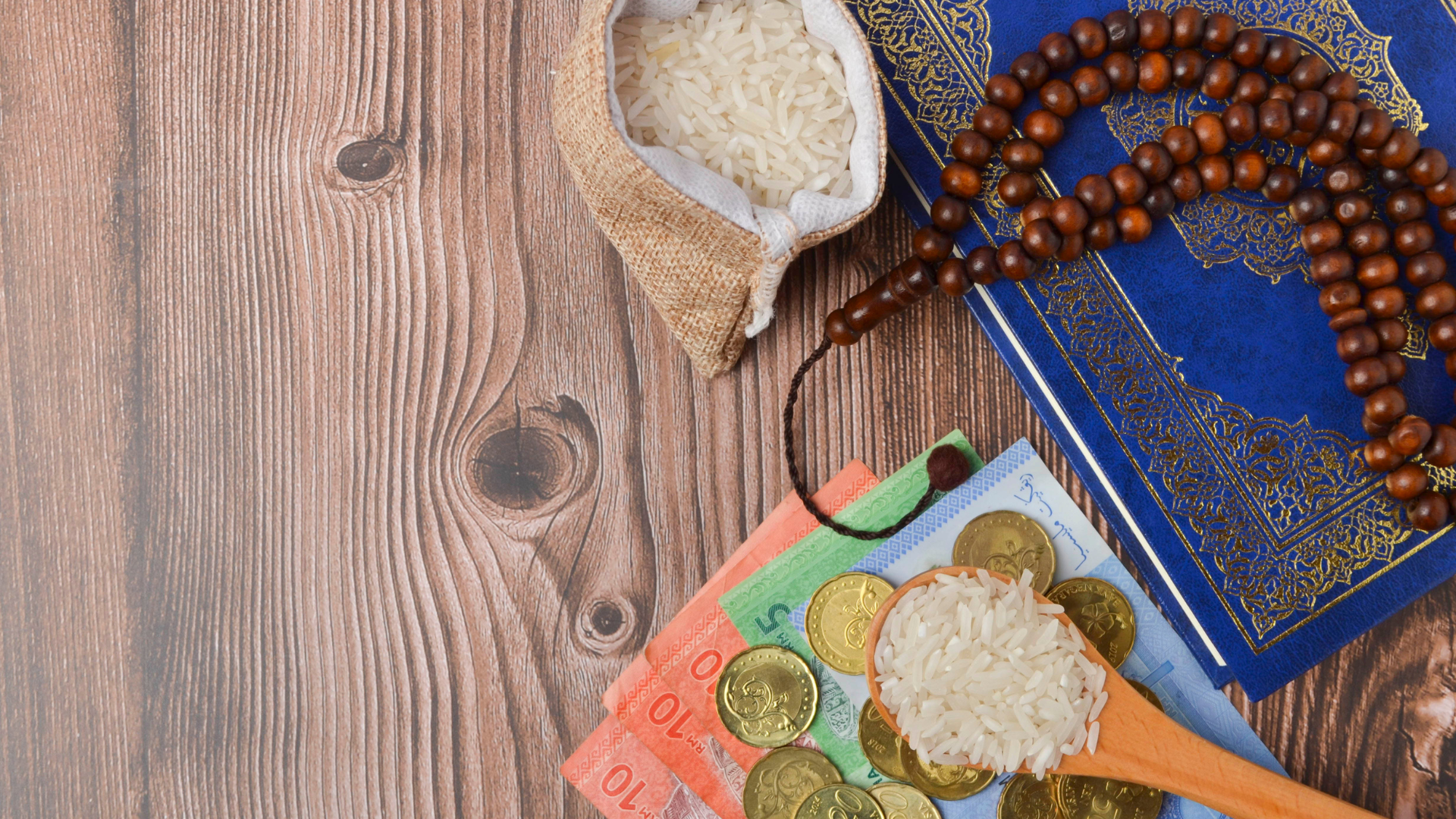
Purification, Worship, and Care for the Ummah
Islam is not only a religion of belief. It is a religion of worship, obedience, purification, and mercy. It teaches the Muslim how to stand before Allah in prayer, how to fast, how to speak, how to treat other people, and how to use wealth. For this reason, the pillars of Islam are not random religious acts scattered across life. They form a structure. They shape the believer inwardly and outwardly.
After the testimony of faith and the establishment of ṣalāh comes the third pillar of Islam: zakāh. Many people think of zakāh simply as charity, but zakāh is more precise than that. It is not merely generosity in a general sense. It is a defined act of worship, an obligation upon eligible Muslims, and a right that the poor have over the wealth of the wealthy by the command of Allah.
Zakāh teaches that wealth is a trust. It teaches that a Muslim does not own anything in an absolute sense. Everything belongs to Allah, and He gives and withholds as He wills. The believer is only a steward. When zakāh is paid sincerely, it purifies wealth, disciplines the soul, relieves need, strengthens the bonds of the Muslim community, and reminds the giver that his provision came from Allah in the first place.
For a new Muslim, zakāh can seem confusing at first. Questions come quickly. What exactly is zakāh? Is it the same as ordinary charity? Does every Muslim have to pay it? How much is it? When is it due? What if someone does not have much money? These are important questions, and the answers matter because zakāh is one of the pillars of Islam, not a side issue.
This article will explain what zakāh is, why it matters, what the Qur’an and Sunnah say about it, who must pay it, how it generally works, and how a new Muslim can begin learning to practice it correctly.
What Is Zakāh?
The Arabic word zakāh carries the meanings of purification, growth, and blessing. That is deeply fitting, because zakāh purifies the one who gives, purifies wealth from greed and selfishness, and becomes a means through which Allah places blessing in what remains.
Allah says:
“Take from their wealth a charity by which you purify them and cause them increase, and invoke blessings upon them. Indeed, your invocations are reassurance for them. And Allah is Hearing and Knowing.”
(Qur’an 9:103)
Zakāh, then, is not merely a social program. It is worship. It is not just financial redistribution. It is obedience to Allah. It is not simply kindness, though kindness is part of it. It is a commanded duty with spiritual meaning.
In the famous hadith of Jibrīl, when the Prophet ﷺ was asked about Islam, he said:
“Islam is to testify that there is no god but Allah and that Muhammad is the Messenger of Allah, to establish prayer, to give zakāh, to fast Ramadan, and to make pilgrimage to the House if you are able to do so.”
(Ṣaḥīḥ Muslim)
This places zakāh among the central outward acts that define the life of a Muslim community.
Zakāh Is Not the Same as General Charity
One of the first things a new Muslim should understand is that zakāh is not identical to general charity, even though both are good and both involve giving.
In Islam, there is a broad category of voluntary charity called ṣadaqah. Ṣadaqah can be money, food, clothing, a kind word, helping someone carry a burden, or even smiling at your brother. It is wide and open. It may be given at any time in any amount.
Zakāh is different. Zakāh is:
- obligatory, not optional
- due only on certain kinds of wealth
- required only when certain conditions are met
- calculated according to defined rules
- distributed to specific categories named by Allah
So every zakāh payment is a kind of charity, but not every act of charity is zakāh.
This distinction matters. A Muslim cannot say, “I gave some random amount away this year, so that counts as my zakāh,” unless what he gave actually fulfilled the conditions of zakāh. Voluntary generosity is wonderful, but it does not automatically replace an obligation.
Zakāh in the Qur’an
Zakāh is mentioned throughout the Qur’an, often together with ṣalāh. This pairing is not accidental. Prayer establishes the believer’s relationship with Allah in direct worship. Zakāh establishes obedience to Allah in the use of wealth and concern for others. Together, they form a pattern of devotion that is both spiritual and practical.
Allah says:
“And establish prayer and give zakāh, and whatever good you put forward for yourselves—you will find it with Allah. Indeed, Allah of what you do is Seeing.”
(Qur’an 2:110)
And He says:
“And establish prayer and give zakāh and bow with those who bow.”
(Qur’an 2:43)
And He says:
“They were not commanded except to worship Allah, being sincere to Him in religion, inclining to truth, and to establish prayer and give zakāh. And that is the correct religion.”
(Qur’an 98:5)
The Qur’an also makes clear that the righteous care about the needy and do not cling selfishly to wealth. Allah says:
“And in their wealth there was a known right for the beggar and the deprived.”
(Qur’an 70:24–25)
This is a powerful phrase: a known right. The poor do not stand before the wealthy merely hoping for scraps of kindness. In Islam, Allah has placed a right for them in the wealth of those whom He has enriched.
Zakāh in the Sunnah
The Sunnah of the Prophet ﷺ reinforces the obligation and seriousness of zakāh.
Ibn ʿUmar reported that the Messenger of Allah ﷺ said:
“Islam has been built upon five: the testimony that there is no god but Allah and that Muhammad is the Messenger of Allah, establishing prayer, giving zakāh, pilgrimage to the House, and fasting Ramadan.”
(Ṣaḥīḥ al-Bukhārī; Ṣaḥīḥ Muslim)
When the Prophet ﷺ sent Muʿādh ibn Jabal to Yemen, he instructed him to teach the people the essentials of Islam step by step. He said:
“Inform them that Allah has made obligatory upon them five prayers in every day and night. If they obey you in that, then inform them that Allah has made obligatory upon them a charity to be taken from their rich and given to their poor.”
(Ṣaḥīḥ al-Bukhārī; Ṣaḥīḥ Muslim)
This hadith is especially important because it defines something essential about zakāh: it is taken from the rich and given to the poor. It is not merely symbolic. It serves a real purpose in the community.
The Prophet ﷺ also warned against hoarding wealth and failing to fulfill this obligation. Severe warnings appear in the revealed texts for those who refuse zakāh out of arrogance, greed, or rebellion against Allah’s command.
Allah says:
“And those who hoard gold and silver and do not spend them in the way of Allah—give them tidings of a painful punishment. On the Day when it will be heated in the Fire of Hell and branded upon their foreheads, their sides, and their backs, it will be said: ‘This is what you hoarded for yourselves, so taste what you used to hoard.’”
(Qur’an 9:34–35)
The point is not that wealth itself is evil. It is that wealth becomes a trial when it is hoarded, worshiped, or withheld from the rights Allah has placed in it.
Why Zakāh Matters Spiritually
Zakāh is easy to reduce to math, percentages, assets, and due dates. Those things matter, but they are not the heart of it. The heart of zakāh is submission.
Human beings are naturally attached to wealth. We fear losing it. We measure security through it. We compare ourselves to others through it. We can become proud because of it, anxious over it, and stingy with it. Zakāh cuts into that disease.
When a Muslim gives zakāh, he is saying with his actions:
- My money belongs to Allah.
- My security is not in my bank balance, but in my Lord.
- My success is not measured only by what I keep, but by whether I obey.
- The poor are not invisible to me.
- Wealth is a trust, not a throne.
Allah says:
“Never will you attain righteousness until you spend from that which you love. And whatever you spend—indeed, Allah is Knowing of it.”
(Qur’an 3:92)
That verse reaches beyond zakāh into broader generosity, but it captures the spiritual logic of giving. What purifies the soul is not merely parting with what is easy to throw away. It is learning to release what the heart clings to.
Zakāh Builds Justice and Mercy in the Muslim Community
Zakāh is deeply personal, but it is not private in its purpose. It is one of the ways Islam protects the vulnerable and binds the community together.
A society without zakāh easily becomes hard-hearted. Wealth collects upward. The poor are shamed. The needy become desperate. The lonely are forgotten. The affluent begin to imagine they are self-made and self-sufficient. Islam rejects that kind of moral decay.
Zakāh reminds the wealthy that they are indebted to Allah and connected to their fellow Muslims. It reminds the poor that they have not been abandoned. It reminds everyone that the ummah is meant to function as a body, not as isolated individuals.
The Prophet ﷺ said:
“The believers, in their mutual love, mercy, and compassion, are like one body. When one limb suffers, the whole body responds with sleeplessness and fever.”
(Ṣaḥīḥ al-Bukhārī; Ṣaḥīḥ Muslim)
Zakāh is one of the practical ways that this mercy takes visible form.
Who Has to Pay Zakāh?
Not every Muslim pays zakāh. Zakāh is only obligatory when a person owns a sufficient amount of qualifying wealth and that wealth remains in his possession for a required period.
In simple terms, zakāh is due on a Muslim who possesses wealth above a minimum threshold called the niṣāb, and that wealth remains above that threshold for roughly one lunar year, depending on the asset type and the details discussed by scholars.
This means that many new Muslims do not owe zakāh immediately, especially if they are financially struggling, carrying debt, living paycheck to paycheck, or do not yet own enough savings or assets to reach the niṣāb.
That is important to hear clearly: zakāh is not meant to burden the poor. It is meant to assist them.
The Prophet ﷺ described it as being taken from the rich and given to the poor. So if a person does not have enough qualifying wealth, then he is not sinful for not paying zakāh. In that case, he may still give voluntary charity, even if small, but the pillar itself is only obligatory when the conditions are met.
What Is the Niṣāb?
The niṣāb is the minimum amount of qualifying wealth a Muslim must own before zakāh becomes obligatory.
Traditionally, the niṣāb is tied to the value of a certain amount of gold or silver. Scholars then use those prophetic standards to calculate the contemporary threshold in money terms. Because the market value of gold and silver changes, the exact dollar amount changes over time and place.
This means there is not one permanent modern-number answer like “zakāh begins at exactly this same dollar figure forever.” Rather, the niṣāb must be calculated based on current values.
For practical purposes, many Muslims today check the current niṣāb value through a reliable zakāh calculator or a trusted local scholar. You do not have to memorize the metal weights immediately as a new Muslim, though learning the basics over time is beneficial.
What matters first is understanding the concept: if your zakatable savings and assets are below the niṣāb, you do not owe zakāh. If they are above it for the required period, then you likely do.
How Much Zakāh Is Due?
For many common forms of wealth, the standard zakāh amount is 2.5%, or one-fortieth, of qualifying accumulated wealth after one lunar year.
This usually applies to things like savings, cash on hand, certain business assets, gold and silver, and similar forms of stored wealth. But zakāh law is broader than that, and the details differ across asset types. Agricultural produce, livestock, trade inventory, and other forms of wealth have their own rulings in the books of fiqh.
For a new Muslim, the most relevant starting point is usually this: if you have accumulated savings above the niṣāb for a lunar year, then 2.5% is often the basic number you will hear.
That does not mean a new Muslim should try to become his own mufti overnight. It means he should begin with the core principle and then learn the details carefully, especially if his finances are more complex.
What Kinds of Wealth Are Commonly Included?
In simple modern terms, zakāh commonly relates to accumulated wealth such as:
- cash savings
- money in checking and savings accounts
- gold and silver
- investment wealth, depending on its nature
- business inventory or trade goods
- receivable money that is likely to be repaid, according to many scholars
It usually does not apply in the same way to personal everyday necessities such as:
- the home you live in
- your ordinary clothing
- your daily-use car
- normal household furniture
- personal items for regular use
The principle here is that zakāh is generally due on wealth that is stored, held, or capable of growth, not the ordinary essentials of daily living.
Still, the exact ruling on specific assets can vary in detail, and modern finances can become complicated. Retirement accounts, stocks, business structures, debt, real estate, and mixed personal-business funds often require more careful guidance.
The Eight Categories of Zakāh Recipients
One of the clearest Qur’anic passages about zakāh is the verse naming those eligible to receive it. Allah says:
“Zakāh expenditures are only for the poor, the needy, those employed to collect it, those whose hearts are to be reconciled, for freeing captives, for those in debt, for the cause of Allah, and for the stranded traveler—an obligation from Allah. And Allah is Knowing and Wise.”
(Qur’an 9:60)
This verse is extremely important because it teaches that zakāh is not distributed randomly. Allah Himself identified the categories.
In brief, these include:
The poor and needy. These are those who lack sufficient means.
Those employed to administer zakāh. In a properly functioning Muslim system, collectors and administrators may be paid from it.
Those whose hearts are to be reconciled. This category has been discussed in detail by scholars and historically relates to strengthening hearts toward Islam or stabilizing communal relations.
Freeing captives or slaves. This reflects Islam’s concern with liberation and human dignity.
Those burdened by debt. Legitimate debt can leave a person crushed and in hardship.
In the cause of Allah. Scholars have discussed the scope of this phrase in detail.
The stranded traveler. A person cut off from access to resources while away from home may qualify.
For a new Muslim, the most practical lesson is this: zakāh should be given thoughtfully and correctly, not simply wherever emotion happens to pull at the moment. There is room for wisdom and scholarship here.
What Happens If Someone Is Poor?
A poor Muslim does not owe zakāh. In fact, he may be among those entitled to receive it.
This is one of the mercies of Islamic law. Allah does not command the struggling person to give what he does not have. The one who is barely surviving, living under debt, or unable to maintain basic needs is not being asked to carry the burden meant for those with abundance.
At the same time, being poor does not make a Muslim spiritually inferior. Poverty is not shame. Wealth is not proof of honor. Allah tests some people with scarcity and others with abundance. The test of the wealthy is gratitude, humility, and obedience. The test of the poor is patience, trust, and perseverance. Both need Allah.
Zakāh and Zakāt al-Fiṭr Are Not the Same
A common confusion is the difference between zakāh and zakāt al-fiṭr.
The third pillar refers to the main annual zakāh on qualifying wealth.
Zakāt al-fiṭr is a separate charitable obligation connected to the end of Ramadan. It is due on behalf of Muslims at the close of the fasting month and is meant to purify the fasting person from shortcomings and to provide for the poor before ʿEid.
So when people speak about “the third pillar,” they mean the annual zakāh on wealth, not zakāt al-fiṭr, though both are important.
The Severe Warning Against Refusing Zakāh
Because zakāh is a pillar, deliberately refusing it is a very serious matter. The early Muslims treated rebellion against zakāh as rebellion against a foundational obligation of Islam.
The issue here is not an honest mistake by a new Muslim who is still learning, nor a confused person who is trying sincerely to calculate correctly. Allah is merciful, and growth takes time. The warning is directed at deliberate refusal, stubbornness, greed, and contempt for what Allah made obligatory.
The Prophet ﷺ warned about the fate of wealth withheld from zakāh, and the Qur’an speaks in fearful terms about hoarding. That should humble the believer.
At the same time, a new Muslim should not let these warnings throw him into panic. The right response is not despair. The right response is learning, sincerity, and action. If you owe zakāh, learn how to calculate it and pay it. If you are unsure, ask someone trustworthy. If you made mistakes in the past, correct them as best you can and turn to Allah.
Practical Guidance for New Muslims
For many new Muslims, zakāh feels more intimidating than it really is. The topic becomes manageable once you break it down into simple steps.
1. Learn the basic principle first
You do not need to master every school of fiqh in a week. Start with this: zakāh is an obligation on qualifying wealth above the niṣāb, usually after one lunar year, and it is generally 2.5% on many common stored assets.
That alone gives you a framework.
2. Determine whether zakāh even applies to you yet
Many new Muslims assume they must start paying zakāh immediately because it is a pillar. But the pillar only becomes obligatory when the conditions are met.
Ask yourself honestly: Do I actually own enough savings or qualifying wealth to be above the niṣāb? If not, then your immediate duty is to learn, not to force yourself into an obligation Allah did not place on you.
3. Keep a simple record of your savings
If you do have savings, start tracking them. Write down:
- cash on hand
- bank balances
- gold or silver you own
- business inventory, if relevant
- money owed to you that is likely to be repaid, if applicable
You do not need a perfect accountant’s spreadsheet on day one. A clear basic record already helps tremendously.
4. Pick a zakāh date
Many Muslims choose one date each lunar year to review their zakatable assets. This simplifies life. Rather than recalculating constantly in a chaotic way, they review their qualifying wealth on that date and calculate what is due.
5. Use a reliable zakāh calculator as a tool, not as a replacement for learning
A good calculator can help with modern finances, especially for beginners. But do not let online tools become your only source of understanding. Use them alongside learning from trusted teachers, reliable mosques, and established scholarship.
6. Ask a knowledgeable person when your finances are complicated
If your situation involves investments, business ownership, major debts, multiple accounts, or unusual assets, get guidance. There is no shame in this. In fact, it is wise. Part of practicing Islam well is knowing when to ask.
Allah says:
“So ask the people of knowledge if you do not know.”
(Qur’an 16:43)
7. Give with sincerity, not resentment
Zakāh is not a tax you grudgingly endure while your heart complains. It is worship. Give it seeking the pleasure of Allah. Give it with gratitude that Allah gave you enough to owe it in the first place.
8. Do not delay without reason
Once you know zakāh is due, pay it. Unnecessary delay is spiritually dangerous. When Allah gives clarity, the believer responds.
9. Keep voluntary charity alive too
Even if you do not owe zakāh yet, or even after paying it, continue giving ṣadaqah. Islam does not train the believer to become mathematically obedient but emotionally stingy. The heart should remain open, generous, and compassionate.
10. Remember that small beginnings are still real beginnings
A new Muslim may feel embarrassed for not knowing how all of this works. Do not be embarrassed. Every knowledgeable Muslim once had to learn. The path is one step at a time. Learn the foundations, act on what you know, and grow steadily.
A Simple Example for Beginners
Suppose a Muslim has had savings sitting above the niṣāb threshold for a full lunar year. On his zakāh date, after reviewing his qualifying assets, he finds that he has $10,000 in zakatable savings.
If the entire amount is zakatable under his situation, then 2.5% of $10,000 would be $250. That would be the zakāh due.
This is only a simple illustration, not a universal ruling for every financial case. Real life can involve debts, mixed assets, business goods, investments, and other details. But the example helps show that the basic logic is not impossible to grasp.
Common Mistakes New Muslims Should Avoid
One mistake is assuming that zakāh means giving away random amounts whenever one feels inspired. Voluntary charity is good, but zakāh is a defined duty.
Another mistake is assuming that because zakāh is a pillar, every Muslim must pay it immediately regardless of financial condition. That is not true.
A third mistake is delaying learning because the topic seems too technical. You do not have to become a scholar to begin obeying Allah properly.
Another mistake is becoming obsessive and panicked. Islam is a religion of seriousness, but not a religion of chaos and spiritual collapse. Learn carefully, ask questions, and move with sincerity.
A final mistake is treating zakāh as purely financial and forgetting its spiritual weight. Zakāh is about the heart as much as the wallet.
The Relationship Between Zakāh and Trust in Allah
Zakāh trains the soul in tawakkul, reliance upon Allah. The person who gives may feel a whisper of fear: what if I need this later? What if my savings decrease? What if I regret it?
But the believer knows that sustenance comes from Allah, not from clinging anxiously to every dollar. That does not mean irresponsibility. Islam does not teach recklessness. It teaches obedience joined with trust.
The Prophet ﷺ said:
“Charity does not decrease wealth.”
(Ṣaḥīḥ Muslim)
This does not mean a calculator will show the money physically increasing the next second. It means that what is given for Allah’s sake is not a true loss. Allah places blessing in what remains, rewards what was spent, opens doors unseen, and protects the giver from harms he may never even notice.
Zakāh as a Sign of Living Faith
The Qur’an often presents prayer and zakāh together as marks of sincere faith. The believer does not only profess Islam with the tongue. He embodies it in worship, conduct, and sacrifice.
Allah says:
“The believers are only those who, when Allah is mentioned, their hearts tremble, and when His verses are recited to them, it increases them in faith; and upon their Lord they rely. Those who establish prayer and spend from what We have provided them.”
(Qur’an 8:2–3)
Notice that spending from provision is named among the traits of believers. Faith is not hidden only in inward feeling. It shows itself in actions.
A Brief FAQ on Zakāh
Do all Muslims have to pay zakāh?
No. Zakāh is only obligatory on Muslims who possess qualifying wealth above the niṣāb and meet the required conditions. A poor person does not owe zakāh.
Is zakāh the same as ordinary charity?
No. Zakāh is obligatory and governed by specific rules. Ordinary charity, or ṣadaqah, is voluntary and broader.
How much zakāh do I pay?
For many common forms of stored wealth, the amount is 2.5% after one lunar year above the niṣāb. Some assets have more detailed rulings.
What if I just became Muslim?
You should begin by learning the basics. You may not owe zakāh yet, especially if you do not have enough qualifying wealth. Do not panic. Learn step by step.
What if I am confused about my finances?
Ask a knowledgeable local imam, student of knowledge, or trusted scholar, especially if your finances involve investments, business assets, debt, or retirement accounts.
Can I still give charity if I do not owe zakāh?
Yes. In fact, voluntary charity is greatly encouraged, even if small.
Is zakāh only about money?
It is about money and wealth, but spiritually it is also about purification, obedience, gratitude, mercy, and detachment from greed.
Conclusion
Zakāh is the third pillar of Islam because wealth is one of the great tests of human life. People are often willing to say they believe, and sometimes even willing to perform outward worship, but wealth reaches deep into the heart. It exposes fear, attachment, pride, selfishness, and love of dunya. Zakāh confronts all of that.
It teaches that Islam is not only what we say, but what we surrender. It teaches that the poor are not forgotten by Allah. It teaches that wealth is not ours in absolute ownership, but a trust from the Lord of the worlds. It teaches that purification comes not only through prayer and tears, but also through giving.
For the new Muslim, the path forward is simple even if the details take time. Learn what zakāh is. Understand that it is worship. Find out whether it applies to you yet. Keep clear records. Ask trustworthy people when needed. Give sincerely when it becomes due. And remember that every pillar of Islam is meant not merely to burden you, but to bring you nearer to Allah.
The Muslim who pays zakāh correctly is not simply transferring money. He is answering a command, purifying his soul, fulfilling a right, strengthening the ummah, and declaring with his actions that Allah matters more to him than what he owns.