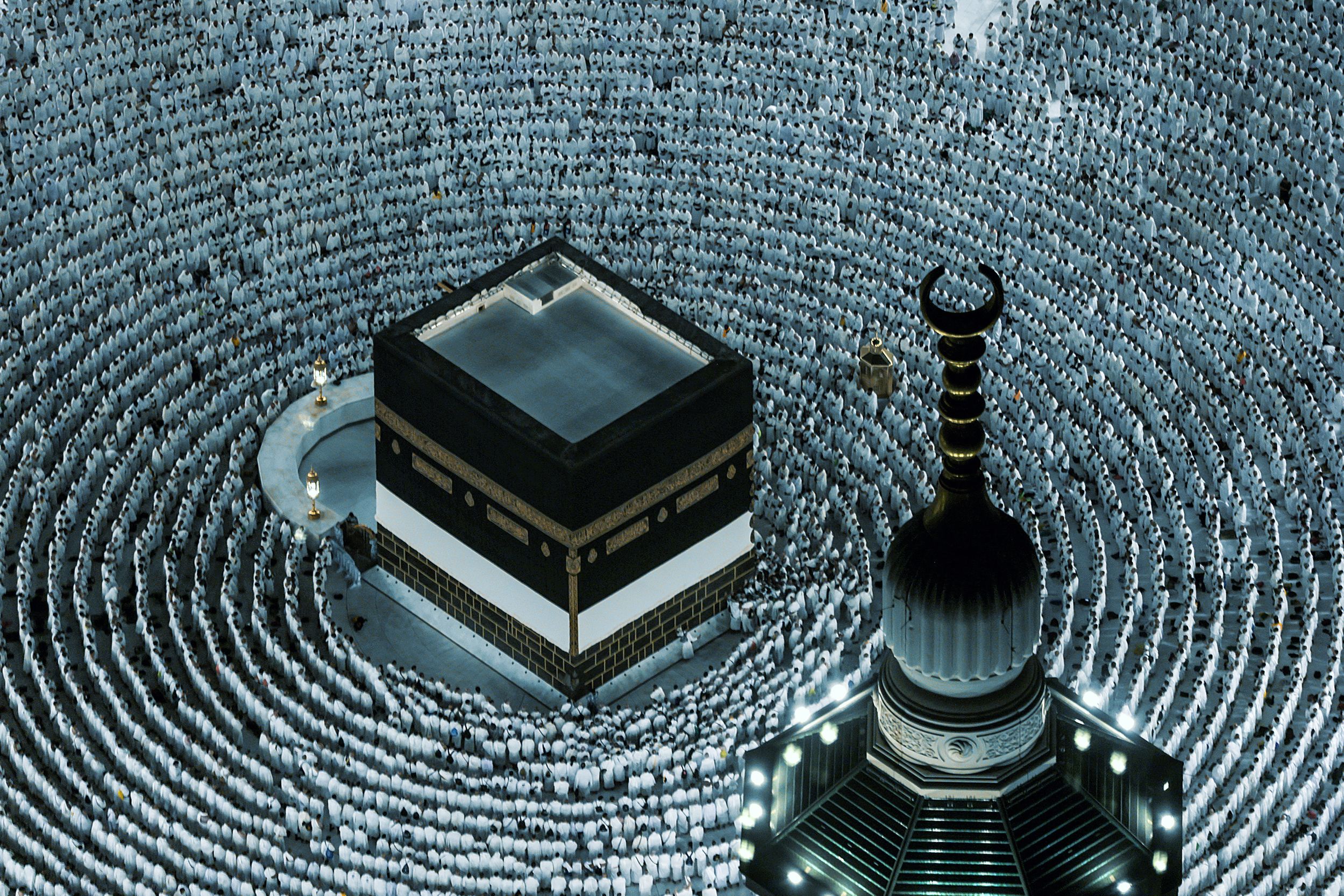
There is something deeply moving about watching people gather in Makkah from every part of the world. They arrive speaking different languages, carrying different histories, and leaving behind very different lives. Some have saved for decades. Some are young and strong; others move slowly with the help of relatives or caregivers. Among them are Muslims whose families have practiced Islam for generations and Muslims who only recently learned the words of the shahadah. Together, they answer the same call.
Hajj, the pilgrimage to the Sacred House in Makkah, is the fifth pillar of Islam. Through it, the believer brings time, wealth, bodily effort, and intention into a concentrated act of worship. The journey gathers many of the lessons of Muslim life: the oneness of Allah, obedience to His Messenger Muhammad ﷺ, repentance, patience, generosity, and the equality of human beings before their Lord.
For a new Muslim, however, the images can also raise questions. Why do Muslims circle the Kaaba? What happens at Arafat? Is pilgrimage required immediately after conversion? What if someone cannot afford it? How does a person learn so many unfamiliar rites? These questions deserve clear answers. Understanding Hajj begins with understanding the mercy within its obligation and the faith that gives its movements meaning.
One reassurance belongs at the beginning: if you have recently become Muslim and the journey is beyond your means, you do not need to worry about arranging it anytime soon. Hajj is an obligation once in a lifetime when its conditions are met. It may remain a hope for many years while you establish prayer, learn the faith, support your household, and build a stable life. Your place in Islam is already real. The intention to make pilgrimage when Allah makes it possible can grow alongside the rest of your religious life.
What Is Hajj?
Hajj is the prescribed pilgrimage to Makkah and its surrounding sacred sites, performed during appointed days of the Islamic month of Dhul Hijjah. Its rites include entering the sacred state of ihram, circling the Kaaba, going between Safa and Marwah, being present at Arafat, and completing the associated observances at Muzdalifah and Mina.
These actions belong to a particular form of worship taught by the Prophet Muhammad ﷺ. His instruction to learn the pilgrimage rites from him establishes the importance of both understanding and practice (Sahih Muslim 1297). A pilgrim brings a sincere heart while also learning how to perform what Allah has prescribed.
The basic obligation is once in a lifetime for a Muslim who meets its conditions. Later pilgrimages are generally voluntary, although a vow or another specific circumstance can create an additional obligation. In the familiar ordering of the five pillars, Hajj follows the shahadah, salah, zakah, and fasting Ramadan. The order of mention varies in authentic narrations; the obligation of pilgrimage is firmly established in them.
The Command to Make Pilgrimage
The Quran states the obligation with a qualification that must always remain part of our explanation:
“Pilgrimage to this House is an obligation by Allah upon whoever is able among the people.”
- Quran 3:97, translation of the meaning
The words concerning ability are essential. Allah has commanded a real act of worship, and He has attached that command to the believer’s circumstances. The person who has the means should take the obligation seriously. The person who lacks them should understand the limits Allah Himself has placed upon it.
The Sunnah reinforces both the obligation and its measured scope. When the Prophet Muhammad ﷺ announced that Allah had prescribed Hajj, a man asked whether it must be performed every year. The Prophet explained that an affirmative answer would have made it obligatory annually, beyond what people could manage (Sahih Muslim 1337). The religion gives pilgrimage an immense place while requiring it, under the ordinary conditions of obligation, only once.
For someone considering Islam, this is an important reassurance. Becoming Muslim does not depend on having the money, health, or opportunity to travel to Makkah. A person enters Islam through sincere faith and the shahadah. Pilgrimage becomes an obligation when its conditions are present.
A Lifetime to Pursue, Without Anxiety or Neglect
New Muslims often encounter the five pillars as a list and understandably assume that they must immediately accomplish everything on it. Yet the pillars have different conditions and rhythms. The daily prayers become part of ordinary life. Fasting has its annual season and recognized exemptions. Zakah applies when its financial conditions are met. Hajj has its own conditions of ability and its ordinary once-in-a-lifetime obligation. Learning these distinctions is part of learning the mercy and coherence of Islam.
For someone living paycheck to paycheck, raising children, meeting essential expenses, or rebuilding financial stability, a journey to Makkah may be a distant possibility. That person can receive the teaching about Hajj with hope and peace. There is no religious requirement to buy a package simply because one has recently said the shahadah. There is no deadline measured from the day of conversion that overrides the conditions Allah has placed upon the duty.
Think of Hajj as something to pursue across the course of the life Allah gives you. You may begin with a sincere intention and a little learning. You may save modestly when circumstances allow. There may also be years when every available dollar is needed for the people and responsibilities already entrusted to you. Providing necessary food, housing, and support is itself part of faithful Muslim life. A person who currently lacks the means for Hajj is not sinful merely for being unable to go.
This lifetime perspective needs one clarification. It describes the horizon of a duty that may become possible later; it does not promise unlimited freedom to postpone after genuine ability has arrived. Scholars differ over permissible delay once the conditions are fulfilled. The predominant Maliki position emphasizes prompt performance when a person is actually able. Those legal discussions concern established ability, not the new Muslim who cannot afford the journey in the first place.
If a real opportunity arises, welcome it with gratitude and examine it responsibly. Adequate lawful funds, health, safe travel, official access, and the rights of dependents all matter. When the conditions are genuinely met, seek guidance and make serious plans. The hope of going someday should remain an open intention, ready to become action when the way opens.
Until then, let Hajj inspire you without allowing anxiety to overshadow the worship available today. You can learn the prayer in your own home. You can ask forgiveness where you are. You can practice honesty at work and mercy within your family. The Muslim life is already unfolding in those acts.
Hajj and the Worship of the Whole Person
The theology of Hajj begins with a simple truth: the whole of a human life belongs to Allah. The Quran brings prayer, sacrifice, life, and death together in the declaration of devotion found in 6:162. Faith reaches into the use of time, the treatment of the body, the spending of wealth, and the intentions that give actions their direction.
Hajj gathers these dimensions into one journey. The body travels and moves through the rites. Wealth is spent. Familiar routines are set aside. The tongue remembers Allah. The mind learns and attends. The heart repents, hopes, and gives thanks. Through this combination, the pilgrim practices offering the whole self in worship.
This matters because human beings learn through what they repeatedly do. We can understand humility as an idea while still organizing our lives around the need to be admired. We can speak about reliance on Allah while resisting every interruption to our plans. Pilgrimage places us in circumstances where humility and reliance require practice. Waiting, sharing space, receiving assistance, and adjusting expectations can reveal how deeply a conviction has entered our conduct.
The spiritual meanings discussed here are reflections grounded in the revealed texts and the experience of worship. They help us attend to the rites without claiming to exhaust Allah’s wisdom in prescribing them. A person may understand some benefits clearly and discover others much later. The sincerity of worship includes a willingness to learn throughout that process.
Sacred Signs and the Education of the Heart
The Quran describes honoring Allah’s sacred symbols as arising from the piety of hearts (Quran 22:32). This joins inward reverence to outward observance. A place, a time, or an action becomes significant through its relationship to the worship Allah has prescribed. Attention to that significance can educate the heart.
Human life is already shaped by meaningful actions. We stand to welcome a person we respect. We preserve an object because of the love or memory it carries. We mark important commitments with words, gatherings, and bodily gestures. In religious worship, the meaning is directed toward Allah, and the prescribed form gives a shared expression to that devotion.
Hajj teaches us to bring intention into action. A circuit of tawaf can be accompanied by remembrance. A period of waiting can become an opportunity for patience. Giving can express gratitude for provision. The outward and inward dimensions of pilgrimage belong together, and each calls the other toward greater care.
The House of Ibrahim and the Call to Tawhid
The Quran places the pilgrimage within the story of Ibrahim and Ismail, Abraham and Ishmael, peace be upon them. It describes them raising the foundations of the House and asking Allah to accept their work (Quran 2:127). It also connects the sanctuary with worship, security, and the purification of the House for those who circle it and pray there (Quran 2:125).
In Surat al-Hajj, Allah commands Ibrahim to proclaim the pilgrimage, describing people arriving from distant paths (Quran 22:26-27). Muslims understand their own journeys within this revealed account. The pilgrim joins a history of submission whose central truth is tawhid: worship belongs to Allah alone.
The Quranic picture is especially striking because Ibrahim and Ismail ask for acceptance while engaged in building the House. Their service does not produce self-satisfaction. It produces supplication. The pilgrim can learn from that example before ever leaving home. Having the money to travel, completing the arrangements, or performing the outward actions gives us reasons for gratitude and hope. We still ask Allah to accept what we offer.
Hajar, the Search for Water, and the Meaning of Trust
Another foundational account concerns Hajar, Hagar, and her infant son Ismail. A lengthy narration in Sahih al-Bukhari describes her searching for help in the valley of Makkah, going repeatedly between Safa and Marwah as her child suffered thirst. It connects the pilgrims’ movement between those places with her search and recounts the appearance of the water of Zamzam (Sahih al-Bukhari 3364).
Hajar’s presence in the pilgrimage gives a woman’s struggle an enduring place in the worship of the entire community. Generation after generation, men and women traverse a route associated with a mother’s concern, effort, and reliance upon Allah. Her story belongs at the center of how we explain Hajj.
It also offers a powerful way to understand tawakkul, trust in Allah. Hajar searches. She looks for help. Her trust accompanies her effort. For the pilgrim, this becomes a lesson that extends into ordinary life: seek provision, care for those entrusted to you, take the available means, and entrust the outcome to Allah. Faith can sustain determined action even when the way forward remains uncertain.
Her story also gives dignity to forms of struggle that communities can overlook. Caring for a dependent child, searching for provision, and enduring uncertainty may seem far removed from public religious achievement. Yet the memory of a mother’s search stands within the pilgrimage itself. A Muslim who cannot travel because essential resources are needed for family care should hear that story with encouragement. The care of those entrusted to us already has a place within a life turned toward Allah.
Who Is Required to Perform Hajj?
The ordinary obligation concerns an adult Muslim of sound mind who possesses the relevant ability. Jurists discuss ability in detail, including the means of travel, bodily capacity, safety, and the rights of dependents and creditors. Their explanations contain differences, so a difficult individual case deserves guidance from a qualified scholar.
Financial ability involves more than being able to pay an advertised price. A person must consider necessary living expenses, the support owed to dependents, and debts that fall due. Spending the household’s essential provision on a pilgrimage while leaving a spouse or children without support conflicts with responsibilities that Islam also imposes. Existing debt requires careful assessment; a long-term obligation with manageable payments is a different situation from an overdue debt that the creditor is entitled to collect now.
A Muslim is not ordinarily required to borrow money to create the financial ability for Hajj. Someone who cannot afford the journey may save gradually, ask Allah to open a way, and continue fulfilling the obligations already within reach. There is no place for shaming people because the pilgrimage remains beyond their means.
Physical ability also requires an honest assessment. Some people can perform the pilgrimage with assistance; others face circumstances that prevent personal travel. Temporary illness, permanent incapacity, and pilgrimage performed on another person’s behalf raise different questions. The Sunnah includes permission for a woman to perform Hajj for her elderly father, but the schools differ over the scope and requirements of such arrangements (Sahih al-Bukhari 1513). Anyone considering a proxy pilgrimage should obtain advice suited to the case and the school followed.
The proper response to ability is responsibility. Where the conditions are present, the believer should make serious plans rather than indefinitely postponing the duty. Where the conditions are absent, the believer should receive clear guidance and encouragement.
Hajj and Umrah
Hajj and umrah are related acts of worship, with different rites and timings. Umrah includes ihram, tawaf around the Kaaba, sai between Safa and Marwah, and shaving or shortening the hair according to the relevant rules. It may generally be performed throughout the year, subject to access arrangements. It does not include the central gathering at Arafat or the full sequence of Hajj.
Hajj takes place during its prescribed season, with its principal days running from the eighth through the twelfth or thirteenth of Dhul Hijjah. Its annual occurrence on the lunar calendar means that it moves through the seasons of the solar year.
A Muslim may perform umrah before being able to make Hajj, and its devotional value is great. Nevertheless, it does not discharge the obligatory Hajj. The jurists also differ over whether umrah itself is obligatory or an emphasized Sunnah; in the Maliki school it is generally treated as an emphasized Sunnah.
The Three Forms of Hajj
There are three recognized forms of pilgrimage: ifrad, qiran, and tamattu. Understanding them helps explain why pilgrims sometimes perform the associated observances in different ways.
In ifrad, the pilgrim enters ihram for Hajj alone. In qiran, the pilgrim combines umrah and Hajj within a continuing state of ihram. In tamattu, the pilgrim first performs umrah during the months of Hajj, leaves ihram after completing it, and later enters ihram again for Hajj in the same year.
For an ordinary pilgrim arriving from abroad, tamattu and qiran generally entail the sacrificial offering called hady. Ifrad does not require that offering simply because that form was chosen. Exceptions and substitute fasting have their own rules; the Quran addresses the provision for those unable to obtain the required offering in 2:196.
All three forms are recognized within Sunni jurisprudence. The schools differ over preference: Maliki jurists generally favor ifrad, while other schools order the preferences differently. A beginner should learn the form being undertaken and follow coherent instruction from a competent teacher. Encountering another valid form should broaden understanding of the tradition.
Ihram: Entering a State of Consecration
Ihram is the sacred state through which a person enters the pilgrimage. It begins with the intention to undertake the appropriate rite, accompanied by the prescribed observances. Pilgrims approaching Makkah for pilgrimage must learn the rules of the miqat, the designated boundary relevant to their route. For someone arriving by air, preparation needs to happen before the aircraft crosses that boundary.
The word ihram is also commonly used for the clothing worn by men: two cloths, one wrapped around the lower body and the other covering the upper body. Women wear suitable modest clothing and have their own detailed rules. They are not required to dress in white or adopt the men’s two cloths. Changing clothes by itself does not constitute entering the sacred state.
During ihram, certain otherwise lawful activities become restricted, including sexual intimacy, applying perfume, and cutting hair or nails, subject to detailed rules and necessary exceptions. Men also observe particular clothing and head-covering restrictions. These should be learned with care. The familiar shorthand about “unstitched clothing” can confuse beginners: the mere presence of a seam is not the entire legal issue.
Spiritually, ihram can help loosen our attachment to appearance, convenience, and control. The pilgrim accepts boundaries that reach into familiar habits. A person accustomed to organizing everything around personal preference practices accepting restraint for Allah’s sake. The outward simplicity invites an inward question: what am I carrying into this journey that I need to surrender?
The simplicity of the men’s clothing also leads many pilgrims to reflect on mortality and the shroud in which a body will eventually be buried. This is a devotional association rather than a claim that the rite has only one explanation. It can nevertheless be searching. Titles, possessions, and the careful presentation of the self will all reach their limit. The person who travels to Makkah remains a mortal servant of Allah.
Remembering death in this way can renew gratitude for life. There is still time to apologize, return what belongs to someone else, become more generous, or begin again after years of neglect. The awareness that we cannot keep everything forever can help us choose more carefully what deserves our attention now.
The Talbiyah: Answering the Call
One of the most recognizable sounds of pilgrimage is the talbiyah:
Labbayka Allahumma labbayk. Labbayka la sharika laka labbayk. Inna al-hamda wa al-nimata laka wa al-mulk. La sharika lak.
Its meaning is:
Here I am, O Allah, answering Your call. Here I am. You have no partner. Here I am. All praise, every blessing, and sovereignty belong to You. You have no partner.
Jabir’s account of the Prophet’s pilgrimage records this proclamation of Allah’s oneness (Sahih Muslim 1218a). The words give the journey its orientation. The pilgrim acknowledges the One who called, the One who provided the means to answer, and the One to whom every blessing belongs.
There is a tenderness in saying “Here I am” when Allah already knows every detail of our lives. We bring the self He knows so completely: the gratitude, the failures, the longing, and the hope. The talbiyah becomes an expression of willingness. We have come to obey, to remember, and to seek His mercy.
The words also make tawhid personal. To affirm that Allah has no partner directs us to examine the loyalties governing our choices. The desire for approval, the pursuit of status, resentment, or the fear of losing control can acquire enormous power over a life. These attachments deserve honest examination. The talbiyah gives the pilgrim an occasion to renew allegiance to Allah and put the rest of life into a sounder order.
Its language of praise and blessing also teaches gratitude. Even the ability to answer the call depends on gifts we did not create: life, provision, strength, help from others, and an opportunity to travel. Recognizing those gifts should soften pride. A person who has reached Makkah has particular reasons to be thankful and particular reasons to treat those still hoping to go with tenderness.
The Kaaba and the Direction of Worship
The Kaaba is the Sacred House toward which Muslims face in prayer. Arriving there can make a familiar daily practice feel suddenly immediate. The direction a believer has faced from a bedroom, an office, or a small neighborhood mosque now has a visible center before the eyes.
Worship remains directed to Allah alone. The Kaaba has sanctity through His designation, and the acts associated with it have meaning through His command. Muslims do not understand the building as containing Allah or possessing independent divine power.
Calling it the House of Allah expresses its honor and dedication to His worship. It does not describe a dwelling that confines the Creator. Likewise, drawing near to Allah through Hajj concerns devotion, obedience, and the relationship of the servant to the Lord. A change in geographical location gives the pilgrim access to prescribed rites; the journey never places Allah within the limits of a building.
This distinction offers comfort to those who cannot travel. In Quran 2:186, Allah tells His servants of His nearness and His response to those who call upon Him. A new Muslim making dua in a rented room can turn toward Him with confidence. The sanctity of Makkah and the special worship of Hajj remain real, while the opportunity to seek Allah’s mercy is also present wherever the believer lives.
The same principle clarifies the place of the Black Stone. Umar ibn al-Khattab explained that he knew it was a stone, unable independently to benefit or harm, and that he kissed it because he had seen the Messenger Muhammad ﷺ do so (Sahih al-Bukhari 1597). Following the prophetic example expresses devotion to Allah. The pilgrim who cannot approach the Stone safely can continue the prescribed rite without touching it. No devotional aspiration justifies injuring another person in the crowd.
Tawaf: Circling the Sacred House
Tawaf consists of seven circuits around the Kaaba, keeping it to the left. Different tawafs occur within pilgrimage, including the tawaf of umrah and tawaf al-ifadah, an essential part of Hajj. Their conditions and place in the pilgrim’s itinerary need to be learned before the journey.
During tawaf, the believer remembers Allah, recites, and makes dua. Personal supplication may be offered in a language the pilgrim understands. A new Muslim does not need to possess a large collection of memorized Arabic prayers to ask Allah for forgiveness, guidance, or help for loved ones.
The movement can invite reflection on the direction of a life. We spend so much time circling our anxieties, ambitions, grievances, and desires. Here, the body participates in an act centered upon worship. That reflection is a spiritual lesson we may draw from tawaf; its prescribed form and validity rest on the revealed guidance, independently of how much emotion a pilgrim experiences.
The shared movement can also make belonging visible. Each pilgrim has a private history, yet each participates in a worship larger than that history. For someone who has felt isolated after becoming Muslim, this can be especially moving. A person whose local experience of Islam has been small or uncertain encounters a community extending across languages, cultures, and generations.
That experience can bring a new perspective to the self. Our concerns still matter, and Allah knows them intimately. We can also begin to see the lives and needs of others with greater generosity. The person beside us is carrying a story too. Worship invites room for both the personal prayer and the care that notices another human being.
Sai: Walking the Path of Hajar
Sai is the sevenfold passage between Safa and Marwah, beginning at Safa and ending at Marwah. One journey from Safa to Marwah counts as one passage, and the return counts as the next. The count is therefore seven one-way passages. The Quran identifies these places among Allah’s sacred symbols (Quran 2:158).
Remembering Hajar while making sai can deepen the pilgrim’s understanding of effort and vulnerability. Many people arrive carrying concerns for children, an uncertain livelihood, a sick relative, or a future they cannot yet imagine. Her story gives those concerns a place within the pilgrim’s reflection. We ask for relief while continuing to walk the path before us.
Pilgrims who require mobility assistance should arrange it and learn the applicable rules. Receiving help can itself require humility. The value of the pilgrimage is never measured by comparing one person’s physical capacity with another’s.
There is also something instructive about returning over ground already crossed. Much of spiritual life involves repeated effort: another prayer, another attempt at patience, another refusal to surrender to despair. We do not always see the result while the effort is underway. Through the memory of Hajar, sai can encourage persistence joined to trust, especially when the next step is clearer than the eventual outcome.
The Eighth of Dhul Hijjah: Going to Mina
On the eighth of Dhul Hijjah, those performing tamattu enter ihram again, this time for Hajj. Those performing ifrad or qiran continue in their existing state of ihram. In the usual prophetic itinerary, pilgrims go to Mina, pray there, and spend the night before traveling to Arafat the next day.
This stage allows the gathering to settle into the main days of pilgrimage. It also illustrates the importance of distinguishing a recommended observance from an indispensable rite: missing the stay at Mina on the eighth does not by itself invalidate Hajj. A pilgrim should learn the itinerary carefully while understanding the legal significance of its different parts.
Arafat: The Heart of the Pilgrimage
On the ninth of Dhul Hijjah, the pilgrims gather at Arafat. The Prophet Muhammad ﷺ expressed its decisive place in the words:
“Hajj is Arafah.”
- Jami al-Tirmidhi 889
Presence at Arafat within the legally prescribed time is indispensable to Hajj. The detailed minimum requirements differ among the schools, which makes reliable guidance particularly important. The normal itinerary brings pilgrims there on the ninth, where they remain in worship until departing after sunset.
The rite is often called the “standing” at Arafat, but it does not require everyone to remain physically on their feet. Nor does it require climbing Jabal al-Rahmah, the hill commonly associated with the site. The essential concern is the prescribed presence within Arafat, with its proper timing and conditions.
This is a day for repentance, remembrance, and earnest supplication. The Prophet Muhammad ﷺ described the extraordinary mercy associated with the Day of Arafah (Sahih Muslim 1348). The pilgrim may ask for forgiveness with a directness that everyday life has made easy to avoid. Old wrongs, wasted years, broken relationships, and private failures can finally be named before Allah.
The gathering can also call to mind the final gathering before Allah. The Quran’s instructions concerning the days of pilgrimage conclude with a reminder that we will be gathered to Him (Quran 2:203). This gives reflection on accountability a clear place within the season. The people around us are fellow human beings who share mortality, moral responsibility, and need for mercy.
Repentance becomes more concrete when we stop protecting a flattering account of ourselves. A pilgrim may need to acknowledge cruelty disguised as discipline, dishonesty excused as necessity, or pride expressed in religious language. Bringing such things before Allah can be painful. It can also become the beginning of freedom from the habits and self-deceptions that have sustained them.
Hope belongs within that honesty. The person asking forgiveness is addressing the Lord whose mercy the Sunnah teaches us to seek. We can admit what we have done and still ask for a different future. Arafat gives a concentrated setting for that appeal, one whose consequences may continue to unfold long after the journey ends.
There is room for tears, and there is room for quiet. Some people feel overwhelmed; others feel tired, distracted, or emotionally still. The task is to turn toward Allah as sincerely as one can. An intense emotional experience is a blessing when it comes, while the hope of mercy remains open to the believer whose worship feels less dramatic.
Muzdalifah: Remembrance and Dependence
After leaving Arafat, pilgrims proceed to Muzdalifah. In the usual sequence, they pray Maghrib and Isha together there and spend the night before returning toward Mina. The Quran connects the departure from Arafat with remembering Allah at al-Mashar al-Haram (Quran 2:198).
The details of staying at Muzdalifah, including concessions for those who need them, vary within the juristic tradition. Pilgrims should follow qualified guidance and the arrangements made for their circumstances. Fatigue, shared space, and dependence on others may all become part of this stage. Receiving them with patience helps give practical substance to the humility expressed in supplication.
Even the need for sleep can become a useful reminder. We are creatures who must rest, eat, and receive care. Acknowledging those needs can soften the fantasy of complete self-sufficiency. The journey gives many occasions to thank Allah for ordinary mercies and to recognize the people through whom help arrives.
Mina, the Jamarat, and the Offering
On the tenth of Dhul Hijjah, the Day of Sacrifice, pilgrims undertake major rites that include throwing seven small pebbles at Jamrat al-Aqabah. Further stoning takes place at the three jamarat on the subsequent prescribed days. Islamic tradition associates these observances with Ibrahim’s rejection of Satan, and pilgrims can reflect through them on their own resistance to temptation.
The rite is governed by a defined practice. Its dignity lies in remembrance and obedience, expressed with care for the people nearby. Shouting abuse, throwing dangerous objects, or pushing others adds harm to an observance meant to train the soul. The temptation to anger may become the very thing a pilgrim needs to resist while performing it.
Those whose form of pilgrimage requires hady arrange the prescribed animal offering, and pilgrims shave or shorten the hair according to their circumstances and the legal rules. Men may shave or shorten; women shorten a small amount. The offering connects worship with provision and the feeding of others. The Quran directs our attention to its inward purpose: Allah receives the worshipper’s taqwa, rather than the animals’ flesh or blood (Quran 22:37).
This verse is central to the theology of sacrifice. Allah has no bodily need that an offering could satisfy. The act concerns the worshipper’s reverence, obedience, gratitude, and use of what Allah has provided. The adjoining Quranic instructions also connect the offering with feeding those in need (Quran 22:36). Devotion reaches outward into generosity.
The question can therefore follow the pilgrim home: how will gratitude shape the use of provision? A willingness to give during pilgrimage can grow into a steadier willingness to share, pay fairly, relieve hardship, and loosen the hold of possessiveness. The prescribed offering has its own rules, while its ethical lessons can continue across a lifetime.
The rites of this day also involve recognized flexibility. When pilgrims asked the Prophet Muhammad ﷺ about certain actions performed in a different order, he instructed them to complete what remained and reassured them (Sahih al-Bukhari 83). This is a valuable source of confidence, alongside careful learning. A pilgrim who makes a mistake should seek a reliable ruling rather than assume that the entire pilgrimage has been lost.
Completing the Rites and Taking Leave
Tawaf al-ifadah is an essential rite of Hajj, performed at its prescribed time after Arafat. Sai is also completed where it remains due; its place in the itinerary depends on the form of pilgrimage and what the pilgrim has already performed. Release from ihram occurs through the relevant rites in stages, with details differing among the schools.
Pilgrims continue the prescribed observances at Mina during the days of tashriq. The Quran allows departure after two of these days or remaining longer under the appropriate conditions (Quran 2:203). A guide’s role includes helping pilgrims understand these timings and the valid concessions available to them.
Before departure, pilgrims ordinarily perform tawaf al-wada, the farewell circumambulation. Most Sunni jurists treat it as obligatory for those to whom it applies, while the Maliki school generally treats it as recommended. Recognized exemptions also exist, including for menstruating women. These distinctions illustrate why the essential pillars, other required acts, and recommended observances should be explained carefully.
Taking leave of Makkah often brings a mixture of gratitude and longing. The pilgrim departs with the journey’s lessons still unfolding. Worship must now find expression in the places and relationships to which the traveler returns.
The Meaning of an Accepted Pilgrimage
The Prophet Muhammad ﷺ taught that an accepted pilgrimage, hajj mabrur, has Paradise as its reward (Sahih Muslim 1349a). Another narration promises extraordinary forgiveness to the person who performs Hajj for Allah while avoiding sexual misconduct and wrongdoing (Sahih al-Bukhari 1521). These are among the great reasons Muslims long for the journey.
Such promises call us toward sincerity, repentance, and hope. They also invite reflection on the word mabrur: a pilgrimage marked by righteousness and acceptance. Learning the rites matters. So do lawful provision, care for others, and the willingness to let worship change our conduct.
Hope in forgiveness belongs alongside responsibility for injuries we have caused. Money owed to another person remains a debt to address. Stolen property must be returned. Harmful conduct must cease. Jurists discuss the scope of expiation in these narrations, and the believer should continue making sincere repentance rather than treating travel as a way to avoid accountability.
We also leave the final judgment of acceptance to Allah. A smooth itinerary, a particular feeling, or admiration from other people cannot certify it. We perform the worship, ask for acceptance, and seek to carry its fruits into the rest of life.
The teaching that deeds are judged according to intentions is especially relevant here (Sahih al-Bukhari 1). Two people can undertake outwardly similar journeys while attending to very different purposes. One may be preoccupied with recognition; another may be struggling quietly to repent. Each of us therefore has reason to examine personal intention, with humility about what we can know of anyone else’s heart.
The Sunnah also teaches that Allah looks to hearts and deeds rather than appearance and wealth (Sahih Muslim 2564c). A costly package conveys no assurance of acceptance. A modest arrangement diminishes no sincere act of worship. These teachings should guide both pilgrims and the communities that welcome them home.
Women, Pilgrimage, and Clear Guidance
Women undertake the same fundamental pilgrimage and share fully in its spiritual promise. Some practical rulings differ, including clothing, hair shortening, menstruation, and aspects of travel. These matters deserve accessible instruction delivered with respect.
When Aishah began menstruating during the journey, the Prophet Muhammad ﷺ reassured her and instructed her to carry out the pilgrims’ observances while postponing tawaf until she was purified (Sahih al-Bukhari 305). Menstruation therefore does not cancel a woman’s pilgrimage. Difficult travel schedules or exceptional circumstances should be discussed promptly with a qualified scholar who understands the details.
The question of travel with a mahram also involves a recognized difference of opinion. Some scholars require a husband or mahram, a relative whom a woman can never marry. Maliki and Shafii authorities recognize circumstances in which trustworthy company and secure travel permit the obligatory pilgrimage without one. A woman should receive guidance appropriate to her circumstances and observe the current official travel requirements. The existence of a stricter view should not conceal the recognized breadth of Sunni jurisprudence.
Preparing for Hajj as a New Muslim
For a new Muslim with limited means, preparation may begin as simply as holding a hopeful intention. There is no need to turn the first months of Islam into an anxious search for travel money. Establish the foundations already shaping Muslim life: regular prayer, sincere repentance, lawful conduct, and fulfilling responsibilities to other people. These give a future pilgrimage continuity with daily faith. You can learn its names and stories slowly, without committing to a booking or a date.
When concrete planning begins, seek a trustworthy teacher and a guide suited to the school or coherent method you intend to follow. Learn the difference between an essential rite, another required act, and a recommendation. Also learn what to do when illness, delay, or a mistake disrupts the plan. A short course with opportunities for questions is often more useful than collecting large numbers of disconnected opinions online.
Arrange travel through the authorized process for your country, verify what the package includes, and check the current visa, permit, and health requirements through official Saudi sources. These arrangements can change between pilgrimage seasons. Ask early about language support, accessibility, and the religious guidance available with the group. Someone traveling without Muslim relatives may benefit especially from clear introductions and dependable companionship.
Health preparation belongs here too. Discuss relevant conditions and support needs with a clinician, and make realistic arrangements for medication, mobility assistance, and rest. Follow the official health guidance for the season. The concessions recognized by Islamic law exist to be used when their conditions are met.
Prepare inwardly as well. Think about the repentance you need to make, the people for whom you want to pray, and the habits you hope to change. Learning the talbiyah and a few important supplications can help, but Arabic fluency is not a condition for making Hajj. Allah hears the supplication of the new Muslim who calls upon Him with sincerity in the language of the heart.
Pilgrimage and the Character of the Pilgrim
The Quran’s guidance about Hajj includes restraint from sexual relations, wrongdoing, and quarrelling, together with the instruction to take provisions and remember that the best provision is taqwa (Quran 2:197). These ethical directions belong within the explanation of the rites from the beginning.
Crowds and fatigue can expose habits that remain hidden when life is comfortable. Someone who speaks eloquently about humility may struggle when a bus is late or a room is shared. Someone who loves the idea of the Muslim community may become impatient with a pilgrim whose language or customs are unfamiliar. Such moments provide immediate opportunities to practice what the journey teaches.
Make room. Speak gently. Listen to instructions. Help someone who is confused. Treat cleaners, drivers, guides, and service workers with dignity. A simple act of consideration may be the point at which devotion becomes most visible in our conduct.
Hajj also gives a vivid setting for the Quranic teaching that human diversity calls us to know one another and that honor before Allah rests in taqwa (Quran 49:13). People arrive with unequal resources, and practical differences remain. Yet wealth and nationality confer no spiritual rank. For a new Muslim in particular, the gathering can make belonging tangible: the ummah has room for the believer whose accent, ancestry, and life story differ from those of the people nearby.
The moral challenge is to carry that recognition into ordinary community life. A pilgrim who has prayed alongside people from across the world can return ready to confront prejudice, welcome converts, and notice those excluded by language, class, or custom. Equality becomes more convincing when it changes who receives our attention and hospitality.
When the Journey Is Beyond Reach
Some Muslims will spend many years hoping to perform Hajj. Some will never acquire the means. The conditional nature of its obligation must remain clear in the way communities speak about them. The person who never becomes able to undertake the duty is not blameworthy for that inability. A person’s financial circumstances or bodily limitations do not reveal the quality of the heart.
The Quran teaches that Allah does not burden a soul beyond its capacity (Quran 2:286). In the case of Hajj, the qualification concerning ability is also stated directly within the command itself. Respecting that qualification is part of respecting revelation. Communities should explain it as carefully as they explain the obligation.
Muslims sometimes describe the opportunity to travel as an invitation from Allah. Used personally, that can be a beautiful expression of gratitude. It should never become a judgment that a person without money, health, or access has been rejected by Allah. We do not know the unseen, and the cost of a journey tells us nothing about the measure of divine love.
Someone unable to travel can continue praying, fasting as required and able, giving according to means, seeking knowledge, repenting, and caring for others. These acts have their own value. They do not replace the actual rites if Hajj later becomes obligatory, but they make the present a real setting for worship and spiritual growth. Distance from Makkah does not prevent a life of sincere devotion.
For a new Muslim in particular, the most helpful counsel may be wonderfully ordinary: keep learning, protect your prayer, care for your responsibilities, and let the hope of Hajj remain open. Save when you reasonably can. Reconsider your circumstances when they change. You can desire the journey deeply while remaining at peace with the fact that it is not yet possible.
This also has implications for Muslims considering repeated voluntary pilgrimages. Alongside a worthy desire to return, they can consider obligations to family and opportunities to relieve serious need. The first obligatory Hajj has its own claim. Subsequent voluntary journeys belong within a wider judgment about how to use the blessings Allah has entrusted to us.
Returning Home With the Lessons of Hajj
The pilgrim returns to the same ordinary responsibilities: work, bills, relationships, fatigue, and the struggle to preserve prayer. These familiar circumstances offer the setting in which the journey’s lessons can take root. The patience practiced in Mina can shape an evening at home. The repentance made at Arafat can become an honest conversation or a debt repaid.
Avoid turning this hope into an impossible demand for instant perfection. People remain human after pilgrimage. Habits take work, and mistakes still require repentance. A lapse need not become a reason to abandon the direction of change. The believer can return again to the mercy sought during Hajj.
One useful question is what will become different in the treatment of other people. Will a spouse encounter greater gentleness? Will employees receive fairer treatment? Will an unfamiliar Muslim find a warmer welcome? Will the person who has been wronged receive justice? These are concrete ways for the memory of worship to continue bearing fruit.
A Brief FAQ for New Muslims
Must I perform Hajj immediately after becoming Muslim?
Conversion by itself creates no requirement to arrange an immediate journey. Hajj depends on its conditions, including ability. If you cannot afford it, you do not need to worry about going anytime soon. Let it remain a hope to pursue as life develops. If its conditions are already present, seek guidance and make serious plans rather than assuming that a lifetime obligation can always be postponed.
Do I have to make pilgrimage every year?
The basic obligation is once in a lifetime. Later pilgrimages are generally voluntary, apart from circumstances such as a vow that create a further duty.
Can umrah take the place of Hajj?
Umrah is a distinct act of worship. Its performance does not discharge the obligation of Hajj.
Must I know Arabic fluently?
Arabic fluency is not required. Learn the essential observances and important formulas with help, and make personal supplication in a language you understand.
Must I touch the Kaaba or kiss the Black Stone?
Neither is a condition of a valid pilgrimage. Follow the proper guidance for tawaf and avoid causing harm while attempting a recommended act.
Is visiting Madinah part of Hajj?
Visiting the Prophet’s Mosque in Madinah is a highly valued separate devotion. It is not a rite or condition of Hajj, which remains valid without that visit.
What if I make a mistake?
Ask a knowledgeable guide promptly. The consequence depends on the action, timing, circumstances, and applicable ruling. Some mistakes need correction or compensation; others do not. Avoid assuming that every difficulty invalidates the pilgrimage.
What if I cannot afford to go?
You are not sinful for an inability you genuinely have. Continue your present responsibilities, save if realistically possible, and keep the hope of pilgrimage without treating financial hardship as a spiritual disgrace. Essential support for yourself and your dependents belongs within the assessment of ability.
What if the opportunity comes many years from now?
Then meet it with gratitude and assess the conditions at that time. Hajj is ordinarily required once in a lifetime, when its conditions are fulfilled. The passage of years since conversion does not make you less Muslim. A genuine ability to go, whenever it arises, deserves a serious response.
Answering the Call
The fifth pillar gathers the believer into a journey of remembrance and surrender. The pilgrim answers with the voice through talbiyah, with the body through the rites, with wealth through the cost and giving the journey entails, and with the heart through repentance and hope. Each part belongs to the worship of Allah.
For the new Muslim, understanding Hajj can begin long before an application is submitted or a journey booked. Learn why the House is sacred. Learn the stories of Ibrahim, Ismail, and Hajar. Learn the mercy within the obligation and the care required in its performance. Ask Allah to make a way when the time and circumstances are right.
If you cannot go for many years, let your hope remain gentle and sincere. There is a life of worship to live now, with prayer to establish, people to care for, and a heart to cultivate. You can grow toward the journey without being consumed by the cost or distance that presently keeps it beyond reach.
And when that way opens, go with gratitude. Stand among people whose lives you may never fully know, remember the Lord who knows them all, and ask Him to accept you among His worshippers. Then carry the answer home: in greater faithfulness, deeper humility, and more generous care for the people He places in your life.
Sources and Further Reading
Quranic references are to chapter and verse. Translations and explanations above convey meanings; Arabic formulas are accompanied by an explanatory English rendering. Spiritual reflections are offered as reflections rather than exhaustive explanations of the purposes of the rites. This article introduces the pilgrimage and should be read alongside practical instruction for the form of Hajj being undertaken.
- The Quran: 2:125-129, 2:158, 2:186, 2:196-203, 2:286, 3:97, 6:162, 22:26-29, 22:32, 22:36-37, and 49:13.
- Sahih al-Bukhari: 1, intention; 8, the five foundations; 305, menstruation during pilgrimage; 1513, pilgrimage on behalf of an elderly father; 1521, forgiveness; 1597, Umar and the Black Stone; 3364, Hajar and Zamzam; and 83, questions about the sequence of rites.
- Sahih Muslim: 1218a, Jabir’s account of the Prophet’s pilgrimage; 1297, learning the rites; 1337, the obligation’s scope; 1348, the mercy of Arafah; 1349a, the reward of an accepted pilgrimage; and 2564c, hearts and deeds.
- Jami al-Tirmidhi: 889, the centrality of Arafat.
- Supplementary guidance: Hajj Council of North America, Umrah: Introduction, for the distinction between Hajj and umrah and the schools’ differing rulings on umrah.
- Egypt’s Dar al-Ifta: Overview of the Rites of Hajj and Umrah; The Rites of Hajj in Detail; The Requirements of Hajj; The Umrah: Rulings and Rites; Borrowing Money to Perform Hajj and Visit Medina; and Can I Travel Alone with No Mahram?.
- Nusuk Hajj, supervised by the Saudi Ministry of Hajj and Umrah: Official platform and pilgrimage guidance. Check the official requirements applicable to your country and pilgrimage season.
- Additional guidance from Egypt’s Dar al-Ifta: The Conditions for the Obligatoriness of Hajj and Hastening to Perform Hajj When Physically and Financially Capable. For the comparative discussion of immediate performance and permissible delay, see “The Ruling on Marrying Off a Son Before Performing Hajj and Umrah,” Arabic, July 16, 2025, website entry 23921.
Leave a Reply