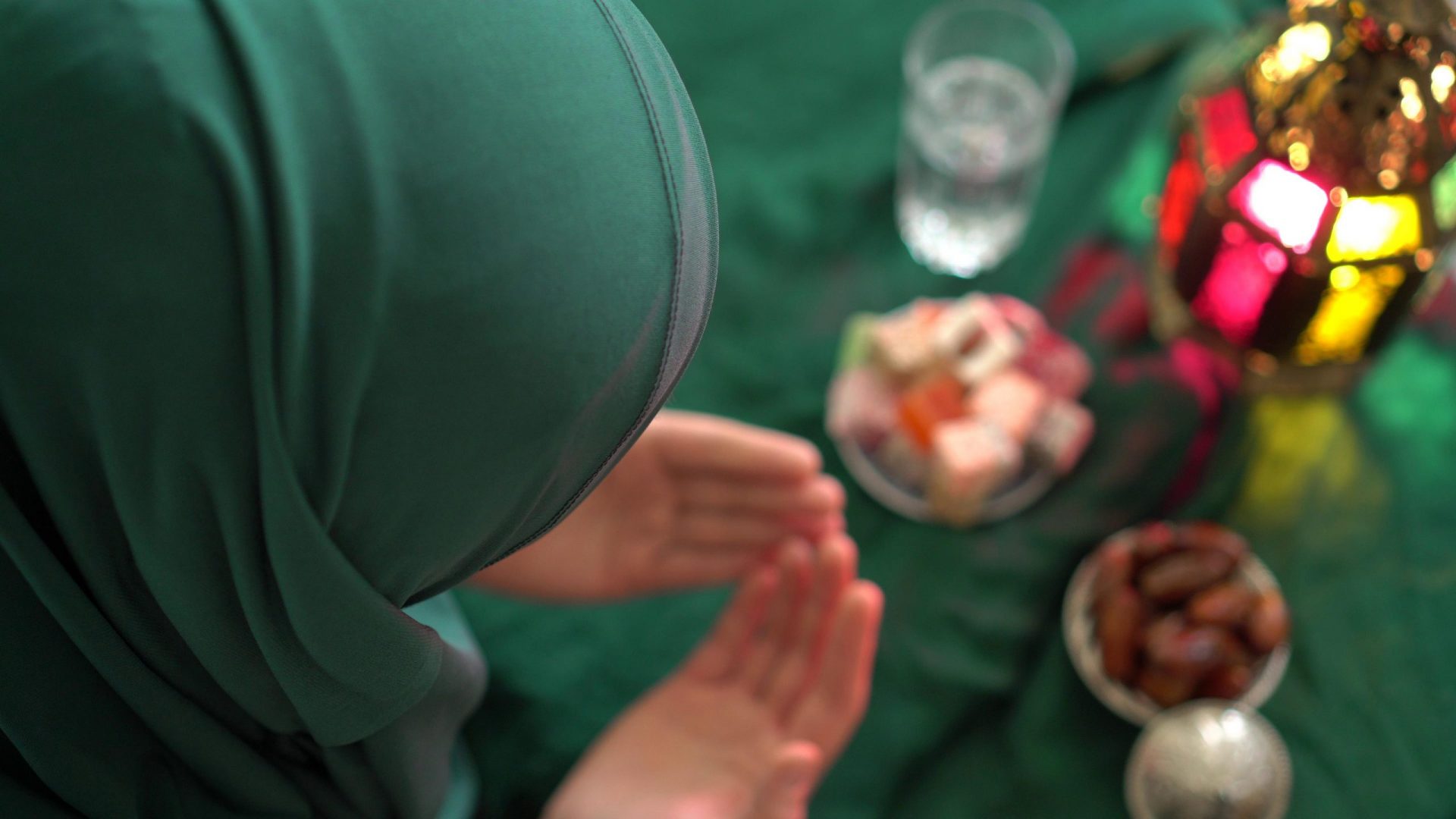
Islam teaches the believer to worship Allah with the whole of life. Through the shahādah, we testify to His oneness and accept the guidance of His Messenger ﷺ. Through salah, we return to Him throughout the day. Through zakāh, we acknowledge His rights over our wealth and our responsibilities toward others. With the fourth pillar, sawm, the believer learns to surrender something even more immediate: the ordinary satisfaction of hunger, thirst, and bodily desire.
For one month each year, the rhythm of daily life changes. We rise before dawn, approach the day with an intention of worship, and wait until sunset to eat and drink. Familiar habits become opportunities for remembrance. A glass of water becomes something for which we consciously give thanks. An impatient response becomes something we must learn to restrain. The passing hours remind us that our needs are real, our dependence is constant, and our lives belong to Allah.
For a new Muslim, Ramadan can be both beautiful and intimidating. The prospect of fasting may raise practical questions about water, work, medication, prayer, family, and the possibility of making mistakes. Those questions deserve clear answers. Fasting is a pillar of Islam, and learning how to observe it is part of learning how to live the faith.
The Qur’an and Sunnah present fasting as an act of obedience filled with spiritual purpose. They also place it within a framework of mercy, capacity, and care. Understanding both dimensions helps the believer approach Ramadan with seriousness, confidence, and hope.
What Is Sawm?
The Arabic words sawm and siyam refer to fasting. In Islamic worship, fasting means intentionally abstaining from food, drink, sexual intercourse, and other acts that invalidate the fast, from the beginning of true dawn until sunset, for the sake of Allah.
The intention matters because fasting is worship. Someone might miss meals because of a demanding workday, a medical procedure, or a lack of appetite. The Muslim observing Ramadan consciously offers this abstention to Allah. The outward action has an inward direction.
The fourth pillar specifically concerns fasting the month of Ramadan. Muslims may also observe voluntary fasts at other times, and certain other fasts become obligatory through vows or particular legal circumstances. Ramadan, however, is the annual obligation that belongs among the foundations of the religion. The Prophet ﷺ included its fast among the five pillars upon which Islam is built. (Ṣaḥīḥ al-Bukhārī, 8.)
This means that Ramadan deserves preparation. Just as a Muslim learns how to pray and how to calculate zakāh, the person who is required to fast should learn the basic conditions, boundaries, and responsibilities of fasting.
Why Allah Prescribed Fasting
Allah explains the purpose of fasting in a verse that should remain at the center of our understanding of Ramadan:
“So that you may attain taqwā.”
Qur’an 2:183, a rendering of the concluding phrase.
Taqwā includes awareness of Allah, reverence for Him, and the effort to guard ourselves against disobedience. A person with taqwā learns to ask whether a choice is pleasing to Allah before simply asking whether it is convenient, enjoyable, or socially acceptable.
Fasting gives that awareness a daily form. The fasting person encounters an ordinary desire and chooses to wait. The food may be lawful. The water may be clean and available. Yet the believer refrains because Allah has appointed a time for abstention and a time for enjoyment.
There is a lesson here that reaches beyond the dining table. Human desire deserves guidance. Anger need not become cruelty. Attraction need not become exploitation. Frustration need not become dishonesty. The ability to pause before satisfying an appetite can help us pause before committing a wrong.
Ramadan offers repeated opportunities to practice that pause. Its spiritual fruit appears when the discipline of the fasting hours begins to shape the rest of our conduct.
Fasting and Sincerity Before Allah
Fasting has a special relationship with sincerity. Much of it takes place in the hidden space between the servant and the Lord. Other people may know that we are observing Ramadan, but they cannot watch every moment of our day. The believer continues to abstain even when eating or drinking privately would be easy.
In a ḥadīth qudsī, a report in which the Prophet ﷺ conveys words from Allah, fasting is singled out with the declaration:
“Fasting is for Me, and I reward it.”
Ṣaḥīḥ Muslim, 1151d, a rendering of the relevant phrase.
All genuine worship belongs to Allah, so this description invites us to reflect on fasting’s particular intimacy. The servant leaves something desired because the Lord has commanded it. There may be no audience, no praise, and no outward recognition. Allah knows.
For someone whose religious life has become tangled in appearances, Ramadan offers a way to recover simplicity. We can begin again with a private act of faithfulness. We can ask Allah to purify our motives and help us serve Him when nobody else is watching.
Why Ramadan Is the Month of Fasting
Ramadan is the ninth month of the Islamic lunar calendar. Its significance is inseparable from revelation. The Qur’an identifies it as the month in which the Qur’an was sent down as guidance for humanity and commands those who witness the month, subject to the stated exemptions, to fast it. (Qur’an 2:185.)
This connection should shape how we spend the month. Making room for the Qur’an belongs naturally beside making room for the fast. We listen, recite what we can, study its meanings, and consider what its guidance asks of us.
A new Muslim who cannot yet read Arabic fluently can still begin a serious relationship with the Qur’an. Read a reliable translation. Listen to recitation while following its meaning. Ask questions about passages that are difficult to understand. Take a manageable portion and return to it consistently.
Completing the entire Qur’an during Ramadan is a valued practice for many Muslims. A beginner can approach that aspiration without turning it into a measure of personal worth. Understanding a passage and allowing it to change one’s behavior is meaningful spiritual work.
When the Fast Begins and Ends
The daily fast begins at true dawn, the beginning of the time for Fajr, and ends at sunset, the beginning of the time for Maghrib. Sunrise occurs later than the beginning of the fast. Eating until sunrise would therefore miss an essential boundary. The Qur’an describes eating and drinking until dawn becomes distinguishable, followed by completing the fast until night. (Qur’an 2:187.)
For everyday practice, obtain a reliable timetable for your location. A mosque, established Islamic organization, or trustworthy prayer-time service can help. Check that the location and settings are appropriate, especially when traveling. Communities in places with unusual daylight conditions need guidance from qualified scholars about their circumstances.
Ramadan itself lasts twenty-nine or thirty days. Its beginning and end follow the Islamic lunar calendar. The Prophet ﷺ instructed Muslims to observe the month in connection with the crescent and to complete thirty days when the relevant sighting was obscured. (Ṣaḥīḥ al-Bukhārī, 1909.)
Muslims differ over the application of local sightings, wider sightings, and astronomical calculations. A new Muslim should follow a trustworthy community or recognized scholarly authority and learn its approach. Disagreement about the calendar should be handled with knowledge and good manners.
Who Is Required to Fast?
In general, the Ramadan fast is obligatory upon a Muslim who has reached legal maturity, has the capacity for religious responsibility, and is physically able to fast, subject to the exemptions recognized in Islamic law.
Children before puberty are not under the same obligation as adults. Families who introduce children to fasting should take account of their health, development, and capacity. Religious education should cultivate understanding and love rather than make exhaustion a source of family pride.
For adults, the obligation also requires attention to actual circumstances. Illness, qualifying travel, menstruation, postnatal bleeding, pregnancy, breastfeeding, and enduring inability can affect whether a person should fast and what is required afterward. These categories have different rulings; they cannot all be reduced to a single instruction to pay money or make up days.
The general explanation that follows is intended to establish the foundations. A person with a particular circumstance should learn the ruling that applies to it.
Making the Intention to Fast
The intention, niyyah, is the heart’s decision to observe the fast for Allah. You do not need to pronounce a special Arabic formula to establish it. Knowing that tomorrow is a day of Ramadan and resolving to fast it is a meaningful intention.
A simple practice is to make that intention during the night before each fasting day. Getting up for suḥūr because you intend to fast ordinarily expresses the same purpose. There is no need to turn intention into an anxious search for a particular feeling or a perfectly worded sentence.
The legal schools differ over some details. In the Maliki school, a single intention at the beginning of Ramadan can cover its consecutive fasts. An interruption such as menstruation, illness, or travel requires attention to renewing the intention when fasting resumes. Other schools require a separate intention for each day, with differences concerning its timing. (Dar al-Ifta, “Making the intention to fast Ramadan”; Abdullah bin Hamid Ali, “The Intention for Fasting in the Maliki School.”)
These are established discussions within Islamic jurisprudence. Learn a coherent approach from a trustworthy teacher and practice it calmly.
Suḥūr: Beginning the Day With Blessing
Suḥūr is the meal eaten before dawn in preparation for the fast. The Prophet ﷺ encouraged it:
“Take suḥūr, for there is blessing in it.”
Ṣaḥīḥ al-Bukhārī, 1923, a rendering of the meaning.
That blessing includes the opportunity to begin the day with a conscious act of obedience. A household wakes, food is shared, a quiet intention is renewed, and Fajr approaches. For someone living alone, even a simple meal can become part of a steady rhythm of worship.
Suḥūr is recommended; it is not a condition for the validity of the fast. If you oversleep and miss it, you should still fast, provided the required intention and other conditions are present.
Prepare practically. Have suitable food available, allow time before Fajr, and plan eating, drinking, and sleep sensibly around your circumstances. A person with a medical diet or prescribed fluid restriction should follow individual clinical advice. Religious enthusiasm and sensible preparation can support each other.
Ifṭār: Receiving Allah’s Provision With Gratitude
Ifṭār is the breaking of the fast at sunset. The Prophet ﷺ encouraged Muslims to break the fast promptly when its time arrives. (Ṣaḥīḥ al-Bukhārī, 1957.)
This is an important lesson in obedience. During the fasting hours, we refrain. When the appointed time ends, we receive what Allah has made lawful. The believer learns to respect both boundaries.
A simple ifṭār is entirely sufficient. Water and an available meal can mark the end of a day of worship without elaborate preparation or expense. Regional foods and family traditions can make Ramadan memorable, but a new Muslim does not need to reproduce another household’s menu to belong.
Try to preserve the gratitude of those first moments. Remember those whose next meal remains uncertain. Thank the people who prepared the food. Make duʿāʾ. Attend to Maghrib without allowing the evening meal to consume the whole evening.
Ramadan hospitality should also be shared fairly. When one family member spends every afternoon cooking and every evening cleaning while others worship, the household should reconsider how it distributes the work. Helping prepare a meal and washing the dishes can express the generosity the month is meant to cultivate.
The Fast of the Tongue and the Heart
The physical boundaries of fasting are essential. Its moral purpose asks something further of us. A person can abstain from food while continuing to wound others through lies, humiliation, gossip, manipulation, or anger.
The Prophet ﷺ warned that leaving food and drink while continuing false speech and wrongful conduct fails to honor the purpose of fasting. (Ṣaḥīḥ al-Bukhārī, 1903.) This warning should make us examine what happens to our character during Ramadan.
Do the people around us experience greater patience? Are our coworkers treated respectfully? Does our family feel safer speaking to us? Do we become more careful about what we share online? Hunger may help explain irritation, but it does not give us permission to mistreat someone.
The Prophet ﷺ also taught the fasting person to respond to provocation by remembering, “I am fasting.” (Ṣaḥīḥ Muslim, 1151d.) These words can recall us to the commitment we made before dawn. We have chosen a day of restraint; we can choose restraint in this conversation too.
A moral failure does not mean that a person should abandon the rest of the day’s fast. Repent, repair the harm where possible, and continue. The distinction between a legally valid fast and its spiritual reward helps us take both the rules and the condition of the heart seriously.
Illness, Travel, and the Mercy Within the Obligation
The Qur’an places exemptions within its teaching on Ramadan. It directs the sick and travelers to make up the appropriate number of days later and declares:
“Allah intends ease for you and does not intend hardship for you.”
Qur’an 2:185, a rendering of the meaning.
This mercy belongs to the revealed obligation itself. Taking an applicable exemption can be an act of obedience.
A temporary illness that makes fasting harmful or significantly aggravates the illness can justify postponing the fast. Depending on the seriousness of the danger, refraining from fasting may become necessary. Missed days are generally made up when the person recovers and can fast. Qualifying travel also permits postponement, with details concerning the journey and departure time discussed by the legal schools.
Anyone with a condition affected by fasting or a need for regular medication should consult the relevant clinician before Ramadan. Medication doses and schedules should not be changed independently. Ask what circumstances require breaking the fast and how to obtain treatment. Religious questions about particular medicines or procedures can be discussed alongside that medical advice with a qualified scholar. (British Islamic Medical Association, Ramadan resources; Central and North West London NHS Foundation Trust, “Looking after yourself this Ramadan.”)
A person who must break a fast to prevent serious harm should do so and seek care. There is no spiritual achievement in ignoring a genuine medical danger.
Menstruation, Pregnancy, and Breastfeeding
In Sunni Islamic law, women do not fast during menstruation or postnatal bleeding. The missed Ramadan fasts are made up later. ʿĀʾishah, may Allah be pleased with her, explained that women were instructed to make up these fasts, while the prayers missed during menstruation were not made up. (Ṣaḥīḥ Muslim, 335c.)
This is a religious ruling, and observing it does not diminish a woman’s devotion. She can continue with duʿāʾ, remembrance, charity, study, and other permissible forms of worship. Nobody should be required to explain private bodily circumstances to satisfy another person’s curiosity.
Pregnancy and breastfeeding require a different assessment. Where fasting raises a credible concern for the mother’s health or the child’s well-being, an exemption can apply. The legal schools differ over the subsequent combination of making up days and feeding a needy person, particularly in cases involving concern for the child. A mother should obtain medical advice and learn the ruling appropriate to her circumstances. (Dar al-Ifta, “Breaking the fast due to pregnancy and nursing.”)
Family members can help by providing practical support and avoiding pressure to fast against sound advice.
Enduring Inability and Fidyah
Some Muslims are unable to fast because of frailty or an illness from which a return to the capacity to fast is not reasonably expected. Their situation differs from a temporary illness followed by recovery.
Many jurists prescribe fidyah, feeding a needy person for each missed day, for those with enduring inability who have the means. The Maliki school treats feeding in this situation as recommended rather than obligatory; Ibn Abī Zayd al-Qayrawānī expressly describes feeding as recommended for an elderly person unable to fast. The details should therefore be learned within the legal approach one follows. (Al-Risālah, chapter 23, especially sections 23.6–23.7.)
Fidyah should not be treated as a general option to purchase exemption from fasting. A healthy person who is required to fast cannot simply replace Ramadan with a donation because fasting is inconvenient.
A Muslim who cannot fast remains part of Ramadan. Prayer where applicable, remembrance, generosity, learning, and care for others remain open. Communities should make room for that participation without treating visible abstention as the only sign of faithfulness.
What Breaks the Fast, and What Happens After a Mistake?
Deliberately eating, drinking, or having sexual intercourse during the fasting hours invalidates the fast. Smoking also invalidates it. Medical treatments involve more detailed rulings, and the route and nature of a treatment can matter. A beginner should avoid assuming that every injection, examination, or procedure has the same ruling. (Qur’an 2:187; British Islamic Medical Association, Ramadan Health Factsheet.)
Eating or drinking through genuine forgetfulness deserves separate attention. Most Sunni jurists hold that it does not invalidate the fast. The standard Maliki position requires making up that day, while continuing to abstain for the rest of it; forgetfulness is not treated as a deliberate sinful violation. This is a recognized difference between schools. (Dar al-Ifta, “Things which invalidate the fast.”)
If you make a mistake, stop the relevant act when you realize what has happened, continue observing the day as required, and obtain guidance. Explain the circumstances accurately. An accident, a forgotten fast, a mistaken assessment of sunset, and a deliberate violation are different cases.
For serious deliberate violations, repentance, making up the fast, and sometimes kaffārah, a prescribed expiation, may be required. The schools differ over its scope and conditions. Seek an individual ruling rather than imposing a penalty on yourself from an isolated online statement.
Making Up Missed Days
Making up a missed fast is called qaḍāʾ. When days are missed for an excuse that requires later fasting, keep a clear record and arrange to make them up when able. For ordinary Ramadan make-up fasts, the days need not generally be consecutive.
Aim to complete them before the following Ramadan when you are able. If a continuing illness, pregnancy, breastfeeding, or another valid circumstance prevents that, learn the ruling for your situation. Delaying despite being able to fast can have consequences that differ by school.
It helps to distinguish three terms. Qaḍāʾ means performing a missed fast later. Fidyah concerns feeding in specified circumstances. Kaffārah is an expiation for certain violations. They serve different legal purposes and are not interchangeable.
Keeping a small written record can prevent unnecessary uncertainty months later. It can also help you ask a teacher a precise question instead of trying to reconstruct an entire year from memory.
Prayer and the Worship of Ramadan’s Nights
Fasting belongs within the wider life of worship. The five daily prayers remain obligatory during Ramadan. Protecting them should have a central place in the month’s planning.
Ramadan also has a cherished tradition of night prayer, commonly called tarāwīḥ. The Prophet ﷺ encouraged worship during its nights and associated sincere night prayer with the hope of forgiveness. (Ṣaḥīḥ al-Bukhārī, 37.) Muslims may attend congregational prayers or pray at home according to their circumstances. Jurists have discussed different arrangements and numbers of prayer units within this tradition.
Tarāwīḥ is a recommended act of worship, and attending it is not a condition for a valid fast. A parent caring for a baby, a worker on a late shift, or a Muslim far from a mosque should understand this distinction. Establish the obligatory prayers and add voluntary worship in a way that is sustainable.
If prayer is still something you are learning, continue fasting while working seriously to establish ṣalāh. Learn from a patient teacher. Let Ramadan strengthen your practice one prayer at a time.
Laylat al-Qadr and the Last Ten Nights
Among Ramadan’s greatest gifts is Laylat al-Qadr, the Night of Decree. The Qur’an describes it as “better than a thousand months.” (Qur’an 97:3.) The Prophet ﷺ instructed believers to seek it in the odd nights of Ramadan’s last ten nights. (Ṣaḥīḥ al-Bukhārī, 2017.)
These nights invite greater attention to prayer, Qur’an, repentance, charity, and duʿāʾ. The opportunity should inspire hope. Someone who has struggled during the earlier weeks can still turn sincerely toward Allah.
A new Muslim need not reproduce an exhausting schedule seen on social media. Set aside some time, reduce avoidable distractions, and ask Allah honestly for forgiveness and guidance. A parent’s interrupted prayer or a worker’s quiet supplication may carry a sincerity that other people never see.
The twenty-seventh night receives particular attention in many communities. The prophetic instruction to seek Laylat al-Qadr across the last ten nights encourages a wider, steadier devotion.
Hunger, Gratitude, and Responsibility Toward Others
Fasting can make us more attentive to blessings that familiarity has hidden. Food arrives, water flows, and another day passes; we can forget how dependent we are on provision we did not create.
Ramadan gives us opportunities to recover gratitude. Yet we should be careful about claiming that a day’s fast teaches us everything about poverty. The fasting person may expect a secure meal at sunset. A person facing hunger may have no such assurance. Compassion includes recognizing that difference.
Let the awareness lead to action. Share food. Support reliable relief work. Notice the neighbor, student, elderly person, or family struggling quietly. Serve with dignity and protect the privacy of those receiving help.
At the month’s end, zakāt al-fiṭr connects the celebration with provision for others. It is distinct from the zakāh on qualifying wealth discussed under the third pillar. The Prophet ﷺ commanded its payment before the Eid prayer. Learn its conditions, amount, and method through trustworthy guidance. (Ṣaḥīḥ al-Bukhārī, 1503.)
Generosity during Ramadan also includes giving time, sharing household work, and making space for someone who would otherwise spend the evening alone.
Observing Ramadan at Work and at Home
For Muslims in the West, the surrounding society may continue on its ordinary schedule throughout Ramadan. Meetings, classes, school runs, and family meals continue. A person may be the only Muslim in the workplace or household.
Prepare where possible. Know the local prayer and fasting times. Think ahead about meals, rest, and the practical demands of your work. When useful, explain your needs simply: you are fasting during the day and may need a short break at sunset or a place to pray. Specific requests are often easier for others to understand than a general expectation that they already know what Ramadan involves.
Be considerate toward non-Muslim relatives. Their eating during the day does not prevent your worship. Where relationships are supportive, an invitation to share an evening meal can help them understand something meaningful about your faith.
You can observe Ramadan with familiar foods and in your own language and cultural setting. What matters is learning the worship and its boundaries. A simple meal after work can belong to Ramadan just as fully as an elaborate communal gathering.
When religious questions arise, consult trustworthy teachers. Advice passed through family custom or social media should be weighed against knowledge.
When Ramadan Feels Lonely
For some new Muslims, Ramadan brings an unexpected ache. Images of large gatherings can make a quiet apartment feel especially empty. A person may have embraced Islam sincerely while still lacking Muslim friends, family support, or access to a nearby mosque.
That loneliness deserves care. Worship performed alone remains meaningful, and the desire for companionship is a normal human need.
If possible, contact a mosque or an organization serving converts before the month begins. Ask about open ifṭārs, classes, or opportunities to meet people. An online lesson or a regular call with a Muslim friend can help where travel is difficult. Even one reliable connection can change the experience of the month.
Established Muslim communities also have a responsibility here. A public announcement that everyone is welcome may not reach someone who feels awkward arriving alone. A personal invitation, an offered ride, or a regular check-in can make belonging tangible.
The person breaking a fast alone is seen by Allah. The community should also make the effort to see that person.
Approaching Your First Ramadan
Begin with the essentials. Learn the times, establish the required intention, understand the main invalidators, and find out whether any exemption applies to you. Arrange medical advice early if your health or treatment makes fasting a concern.
Then give the month a manageable shape. Protect the five prayers. Set aside a realistic portion of time for Qur’an and duʿāʾ. Prepare simple meals. Leave room for sleep, work, and the people who depend on you. Add to that foundation as your knowledge and capacity grow.
There may be days of deep peace and days when you mainly notice fatigue. Spiritual growth does not always announce itself through strong emotion. Sometimes it appears as an apology offered sooner, a prayer performed more consistently, or a temptation resisted quietly.
If you stumble, respond to what actually happened. Correct a legal mistake with guidance. Repent for a wrong. Repair harm to another person. Then continue with the next act of worship. One difficult day should not become a reason to surrender the rest of the month.
A Few Common Questions
Can I drink water during the fast?
The Ramadan fast includes abstaining from water as well as food between true dawn and sunset. A person who needs to drink because of a valid medical circumstance should follow the appropriate exemption and seek guidance about making up the day or any other obligation.
Does missing suḥūr mean I cannot fast?
Missing suḥūr does not invalidate a fast. Continue fasting if the required intention and other conditions are present. Try to prepare better for the next day, and obtain advice if your health makes the situation unsafe.
Must I say the intention in Arabic?
The intention is the decision of the heart. No special Arabic sentence is required. Learning the appropriate timing of the intention within your legal school is more useful than worrying over a formula.
Do I need to attend a mosque for my fast to count?
Fasting does not depend on being inside a mosque or attending a communal ifṭār. Community can offer support and opportunities for worship, but Muslims can observe Ramadan at home, at work, while studying, or far from a Muslim population.
What if I cannot fast at all?
Learn the ruling for the reason you cannot fast. Temporary and enduring inability have different consequences. Participate in the forms of worship open to you and seek Allah’s pleasure within your actual capacity.
Carrying Ramadan Into the Rest of Life
Eid al-Fiṭr marks the end of Ramadan with gratitude, prayer, generosity, and celebration. Fasting on the day of Eid itself is prohibited. The month teaches us to observe the fast at its appointed time and to welcome the celebration when that time is complete.
Afterward, consider what Ramadan helped you build. Perhaps you became more consistent in prayer, more careful with speech, more generous, or more willing to sit quietly with the Qur’an. Choose practices you can sustain and give them a place in ordinary life.
There will still be distractions, difficult days, and mistakes. Keep returning to Allah. The habits of repentance and renewed effort belong beyond a single month.
The Pillar That Trains the Soul
The fourth pillar of Islam brings worship into the ordinary experience of wanting, waiting, receiving, and giving thanks. During Ramadan, the believer meets familiar needs with a renewed awareness of Allah. The body participates in obedience, and the heart is invited to grow in taqwā.
Its boundaries matter. So do its exemptions. Its spiritual promise asks us to care about sincerity, mercy, honesty, and the rights of others. Learning these things together allows fasting to become a practice that shapes our relationships as well as our private devotion.
The Prophet ﷺ connected fasting Ramadan with faith, seeking Allah’s reward, and the forgiveness of past sins. (Ṣaḥīḥ al-Bukhārī, 38.) This promise calls the believer toward hope and sincere return. Repentance and the duty to repair wrongs against others remain part of that return.
For the new Muslim, the way forward begins with learning the essentials and approaching the month sincerely. Ask when you do not know. Accept an exemption when it applies. Make room for worship, and let the people around you share in the patience and generosity you are trying to cultivate.
May Allah allow us to reach Ramadan, help us observe it with sincerity and understanding, accept our worship, care for those unable to fast, and make its lessons endure in our lives. Āmīn.
Selected Sources and Further Reading
Qur’anic quotations above convey the meaning in English; wording varies between translations.
- Qur’an 2:183–187: fasting, Ramadan, exemptions, supplication, and the daily boundaries of the fast; Sūrat al-Qadr: the Night of Decree.
- Ṣaḥīḥ al-Bukhārī: 8, the pillars; 37, Ramadan night prayer; 38, fasting with faith; 1903, truthful conduct; 1909, the crescent; 1923, suḥūr; 1957, ifṭār; 2017, seeking Laylat al-Qadr; 1503, zakāt al-fiṭr.
- Ṣaḥīḥ Muslim: 1151d, sincerity and restraint in fasting; 335c, making up fasts missed during menstruation.
- Ibn Abī Zayd al-Qayrawānī, Al-Risālah, English translation with explanatory notes, chapter 23, particularly sections 23.5–23.12.
- Abdullah bin Hamid Ali, “The Intention for Fasting in the Maliki School”.
- Egypt’s Dar al-Ifta: “Making the intention to fast Ramadan”, “Things which invalidate the fast”, and “Breaking the fast due to pregnancy and nursing”.
- British Islamic Medical Association, Ramadan resources and Ramadan Health Factsheet; Central and North West London NHS Foundation Trust, “Looking after yourself this Ramadan”.
Leave a Reply