Learning to Prepare for Prayer, with Particular Attention to the Maliki School
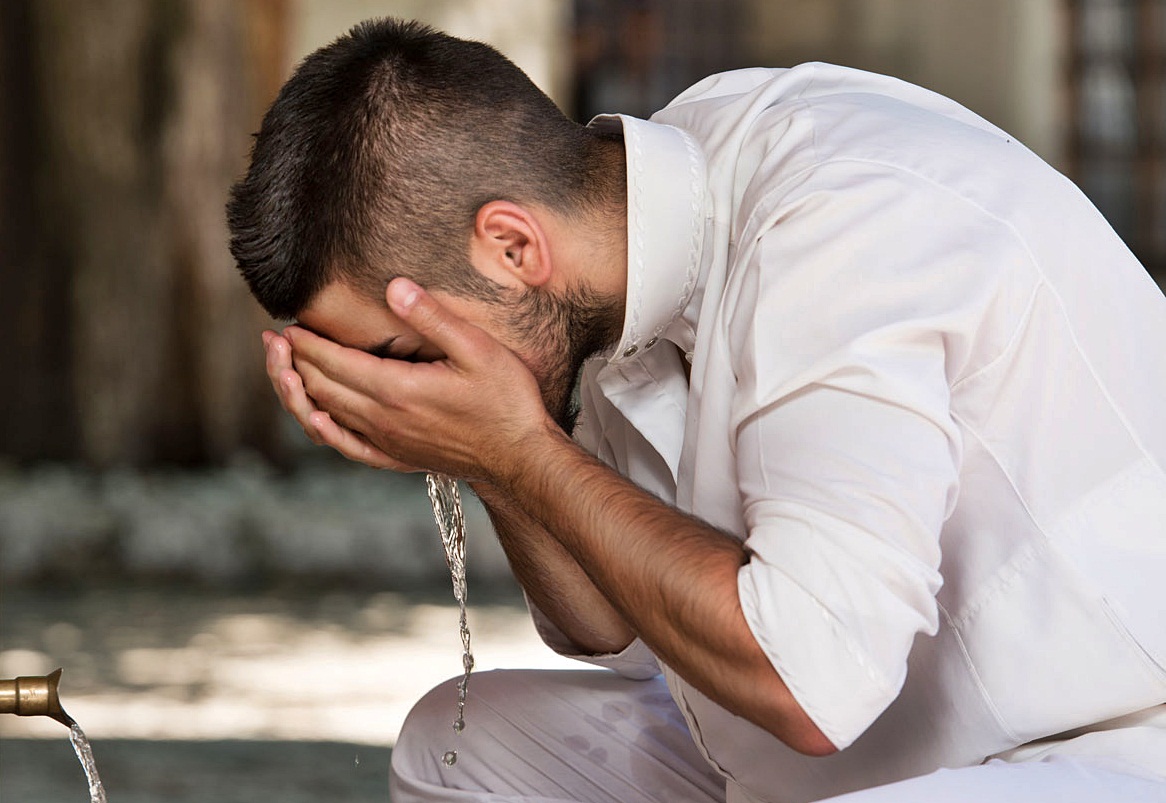
For a new Muslim, learning to pray involves more than memorizing words and movements. There is also the preparation for prayer: finding a suitable place, knowing the time, and learning how to perform wudu, the ritual washing that ordinarily precedes salah. At first, even this preparation can seem complicated. One person says to wash everything three times. Another emphasizes wiping the head. An online video gives instructions that differ slightly from those offered at the mosque. A beginner can easily wonder whether a small mistake has made the whole act invalid.
Wudu becomes much easier when we understand its structure. Some actions are obligatory. Others are established Prophetic practices or recommended refinements. Some events require us to renew wudu, while many everyday activities have no effect on it. Learning these distinctions allows us to worship with care and confidence.
This guide teaches a complete everyday routine and explains the Maliki rulings that a beginner is most likely to encounter. It follows the school’s established teaching while acknowledging that other Sunni schools sometimes reach different conclusions. You do not need to understand every scholarly discussion before beginning. You need a sound method, a little practice, and the willingness to learn.
What Wudu Means
Wudu is an act of ritual purification involving washing particular parts of the body and wiping the head. It prepares a Muslim for prayer when a state known as minor ritual impurity has occurred.
Its foundation is in the Quran. In Surah al-Ma’idah 5:6, Allah instructs believers preparing for prayer to wash the face and arms, wipe the head, and wash the feet. The verse also addresses purification when water cannot be used or found. Its closing words include this reassurance:
“It is not Allah’s Will to burden you, but to purify you…”
The purpose of these instructions includes purification and gratitude. The detailed performance of wudu is learned through the teaching and practice of the Prophet Muhammad ﷺ. [1]
Wudu also has a spiritual meaning. In Sahih Muslim, the Prophet ﷺ describes sins associated with the eyes, hands, and feet being washed away as a believer performs ablution. This gives an ordinary encounter with water a devotional significance. The limbs with which we act in the world are prepared for worship. [2]
We can let that preparation become a moment of attention: What have I looked at today? What have my hands done? Where have my feet taken me? These reflections are personal aids to devotion, rather than additional requirements or prescribed words for each limb.
Why This Guide Explains Maliki Practice
A madhhab is a school of Islamic jurisprudence: a scholarly tradition for understanding and applying the Quran and Sunnah. The Maliki school is associated with Imam Malik ibn Anas of Madinah and the generations of scholars who developed and transmitted its teachings.
Because I follow the Maliki madhhab myself, I generally like to include information specific to this school when writing about Islamic worship and daily practice. That perspective shapes this guide as well. I hope these explanations will be useful both to readers learning Maliki practice and to those who simply want to understand the differences they may encounter among Muslims.
The four established Sunni schools share the basic practice of wudu while differing over some details and their legal classification. A Maliki guide therefore needs to explain more than the familiar sequence of washing. It must also explain rubbing, continuity, the extent of wiping the head, and particular rules concerning what invalidates purification.
The aim is to learn a coherent practice. Encountering someone who follows another recognized school should invite understanding. A difference in technique does not, by itself, establish that the other person has misunderstood Islam.
Three Distinctions That Prevent Confusion
Physical cleanliness concerns such things as washing away dirt, sweat, or an unpleasant smell. Ordinary bathing and handwashing serve this purpose.
Removing an actual impurity concerns substances such as urine or feces on the body or clothing. Cleaning oneself after using the toilet belongs here. Washing the private parts with water is commonly called istinja.
Ritual purification concerns the state required for particular acts of worship. A person can look perfectly clean and still need wudu after passing wind. Conversely, removing a dirty diaper or washing impurity from clothing does not, merely through contact with that impurity, invalidate an existing wudu.
Ibn Abi Zayd’s Risalah explicitly distinguishes cleaning after the toilet from wudu itself. You do not wash your private parts every time you make wudu. If you passed wind but have no actual impurity to remove, you proceed to wudu without that additional washing. [3]
The language of ritual impurity describes a legal state. It does not mean that a person is morally dirty, shameful, or less worthy before Allah.
When Do You Need Wudu?
You need ritual purification for salah, including obligatory and voluntary prayers. If your previous wudu remains valid, you may pray with it again. The arrival of a new prayer time does not itself invalidate wudu.
Sahih Muslim records that the Prophet ﷺ deliberately offered several prayers with one ablution. A person who makes wudu for Dhuhr and experiences no invalidating event afterward can therefore pray Asr with that same wudu. Renewing it can be a good practice, but it is not automatically required for every prayer. [4]
Being without wudu does not prevent ordinary supplication or remembrance of Allah. Aisha reported that the Prophet ﷺ remembered Allah in all his states. Do not postpone calling upon Allah because you have not yet made ablution. [5]
Before You Begin
Use water that is suitable for purification. Ordinary clean tap water is suitable; so are natural sources such as rainwater and seawater. “Pure water” in fiqh does not mean laboratory distilled water. You do not need special bottled water. Use plain water for the ritual washing rather than preparing a bowl of soapy washing solution. Soap may be used separately for ordinary cleaning. [6, 7]
Arrange your clothing so that you can comfortably reach your forearms and feet. Remove a watch or other covering if it would prevent washing the required area. A stable seat can make washing the feet much easier.
Remove substances that form a barrier over areas that must be washed. Ordinary nail polish and artificial nails are common examples. A stain that leaves no coating is different from a layer that keeps water from reaching the surface. Product labels alone do not settle whether a particular coating allows a valid washing. [8]
Maliki texts also contain a particular allowance for rings that are permissible to wear; they do not simply require every such ring to be removed. That specific allowance should not be generalized to watches or other coverings. [9]
Keep the water flow modest. The task is to wash thoroughly and deliberately, with enough water to reach the required areas.
The Seven Obligatory Elements in Maliki Wudu
Traditional Maliki primers identify seven obligatory elements. [6, 10]
| Obligatory element | What it involves |
|---|---|
| Intention | Intending ritual purification for worship. |
| Washing the face | Washing its required outward area. |
| Washing the arms | Including the hands and elbows. |
| Wiping the head | Wiping the whole head with wet hands. |
| Washing the feet | Including the ankles. |
| Rubbing, or dalk | Passing the hand over the areas being washed. |
| Continuity, or fawr | Completing the acts without an undue interruption, when able and remembering. |
Keeping the familiar sequence of face, arms, head, and feet is Sunnah in the Maliki school, rather than an additional obligatory element. Beginning with the right arm or foot is recommended. Learn and preserve that sequence, while understanding that accidentally starting with the left does not invalidate wudu. [6, 10]
Two deserve special emphasis. Rubbing means gently passing your hand over the wet face, arms, and feet. It does not mean scrubbing hard, using soap, or repeatedly working over the same spot. Let your hand accompany the washing. [7]
Continuity means treating wudu as one connected act. Do not wash your face, leave to complete an unrelated task, and return much later to finish. The traditional measure of a lengthy interruption refers to the time in which a washed limb would ordinarily dry under moderate conditions. Forgetfulness and genuine inability have their own rulings; a brief practical pause is not the same as deliberately abandoning the process. [9]
How to Perform Wudu, Step by Step
The following routine includes the obligations together with important Sunnah and recommended practices. It is the routine to learn for everyday use.
1. Intend to Perform Wudu
Begin with the intention in your heart that you are performing wudu for worship, such as preparing for prayer. You do not need to pronounce an Arabic formula.
If you have approached the water because you intend to make wudu for salah, you already understand what you are doing. Do not turn intention into a difficult mental exercise. Intention distinguishes an act of worship from an ordinary wash; the Prophet ﷺ taught the foundational importance of intentions. [11]
In Maliki teaching, the intention must accompany the beginning of the obligatory washing. A straightforward practice is to intend wudu from the start, before washing your hands, and proceed with that purpose. [9]
2. Say Bismillah and Wash Your Hands
Say Bismillah, meaning “In the name of Allah,” and wash both hands to the wrists, usually three times. Clean the palms, backs of the hands, and spaces between the fingers.
In Maliki classification, saying Bismillah is recommended, and the initial washing of the hands is a Sunnah act. Forgetting Bismillah does not invalidate the wudu. [10]
3. Rinse Your Mouth
Take a little water into the mouth, move it around, and spit it out. Repeat three times as part of the complete routine. This is a rinse; you do not need to swallow water.
4. Rinse Your Nose
Bring a small amount of water gently into the nostrils, then expel it, using the left hand to help clean the nose. Repeat three times.
The mouth rinse and nasal cleansing appear in the transmitted descriptions of Prophetic wudu. Maliki teaching classifies them as Sunnah acts. [10, 12]
When fasting, be restrained so that water is not drawn too far inward or swallowed. The Prophet ﷺ specifically cautioned against deep nasal rinsing while fasting. [13]
5. Wash Your Face
Wash the face from the normal hairline to the chin and across its width toward the ears. Wash the outward surfaces, including the sides of the nose and the area around the mouth. Gently pass your hands over the wet face.
One complete washing fulfills the obligation; three complete washings form the fuller routine. Do not put water inside the eyes.
For someone with a sparse beard through which the skin is visible, water must reach the skin beneath it. With a dense beard, wash its outward surface down to its end; wudu does not require soaking through it to the skin as a full ritual bath does. [3, 10]
6. Wash Your Right Arm, Then Your Left
Wash the right hand and arm from the fingertips through the elbow, including the elbow itself. Gently rub as you wash, and ensure that water reaches between the fingers. Then wash the left hand and arm in the same way.
For the complete routine, wash each arm three times. Beginning with the right is recommended.
Remember to wash the hands at this stage too. The earlier washing of the hands does not mean that you should now begin at the wrist and leave the hands out of the obligatory washing of the arms. Pay ordinary attention to areas a sleeve might otherwise conceal. [6, 12]
7. Wipe Your Whole Head
Wet your hands with fresh water. Pass them over the head from the front toward the back, reaching the nape, and return them toward the front. Cover the sides as well as the top.
The forward and return motion is described in the hadith of Abdullah ibn Zayd. In Maliki practice, wiping the whole head is obligatory; the return pass is Sunnah. This is a wiping with wet hands, rather than a washing that requires soaking the hair. If you are bald, wipe the scalp. Where there is hair, wiping its surface is sufficient; you do not need to wet every root. Do not repeat the wiping three times as though the head were one of the washed limbs. [6, 14]
The basic requirement is the same for men and women. Classical Maliki teaching also includes wiping hair that hangs down. Ordinary plaits do not automatically have to be undone for wudu, but coverings or elaborate additions that obstruct the required wiping need separate attention. [3]
Normally, a hat or headscarf is moved or removed sufficiently to wipe the head itself. Simply wiping the outside of a head covering is not the ordinary Maliki method. Arrange privacy where needed. [15]
8. Wipe Your Ears
Take fresh moisture for the ears. Use the index fingers to wipe the inner visible parts and the thumbs for the backs. Do this gently, without pushing the fingers deeply inside.
Wiping the ears and taking fresh water for them are Sunnah practices in the Maliki school. They do not have the same legal status as the obligatory wiping of the head. [10, 15]
9. Wash Your Right Foot, Then Your Left
Wash the entire right foot, including the toes, heel, sole, and both ankle bones. Gently rub with your hand. Ensure that water reaches between the toes; passing the fingers between them is a helpful recommended practice. Then wash the left foot in the same way.
For the complete routine, wash each foot three times. The obligation is one complete washing of each foot.
Give particular attention to the heel and the area behind the ankle, which are easy to miss. Merely passing a damp hand over a bare foot does not fulfill the normal obligation of washing it. The Prophet ﷺ drew attention to neglected heels when people had not washed their feet adequately. [14, 16]
After Wudu
It is recommended to conclude with the testimony of faith. A familiar wording is:
Ashhadu an la ilaha illa Allah, wahdahu la sharika lah, wa ashhadu anna Muhammadan abduhu wa rasuluh.
Its meaning is that Allah alone is worthy of worship, without partner, and Muhammad ﷺ is His servant and Messenger. Sahih Muslim records the merit of this testimony following a well-performed ablution. [17]
This remembrance is additional to the washing. Your ability to perform valid wudu does not depend on first memorizing it. Nor do you need to learn a separate supplication for every limb before you can begin praying.
Must Everything Be Washed Three Times?
One complete washing fulfills the obligation for the areas that must be washed. Repeating the washing a second and third time is recommended. Sahih al-Bukhari preserves reports of the Prophet ﷺ washing once, twice, and three times. [12, 18]
A complete washing means that water has reached the whole required area. Three quick splashes that leave an elbow dry do not accomplish what one careful washing would. If the area requires several handfuls to cover it, the counting must not distract you from actually washing it.
The head and ears are wiped rather than washed in sets of three. Learn the routine carefully, then let it become natural. There is no need to add a fourth or fifth washing to every limb out of anxiety.
Water economy also belongs to Prophetic practice. Anas reported that the Prophet ﷺ performed wudu with a small measure of water called a mudd. A beginner need not reproduce a precise volume; the practical lesson is to use water thoughtfully. [19]
What Breaks Wudu?
The following are the main everyday situations a beginner should recognize.
Urination, Defecation, and Passing Wind
Ordinary urination, defecation, and passing wind from the anus invalidate wudu. Passing wind does not have to produce a sound or smell to count if you know that it happened.
Certain other discharges also require purification. Pre-ejaculatory fluid, called madhy, ordinarily requires cleaning and renewing wudu. For men, Maliki teaching requires washing the whole penis because of madhy. This should be distinguished from semen associated with normal sexual climax, which requires ghusl. Unfamiliar or persistent discharge should be identified correctly rather than treating every kind of moisture alike. [3, 10]
Deep Sleep and Loss of Consciousness
Deep sleep invalidates wudu even when brief. Light drowsiness in which awareness remains is treated differently. In Maliki teaching, the depth of sleep matters; it cannot be reduced to a rule that every closed eye or seated nap has the same consequence.
Fainting and other genuine losses of consciousness also require renewed purification. [3]
Physical Contact Involving Sexual Pleasure
Ordinary accidental contact between a man and a woman does not automatically invalidate wudu in the Maliki school. Contact that is intended for sexual pleasure, or through which such pleasure is experienced, does.
This includes contact between spouses. A routine touch without intended or experienced sexual pleasure is different from an intimate caress. Kissing has further detail: a kiss on the mouth is generally treated as invalidating, apart from specified exceptional circumstances such as a kiss of farewell or mercy without pleasure. It should not simply be placed under a blanket rule that all affectionate contact preserves wudu. [9, 20]
Directly Touching One’s Own Penis
For an adult man, directly touching his own penis with the palm or the inside or side of the fingers invalidates wudu in the standard Maliki account, even without sexual pleasure. Ordinary touching through clothing is different.
Do not extend that rule indiscriminately to every part of the genital area. The well-known Maliki position does not treat a woman merely touching her own vulva as the same nullifier. Discharge and sexually pleasurable contact are separate questions. [9, 10]
What Does Not, by Itself, Break Wudu?
Eating, drinking, sweating, changing clothes, speaking, and entering a bathroom do not themselves invalidate wudu. Neither does merely touching something dirty or washing an impurity from the body. Clean the affected area where required; that is a separate task from renewing ritual purification.
In Maliki teaching, an ordinary nosebleed, bleeding cut, or vomiting does not itself invalidate wudu. Actual impurity may still need cleaning before prayer. Other Sunni schools have different rulings on some of these matters, which explains why another Muslim might renew wudu in a situation where a Maliki does not. [3]
Wudu also does not expire after a fixed number of hours. The important question is whether something that invalidates it has occurred. [4]
Doubt and Persistent Misgivings
This subject needs particular care in a Maliki guide. The school’s standard teaching treats a genuine, occasional uncertainty about whether wudu remains as a reason to renew it before prayer. Many general guides teach another school’s rule on this point without identifying the difference. [6]
However, Maliki manuals expressly distinguish recurring, obsessive misgivings, often called waswasa. A person afflicted by persistent doubts is not instructed to keep repeating wudu in response to them. These doubts are to be disregarded. [9, 10]
There are also details during prayer. Al-Qarawi explains that someone who began prayer with wudu and then merely doubts whether it was subsequently broken should complete the prayer. If that occasional doubt persists afterward, his account calls for renewing wudu and repeating the prayer. The exception for persistent misgivings remains important. [9]
If doubt becomes a daily pattern, obtain one clear set of instructions from a knowledgeable teacher and follow it consistently. Repeatedly checking bodily sensations and searching for increasingly strict answers can make a manageable practice feel impossible.
Can You Wipe over Socks?
Islam recognizes wiping over qualifying footwear instead of washing the feet in particular circumstances. The established Maliki position is more restrictive than the advice often given about ordinary modern socks.
Classical Maliki texts permit wiping over qualifying leather foot coverings, called khuffs, including certain leather-covered forms. Ordinary cotton or wool socks do not automatically qualify because they are thick. The footwear must satisfy the school’s conditions and must have been put on after completing the required purification with water, including washing both feet. [21]
Another difference concerns duration: the well-known Maliki position does not impose the familiar fixed limit of one day for a resident and three days for a traveler. Nevertheless, the permission has conditions and things that end it; needing ghusl is one example. [21]
For a beginner following Maliki practice, washing the feet is the straightforward everyday method. Learn the footwear dispensation separately if you intend to use it. A product sold as a “wudu sock” still needs to be assessed against the relevant rules.
Illness, Disability, and Chronic Conditions
Purification law includes people whose bodies make the ordinary routine difficult. Sit down, use an accessible arrangement, or receive appropriate assistance when needed. You should not assume that struggling to balance at a sink is part of the worship.
When water cannot be obtained or its use would cause harm, tayammum may be prescribed. This is a form of ritual purification using a suitable clean earth substance, with its own method and conditions. Medical dressings and wounds also have specific rules. Learn the applicable method rather than assuming that the only choices are harming yourself or abandoning prayer. [1, 22]
The Maliki school also recognizes dispensations for qualifying chronic, involuntary discharge, such as certain forms of urinary incontinence or persistent passage of wind. Under the relevant conditions, the ongoing problem does not invalidate wudu with every occurrence; renewing wudu for each prayer can be recommended rather than obligatory. Other nullifiers still apply. [23]
The pattern, frequency, predictability, and possibility of treatment affect these rulings. Occasional leakage is not automatically treated like an established chronic condition. Explain the actual situation to a knowledgeable teacher so that the concession is applied correctly.
Does a Shower Count as Wudu?
A shower taken simply to cool down or wash does not automatically establish Maliki ritual purification. Intention and the required acts matter.
A correctly performed obligatory ghusl, such as the ritual bath after sexual intercourse, can include the purification otherwise obtained through wudu. A separate wudu afterward is unnecessary if nothing has invalidated it. However, an event that breaks wudu during or after the bath must still be addressed. This is one reason the recommended ghusl routine cleans the private parts before completing the limbs of wudu. [24]
Ghusl is also required after menstruation and postpartum bleeding have ended, before resuming prayer. Wudu by itself does not replace it. These are matters of ritual preparation, and deserve to be learned without embarrassment. [10]
What If You Forget Something?
First establish whether the missed act was obligatory or recommended. Forgetting Bismillah or the ear wipe is different from failing to wash an arm.
Maliki law provides ways to repair an omission. Al-Akhdari explains that if someone forgets an obligatory part and remembers soon afterward, that part and what follows it are performed. If a long time has passed, the forgotten obligation can still be completed, and any prayer performed before correcting it must be repeated. A missed Sunnah act does not carry the same consequence for the prayer. [10]
These instructions concern an actual omission. Persistent anxious speculation belongs under the rules of misgivings discussed above.
If you discover that you have misunderstood something for a long time, seek guidance before deciding that years of prayers must be repeated. Shaykh Rami Nsour discusses precisely this concern regarding someone who had not known about rubbing, explaining that recognized scholarly positions may allow the earlier worship to be treated as valid. [25]
A Note about the Quran
In the normal Maliki ruling, handling a physical mushaf, the Arabic text of the Quran, requires wudu. The school also recognizes a teaching and learning allowance with its own conditions. This is worth learning with a Quran teacher, especially for someone beginning regular study. [10]
Do not confuse that particular rule with a prohibition on remembering Allah or making personal supplication whenever you lack wudu. Prayer, handling a mushaf, and ordinary remembrance are distinct subjects. [5]
Learning with Care and Confidence
At first, you may need to read the steps while performing them. You may take a little longer to arrange your sleeves or remember which action comes next. That is part of learning a new practice.
Try to learn the complete routine until it becomes familiar: hands, mouth, nose, face, arms, head, ears, and feet, with intention, gentle rubbing, and continuity. Understand which parts carry an obligation, while continuing to value the recommended practices that complete the routine.
Wudu can then become a welcome pause in the day. Before standing in prayer, you turn toward preparation. The water gives you a moment to gather your attention and remember the One you are about to worship. What begins as a sequence to memorize can become an enduring habit of devotion.
Sources and Further Reading
The rulings above follow established Maliki teaching. Some issues have recognized differences within the school; this introduction does not attempt to catalogue every position.
- Quran 5:6.
- Sahih Muslim 244, on the spiritual merit of ablution.
- Ibn Abi Zayd al-Qayrawani, al-Risalah, chapter 4 and chapter 2, with traditional commentary.
- Sahih Muslim 277, on several prayers with one ablution.
- Sahih Muslim 373, on remembrance of Allah.
- Ibn Ashir, al-Murshid al-Mu’in, translation and commentary on purification and prayer by Abdullah bin Hamid Ali.
- Rami Nsour, “Using Soapy Water for Ghusl in Maliki School”, including explanation of rubbing and purifying water.
- Main Khalid al-Qudah, “Nail Polish and Ablution,” Assembly of Muslim Jurists of America; compare the general barrier distinction in this discussion of permeable coatings.
- Muhammad al-Arabi al-Qarawi, Fiqh Summary of the School of the Maliki Masters, “Wudu,” translated by Aisha and Habib Bewley.
- Abd al-Rahman al-Akhdari, section on purification, translated by Aisha Bewley.
- Sahih al-Bukhari 1, on intentions.
- Sahih al-Bukhari 159, describing ablution transmitted from Uthman.
- Sunan Abi Dawud 142, on thorough ablution and caution when fasting.
- Sahih al-Bukhari 185, describing ablution transmitted from Abdullah ibn Zayd.
- Malik ibn Anas, al-Muwatta, Book of Purity, especially the sections on wiping the head and ears.
- Sahih al-Bukhari 163, on washing the feet thoroughly.
- Sahih Muslim 234a and 234b, on remembrance after ablution and the wording of the testimony.
- Sahih al-Bukhari 157 and 158, on washing once and twice.
- Sahih al-Bukhari 201, on using a small amount of water.
- Sahnun, al-Mudawwanah, section on touching and kissing.
- Ibn Abi Zayd, al-Risalah, chapter 7, on wiping over leather socks.
- Al-Qarawi, Fiqh Summary, “Tayammum.”
- Tariq Abdul-Rasheed, “Frequent Rectal Discharges: Is There Any Dispensation Regarding Maintaining Ritual Purity? [Maliki School]”.
- Al-Qarawi, Fiqh Summary, “Ghusl.”
- Rami Nsour, “Repeating Prayers in Maliki School for Not Doing Dalk in Wudu.”
Leave a Reply